Home
Home
 About Us



Turkish tariff rattles Asia's textile firms
16/05/2011 12:00
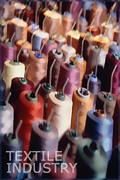
DHAKA - Turkey, which is to increase duties on imported textiles and ready-made garments as of July 21, is holding out against efforts by the governments of Indonesia, Bangladesh and other exporters to have the increases reduced or even dropped altogether.
The Turkish Council of Ministers' decision to implement provisional safeguard duties on imports of certain woven fabrics, apparel and apparel accessories imports was announced on March 24. The safeguard duty, aimed at protecting Turkish textile manufacturers, will particularly affect foreign suppliers in Pakistan, Indonesia, China and Vietnam, while Bangladesh and China will be affected as the major readymade garments exporters to Turkey.
The decision came three months after the Turkish government initiated investigations following complaints that these imported products were harming the local industry.
The duty has been increased by 20% for fabrics. For garments, the tariff increases vary by country, rising for least-developed countries to 17% from 0% and for more developed countries to 36% from 9%. According to the gazetted announcement, importers will be obliged to pay the provisional customs tariffs.
The increases approved by the Council of Ministers are 10% lower than those proposed by the under-secretariat of foreign trade (UFT) in January this year, but the decision is provisional until the nine-month investigation is completed by September. If further investigations by the UFT and the Council of Ministers determine there is no need for safeguard measures, the already collected provisional customs tariffs will be returned in full.
However, once imposed, the duties can last as long as four years if the World Trade Organization (WTO) does not intervene.
The decision will add 18% custom duty on the import of denim fabric from Pakistan, raising the total duty to 24.5%. "After the increase in custom duty, Pakistan faces a loss of US$200 million," said Mirza Ikhtiar Baig, adviser to Pakistan's textile ministry and a prominent textile industrialist. "Our exports of fabric to Turkey are worth $380, million while the total volume of trade between Turkey and Pakistan is $940 million," he was quoted by Business Recorder as saying.
Baig urged Pakistani textile exporters to ship their products as quickly as possible before July 24 to avoid additional duty.
Businessmen in Indonesia last month called on visiting Turkish President Abdullah Gul to lift trade barriers imposed on a number of Indonesian products exported to Turkey.
Turkey has imposed safeguard duties ranging from 5% to 33% on woven fabrics, apparel, footwear, bicycle and motorcycle tires, pipe fittings, hinges and furniture components, the Jakarta Post reported on April 5, citing Indonesian trade ministry data.
The report also quoted Indonesian Textile Association chairman Ade Sudrajat as saying that the duties have made Indonesian textile products uncompetitive in Turkey, as duties additional to the previous 6.4% rate are pushing up prices in Turkey.
Ade said anti-dumping duties ranging from 6.2% to 12% had been imposed on unprocessed polyester synthetic staple fibers and that safeguard duties on Indonesian woven fabrics and apparels to Turkey range from 18% to 27%.
Bangladeshi garments and textiles will be subjected to a 17% safeguard duty, and the Federation of Bangladesh Chambers of Commerce and Industries (FBCCI) and other trade bodies have urged the government in Dhaka to negotiate with Turkey to either withdraw the duty on Bangladeshi goods or reduce the duty to at least 10%.
Prime Minister Sheikh Hasina on Wednesday returned from a four-day visit Turkey, accompanied by an FBCCI delegation, during which she discussed the issue further.
"The safeguard duty is a violation of the WTO safeguard measures which let a WTO member impose such duty only when there is surge in imports, if the local industry is suffering and if there is substantial evidence that proves that the problems are due to high imports," FBCCI adviser Manzur Ahmed told Asia Times Online, in line with similar comments made by Indonesian and Pakistani textiles businessmen.
"Turkish trade data show there was a surge in imports in 2008 and 2009 due to the global recession," said Ahmed. "But the imports in 2010 were similar to the imports in 2005 and 2006. Also, the unemployment cited by Turkish complainants in 2008-2009 can again be attributed to the global recession during which Pakistan, India and other countries faced similar problems. Also, the fact that the safeguard duty varies from one country to the other is violating WTO measures."
Ahmed was hopeful that the duty will not affect Bangladesh's competitive abilities compared with other exporters to the Turkish market, where Bangladesh is the second-largest source for apparel after China. Bangladesh shipped around $650 million worth of apparel to Turkey in 2010, according to New Age in Bangladesh. The amount was over a quarter of Turkey’s total textiles imports.
"The duty may be waived after June 12 when the Turkish general elections will occur," said Ahmed. "Most Turkish businessmen have assured us that the incumbent Turkish government has imposed the duty to boost its popularity amongst voters."
Importers and retailers in Turkey were also annoyed with the government's decision, he said.
Taryk Bozbey, head of the Mediterranean Exporters Union in Turkey, was quoted by Turkish newspaper The Hurriyet as saying that both local and international firms were "quite angry" about the tax decision as Turkey is dependent on some foreign imports not produced domestically in abundance. According to Bozbey, foreign retail chains will be hit by the duty policy as most of them rely heavily on textile products imported from Southeast Asia.
Syed Tashfin Chowdhury is a senior staff writer at New Age in Dhaka
By Syed Tashfin Chowdhury
Source: atimes.com
Các tin khác
- Following the imposition of the highest tariff of 37.13%, the Ministry of Industry and Trade is reviewing galvanized steel from China (19/06/2026)
- Official tariffs have been imposed on colorless float glass imported from Indonesia and Malaysia (19/06/2026)
- India seeks to continue anti-dumping duties on Bangladesh’s jute products (19/06/2026)
- Turkey Initiates Anti-Dumping Investigation into Polyester Cord Fabric from Viet Nam (19/06/2026)
- Chinese dumping in Brazil affected the entire garlic supply chain (19/06/2026)