Home
Home
 About Us


Trade ruling against S. Korean firms could aid Whirlpool
01/06/2012 12:00
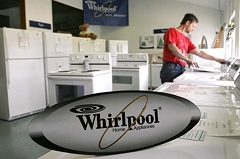
Trade experts say a U.S. Department of Commerce decision Wednesday on trade subsidies could help Michigan-based Whirlpool Corp. but lead to higher-priced clothes washers for consumers.
The Commerce Department said Wednesday that South Korean washing machine manufacturers and exporters have illegally received government subsidies ranging from 0.22 percent to 70.58 percent.
The preliminary decision sides with Benton Harbor-based Whirlpool, which claimed the South Korean government violated U.S. and international trade laws.
Daewoo Electronics Corp., which was investigated but did not cooperate in the federal government probe, had the highest subsidy rate at 70.58 percent.
If the U.S. International Trade Commission applies a penalty tariff equal to the subsidy rate, Daewoo eventually might stop importing its washers to the United States, said Daniel Ikenson, director of trade policy studies at the Cato Institute, a libertarian research group in Washington, D.C.
A $500 appliance would have to be sold for $853 to cover the potential import penalty, Ikenson said.
Whirlpool spokeswoman Kristine Vernier said the company is "pleased" with the ruling.
Ikenson said about two-thirds of all Commerce Department-initiated antidumping or countervailing petitions are successful.
The Commerce Department said it will instruct U.S. Customs and Border Protection agency to collect a cash deposit from importers based on its preliminary rate findings.
Last year, Whirlpool accused South Korean and Mexican makers of large residential clothes washers of "dumping" or unfairly selling their appliances below cost.
A decision is expected this summer.
Whirlpool also filed anti-dumping petitions against bottom freezer refrigerator makers from South Korea and Mexico and an anti-subsidy complaint against the same products from South Korea.
Whirlpool lost the subsidy case and plans to appeal.
Many emerging market companies are taking away market share from American and other Western companies, said Attila Yaprak, professor of marketing and international business at Wayne State University's School of Business Administration. "Companies will do everything they can to recapture or regain losses."
The Commerce Department said Wednesday that South Korean washing machine manufacturers and exporters have illegally received government subsidies ranging from 0.22 percent to 70.58 percent.
The preliminary decision sides with Benton Harbor-based Whirlpool, which claimed the South Korean government violated U.S. and international trade laws.
Daewoo Electronics Corp., which was investigated but did not cooperate in the federal government probe, had the highest subsidy rate at 70.58 percent.
If the U.S. International Trade Commission applies a penalty tariff equal to the subsidy rate, Daewoo eventually might stop importing its washers to the United States, said Daniel Ikenson, director of trade policy studies at the Cato Institute, a libertarian research group in Washington, D.C.
A $500 appliance would have to be sold for $853 to cover the potential import penalty, Ikenson said.
Whirlpool spokeswoman Kristine Vernier said the company is "pleased" with the ruling.
Ikenson said about two-thirds of all Commerce Department-initiated antidumping or countervailing petitions are successful.
The Commerce Department said it will instruct U.S. Customs and Border Protection agency to collect a cash deposit from importers based on its preliminary rate findings.
Last year, Whirlpool accused South Korean and Mexican makers of large residential clothes washers of "dumping" or unfairly selling their appliances below cost.
A decision is expected this summer.
Whirlpool also filed anti-dumping petitions against bottom freezer refrigerator makers from South Korea and Mexico and an anti-subsidy complaint against the same products from South Korea.
Whirlpool lost the subsidy case and plans to appeal.
Many emerging market companies are taking away market share from American and other Western companies, said Attila Yaprak, professor of marketing and international business at Wayne State University's School of Business Administration. "Companies will do everything they can to recapture or regain losses."
May 31, 2012 at 1:00 am
By Karl Henkel
Source: detroitnews.com
By Karl Henkel
Source: detroitnews.com
Các tin khác
- Following the imposition of the highest tariff of 37.13%, the Ministry of Industry and Trade is reviewing galvanized steel from China (19/06/2026)
- Official tariffs have been imposed on colorless float glass imported from Indonesia and Malaysia (19/06/2026)
- India seeks to continue anti-dumping duties on Bangladesh’s jute products (19/06/2026)
- Turkey Initiates Anti-Dumping Investigation into Polyester Cord Fabric from Viet Nam (19/06/2026)
- Chinese dumping in Brazil affected the entire garlic supply chain (19/06/2026)