Home
Home
 About Us



Thailand: Printing federation opposes anti-dumping move on paper
24/08/2011 12:00
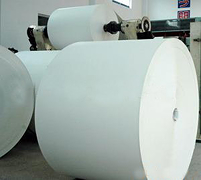
The Federation of Thai Printing Industries, together with three related associations, yesterday came out in opposition to the enforcement of the anti-dumping law on paper products.
"On behalf of business operators from the printing industry and stakeholders, we agree that if the request made by SCG Paper for an anti-dumping investigation of paper products comes to a conclusion, surcharges will definitely be collected," said Thavichai Techavichian, chairman of the federation.
"It will inevitably affect the production costs of publications of all kinds, which will create a hardship for consumers and users of those publications."
The three trade groups joining the federation at a news conference were the Magazine Association of Thailand, Thai Paper and Exercise Book Traders, and the Thai Graphic Arts Suppliers and Manufacturers Trade Association.
SCG Paper, the only local manufacturer of coated art paper weighing 80-260 grams, this year filed a complaint to the Foreign Trade Department against coated paper from mainland China, Indonesia, South Korea, Japan and Taiwan.
The company claimed that the imported paper was being sold here at much lower prices than in their home markets.
The department is still investigating the case but plans to impose preliminary surcharges against the paper factories in those five economies. The countervailing rates would be 17.64 per cent for mainland China, 6.62 per cent for Indonesia, 5.85 per cent for South Korea, 43.01 per cent for Japan and 54.58 per cent for Taiwan.
The federation combines many printing and related associations, including the Printing and Paper Packaging Industry Club, Federation of Thai Industries, Thai Colour Separation Association for the Thai Printing Industry, Thai Printing Association, Publishers and Booksellers Association of Thailand, Thai Packaging Association, Thai Corrugated Packaging Association, Thailand Association for Printing Technology Promotion, Thai Screen Printing and Graphic Imaging Association and Thai Electronic Publishing Club.
Thavichai said the government's measures to support and promote international trade, such as free trade, had resulted in a dramatic increase in the import of coated papers and paperboard, and had contributed to the growth of the local printing industry. Free trade also helps stabilise paper prices as the supply is sufficient to meet domestic demand, he said.
However, anti-dumping enforcement will stunt the growth of the entire printing industry and erode Thailand's competitiveness in the international publishing market, leading to a drop in publication exports, he claimed.
This would also hinder the government's policy of promoting a learning society, aimed at providing lower book prices. Its plan to promote reading has been designated as a national priority, while the Bangkok Metropolitan Administration's Bangkok Read for Life programme was instrumental in Unesco's decision to declare Bangkok the World Book Capital in 2013, he noted.
Pornchai Rattanachaikanont, president of the Thai Packaging Association, said the anti-dumping measure contradicted the movement of Thailand towards the Asean Economic Community, to be fully effective in 2015, when all import duties in the bloc will be eliminated. It would trigger a crisis in the local printing industry as well as related industries such as packaging, print media and magazines and books, as their production costs will go up.
"Such an anti-dumping measure will destroy the competitiveness of all printing businesses in Thailand and will block the country from becoming a hub of the printing industry in Asean, as export orders for printing products will be diverted to rivals such as Malaysia and Vietnam," he said.
After a request made in 2004 by local printing associations, the government in 2006 decided to cut all import duties on all printing equipment and materials to zero.
"Thailand's exports of printing products increased significantly from Bt25.5 billion in 2007, to Bt50.7 billion in 2008, Bt55 billion in 2009 and Bt63 billion last year. The country's exports of printing products reached Bt55 billion in the first four months of this year," Pornchai said.
Worapan Lokitsathaporn, president of the Publishers and Booksellers Association of Thailand, said paper accounted for about 20 per cent of the production costs of books and children's textbooks.
"If those overseas paper factories are slapped with a 10-per-cent surcharge, for instance, local book prices will rise by 7-10 per cent on average," he said.
Ritnarong Kulprasootr, director of the Magazine Association of Thailand, said the Kingdom was far behind developed markets in magazine titles.
"There are 9,000 magazines in Russia and 3,000 in France. For Thailand, there are about 1,000 magazines available in the marketplace," he said.
By Kwanchai Rungfapaisarn
Source: The Nation - nationmultimedia.com
Các tin khác
- Following the imposition of the highest tariff of 37.13%, the Ministry of Industry and Trade is reviewing galvanized steel from China (19/06/2026)
- Official tariffs have been imposed on colorless float glass imported from Indonesia and Malaysia (19/06/2026)
- India seeks to continue anti-dumping duties on Bangladesh’s jute products (19/06/2026)
- Turkey Initiates Anti-Dumping Investigation into Polyester Cord Fabric from Viet Nam (19/06/2026)
- Chinese dumping in Brazil affected the entire garlic supply chain (19/06/2026)