Home
Home
 About Us



Tariff Move Is Bad Timing for Brazil
11/07/2011 12:00
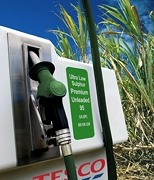
SÃO PAULO, Brazil—To Brazilian sugarcane producers who have long wanted to export ethanol to the U.S., news that Congress may finally tear down trade barriers protecting U.S. fuel from competition comes at a bad time.
An agreement by senators this past week to end a tax of 54 cents a gallon on imported ethanol was cheered by the Brazilian sugarcane industry. For years, Brazil's government and industry have chided the U.S. for protecting its corn-based ethanol producers from potential imports of Brazilian sugarcane-based ethanol, which is considered to be more energy-efficient.
But Brazil's current sugarcane harvest is expected to decline for the first time in many years, and, with heavy demand pressure coming from both domestic drivers and global sugar consumers, experts doubt there will be any ethanol left over to ship abroad.
”The irony of it all is that precisely when the U.S. looks ready to reduce tariffs on ethanol imports, Brazil structurally is not in a position to reap the potential benefits," said Christopher Garman, a Brazil analyst at Eurasia Group.
Brazil's weak harvest is also driving global sugar prices higher, as buyers scramble for limited supplies. Raw sugar for October delivery traded on the Intercontinental Exchange has risen nearly 18% in the past month.
Officials from sugarcane association Unica said this week that the crop now being harvested in Brazil's main producing region could yield less sugar and ethanol this year than last. Sugarcane fields are faltering as a result of both weather conditions and a lack of investment during the global financial crisis.
With global sugar prices so high, Brazilian mills would be unlikely to ramp up production of ethanol this year, even if there was sugarcane to spare.
"Production of sugar is more attractive" for the mills, said Michael McDougall, a senior vice president at brokerage Newedge.
In addition, Brazilian ethanol producers can get much higher prices at home than in the U.S. In the first six months of the year, ethanol prices averaged $5 a gallon in Brazil compared with $3 in the U.S.
And demand for the fuel in Brazil is expected to keep growing, as the nation's consumption-driven economic boom is expected to increase sales of new cars—more than 80% of which are capable of running on pure ethanol or gasoline—about 5% higher this year.
Given the circumstances, the government would almost certainly respond to a surge in ethanol exports with trade barriers of its own, several analysts said.
The Brazilian government, concerned with rising inflation that has in part been fed by high fuel prices, has put the National Petroleum Agency in charge of regulating ethanol production to avoid future shortfalls. Possible means to that end include requiring sugarcane millers to keep mandatory stockpiles of ethanol, officials say.
The government is also considering reducing to as low as 18% the amount of anhydrous ethanol blended with gasoline, from the current 25%.
Though drivers also consume massive amounts of hydrous ethanol, virtually pure alcohol, such a measure would ease demand for the biofuel. Sugar watchers doubt it would rattle the futures market much, given the struggling sugarcane harvest.
"The situation is bad," said Arnaldo Correa, a sugar market analyst at Archer Consulting, adding that some cane growers are already concerned that next year's harvest won't bring much of a recovery. "There's no way out."
In the long term, however, lower U.S. trade barriers would boost incentives for sugarcane producers to invest in capacity improvements.
"It provides a tremendous boost in incentive for new investments in ethanol production in Brazil, to the extent that Brazil can be a platform for exports to the U.S. market into the long term," Eurasia's Mr. Garman said. It's…a stimulus for the sector."
July 11, 2011
Leslie Josephs contributed to this article.
Source: online.wsj.com
Các tin khác
- Following the imposition of the highest tariff of 37.13%, the Ministry of Industry and Trade is reviewing galvanized steel from China (19/06/2026)
- Official tariffs have been imposed on colorless float glass imported from Indonesia and Malaysia (19/06/2026)
- India seeks to continue anti-dumping duties on Bangladesh’s jute products (19/06/2026)
- Turkey Initiates Anti-Dumping Investigation into Polyester Cord Fabric from Viet Nam (19/06/2026)
- Chinese dumping in Brazil affected the entire garlic supply chain (19/06/2026)