Home
Home
 About Us



Talking trade with Griffith
27/07/2010 12:00
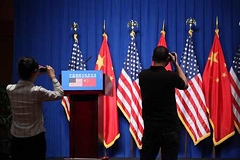
Trade tensions between China and US undoubtedly will remain high, but a "trade war" is unlikely. Continued dialogue between the two governments will help keep trade disputes within the confines of the trade arena, not allowing them to spill over into the larger issues facing the two countries, an experienced Washington trade lawyer said.
Spencer S Griffith is the managing partner of the Beijing office of Akin Gump Strauss Hauer & Feld, an international law firm based in Washington. He spoke with the Global Times (GT) in his office.
Spencer focuses on China, international trade and general litigation matters, including World Trade Organization (WTO) issues and anti-dumping cases. He disclosed some key improvements by Chinese companies in handling trade cases when they exported to the US, and noted some modest success between the two countries in the trade area out of the recently concluded Strategic & Economic Dialogue (S&ED).
GT: What do you think about your role as a lawyer in China?
Griffith: I don't just represent Chinese companies, I also represent companies from all over the world. I was living in Washington for many years, and we have an office in Beijing. I have been traveling back and forth between the two countries for many years, and am now living here. China's economy is booming, particular in the trade area, and the country is becoming an important part of international trade area. Of course, I want to be here to be part of it.
GT: Have you seen any changes by the Chinese companies who met with unfair treatments when they exported goods to the US in recent years?
Griffith: I have handled Chinese trade cases for many years. One thing I want to mention is that previously Chinese companies were not as well organized as they are now. Many Chinese exporters basically gave up and didn't fight back against the dumping cases. But now we are seeing an increasing willingness of Chinese companies to commit the resources from the company, not just from the law firms, to fight in trade cases.
What's more, until recently, the Chinese government was not willing to entertain the possibilities of challenging the US trade decisions in the WTO. In the past, if a Japanese or Korean firm, for instance, felt it was unfairly treated in a US trade case, its government might be willing to go to the WTO. And we have seen the Chinese government began to take a more proactive role in the WTO, using the WTO as a way to try to challenge the trade decisions of US and EU. China is becoming a much more active member in the WTO.
GT: What is unique to Chinese trade cases and the legal environment compared to other WTO members, judging by your work experience?
Griffith: In China, we are now seeing a group of very good local trade lawyers. While in other countries, when the American trade lawyers handle the trade cases, they generally have to deal with the cases by themselves, maybe with a local accountant. But in China, and only in China, local Chinese law firms have become very good at assisting in US trade conflicts cases. The Chinese lawyers are young and smart, serving as a bridge between Chinese clients and the US law firms.
And trade associations in China sometimes help the Chinese exporters, determining whether to respond to a case, but other countries don't have this kind of equivalents.
GT: Some US lawmakers recently pushed for a probe into a Chinese steel company Angang Steel's investment in a US mill, citing concerns over national security and unemployment. Is it fair?
Griffith: A number of US congressmen have written a letter to the Obama administration, asking it to take a close look at whether there are national security implications. We will have to see what the US will do about the request.
There is somewhat of a perception among Chinese investors that the US in some sectors is less welcoming to Chinese investment than perhaps some other countries are. So what we have seen more recently is, that more and more Chinese companies are investing outside the US, in the energy, oil and gas areas, for example. The perception does negatively impact the overall trade relations.
GT: What's your opinion about the currency issues that already impact the trade between the two countries? Have any improvements have been made?
Griffith: Politically, it is becoming the focus point in Washington in the tension over trade between US and China. But some economists believe that, even if the Chinese currency is allowed to appreciate in value, that by itself would not significantly impact the trade deficit between the US and China. But nevertheless, it has become a symbolic issue of the trade tension between the two governments.
The good thing is, both governments agreed not to let the currency issue overtake the recent S&ED.
China did not make any new commitments on its exchange rate policies, and repeated its prior position that China will reform its exchange rate policies pursuant to its own timetable. It is not yet clear if the US will take any unilateral action under US trade law towards China's currency policy. For example, US petitioners in current countervailing duty cases involving paper and aluminum extrusions are asking the US Commerce Department to declare China's currency policy a countervailable subsidy. We will have to wait and see how this issue unfolds in the months ahead.
GT: China recently made a revised offer to the WTO Government Procurement Committee to increase foreign companies' access to its government purchases. Do you think that is big progress?
Griffith: It is a better offer than China has given before. But some WTO members will still not be satisfied with the present offer.
I suspect that other WTO members will come back to China, saying, 'Thank you very much, this is helpful, but this is not enough in numbers of areas.' For instance, one of the key points is the Chinese offer does not include sub-central governments.
But as we known, the WTO is actually an agreement, and all the members have to make compromises. China's offer recognizes some compromises that are needed and we will wait and see what positions other Government Procurement Agreement members will take in the future. But it takes time.
Spencer S Griffith is the managing partner of the Beijing office of Akin Gump Strauss Hauer & Feld, an international law firm based in Washington. He spoke with the Global Times (GT) in his office.
Spencer focuses on China, international trade and general litigation matters, including World Trade Organization (WTO) issues and anti-dumping cases. He disclosed some key improvements by Chinese companies in handling trade cases when they exported to the US, and noted some modest success between the two countries in the trade area out of the recently concluded Strategic & Economic Dialogue (S&ED).
GT: What do you think about your role as a lawyer in China?
Griffith: I don't just represent Chinese companies, I also represent companies from all over the world. I was living in Washington for many years, and we have an office in Beijing. I have been traveling back and forth between the two countries for many years, and am now living here. China's economy is booming, particular in the trade area, and the country is becoming an important part of international trade area. Of course, I want to be here to be part of it.
GT: Have you seen any changes by the Chinese companies who met with unfair treatments when they exported goods to the US in recent years?
Griffith: I have handled Chinese trade cases for many years. One thing I want to mention is that previously Chinese companies were not as well organized as they are now. Many Chinese exporters basically gave up and didn't fight back against the dumping cases. But now we are seeing an increasing willingness of Chinese companies to commit the resources from the company, not just from the law firms, to fight in trade cases.
What's more, until recently, the Chinese government was not willing to entertain the possibilities of challenging the US trade decisions in the WTO. In the past, if a Japanese or Korean firm, for instance, felt it was unfairly treated in a US trade case, its government might be willing to go to the WTO. And we have seen the Chinese government began to take a more proactive role in the WTO, using the WTO as a way to try to challenge the trade decisions of US and EU. China is becoming a much more active member in the WTO.
GT: What is unique to Chinese trade cases and the legal environment compared to other WTO members, judging by your work experience?
Griffith: In China, we are now seeing a group of very good local trade lawyers. While in other countries, when the American trade lawyers handle the trade cases, they generally have to deal with the cases by themselves, maybe with a local accountant. But in China, and only in China, local Chinese law firms have become very good at assisting in US trade conflicts cases. The Chinese lawyers are young and smart, serving as a bridge between Chinese clients and the US law firms.
And trade associations in China sometimes help the Chinese exporters, determining whether to respond to a case, but other countries don't have this kind of equivalents.
GT: Some US lawmakers recently pushed for a probe into a Chinese steel company Angang Steel's investment in a US mill, citing concerns over national security and unemployment. Is it fair?
Griffith: A number of US congressmen have written a letter to the Obama administration, asking it to take a close look at whether there are national security implications. We will have to see what the US will do about the request.
There is somewhat of a perception among Chinese investors that the US in some sectors is less welcoming to Chinese investment than perhaps some other countries are. So what we have seen more recently is, that more and more Chinese companies are investing outside the US, in the energy, oil and gas areas, for example. The perception does negatively impact the overall trade relations.
GT: What's your opinion about the currency issues that already impact the trade between the two countries? Have any improvements have been made?
Griffith: Politically, it is becoming the focus point in Washington in the tension over trade between US and China. But some economists believe that, even if the Chinese currency is allowed to appreciate in value, that by itself would not significantly impact the trade deficit between the US and China. But nevertheless, it has become a symbolic issue of the trade tension between the two governments.
The good thing is, both governments agreed not to let the currency issue overtake the recent S&ED.
China did not make any new commitments on its exchange rate policies, and repeated its prior position that China will reform its exchange rate policies pursuant to its own timetable. It is not yet clear if the US will take any unilateral action under US trade law towards China's currency policy. For example, US petitioners in current countervailing duty cases involving paper and aluminum extrusions are asking the US Commerce Department to declare China's currency policy a countervailable subsidy. We will have to wait and see how this issue unfolds in the months ahead.
GT: China recently made a revised offer to the WTO Government Procurement Committee to increase foreign companies' access to its government purchases. Do you think that is big progress?
Griffith: It is a better offer than China has given before. But some WTO members will still not be satisfied with the present offer.
I suspect that other WTO members will come back to China, saying, 'Thank you very much, this is helpful, but this is not enough in numbers of areas.' For instance, one of the key points is the Chinese offer does not include sub-central governments.
But as we known, the WTO is actually an agreement, and all the members have to make compromises. China's offer recognizes some compromises that are needed and we will wait and see what positions other Government Procurement Agreement members will take in the future. But it takes time.
[23:11 July 25 2010]
By Zhao Qian
Source: business.globaltimes.cn
By Zhao Qian
Source: business.globaltimes.cn
Các tin khác
- Following the imposition of the highest tariff of 37.13%, the Ministry of Industry and Trade is reviewing galvanized steel from China (19/06/2026)
- Official tariffs have been imposed on colorless float glass imported from Indonesia and Malaysia (19/06/2026)
- India seeks to continue anti-dumping duties on Bangladesh’s jute products (19/06/2026)
- Turkey Initiates Anti-Dumping Investigation into Polyester Cord Fabric from Viet Nam (19/06/2026)
- Chinese dumping in Brazil affected the entire garlic supply chain (19/06/2026)