Home
Home
 About Us



RP-Japan deal faulted
28/09/2008 12:00
Accord includes ‘WTO-plus’, zero-tariff waste import provisions
"Loopholes" are beginning to emerge from the Philippines’ free trade deal with Japan a month after it was signed and sealed, with experts seeing no apparent gain and warning the country could find itself on the losing end.
The Philippines, for instance, was inconsistent in agreeing to Japan-Philippines Economic Partnership Agreement (JPEPA) provisions that it has roundly rejected in multilateral trade negotiations.
The bilateral trade agreement with Japan contains the so-called Singapore issues -- investments, competition, government procurement -- complex subjects that led to a gridlock in the World Trade Organization (WTO) talks and had to be dropped to move the multilateral talks forward. Japan is a staunch campaigner for the Singapore issues.
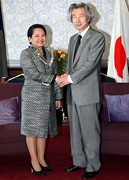
Other "questionable" provisions such as zero tariffs on waste materials like sewage sludge, clinical waste, and ash and residues have found their way into the JPEPA, signed in Helsinki by President Gloria Macapagal Arroyo and Japanese Prime Minister Junichiro Koizumi last September 9.
The JPEPA also offers far less protection from cheap imports than the WTO, in terms of safeguard measures that domestic manufacturers can seek for temporary protection from imports.
Allowing the Singapore issues (which emerged at the 1996 WTO ministerial in Singapore) in the JPEPA, said international trade analyst Jeremy I. Gatdula, begs the question of whether the Philippines really has a coherent trade policy.
"What is our trade policy? We fought for a Doha Round [without the Singapore issues]. What’s our real position?" he asked.
This might be taken against the Philippines, Mr. Gatdula said, when it begins to negotiate with other countries or trade blocs, such as the United States or the European Union, who might want to push the Singapore issues through similar free trade agreements (FTAs).
"What about our consistency? When we go back to multilateral negotiations we can’t anymore say that we don’t like the Singapore issues," he added.
Rene E. Ofreneo, executive director of the Fair Trade Alliance, noted that the JPEPA also has provisions on intellectual property rights (IPR) which could be tougher than what the WTO imposes.
Inserting "WTO-plus issues" into FTAs has been a strategy by rich countries who couldn’t get what they want at the WTO, he claimed. Rich countries, for instance, want patent extensions and data exclusivity as WTO agreements allow parallel imports (such as medicines) and compulsory licensing in the name of public health, Mr. Ofreneo said. In the Philippines, multinational drug firms have launched a massive legal offensive to stop parallel imports hurting their businesses.
"That’s the purpose of bilaterals. They (rich countries) use multilaterals to their advantage. They also use bilaterals to their advantage," he said.
‘FTA more than the WTO’
Sought for comment, Jose Antonio S. Buencamino, special trade representative assigned to the Philippines’ permanent WTO mission in Geneva, said the Singapore issues have not been fully included in the JPEPA.
He did not elaborate, but admitted "You will expect an FTA to more than the WTO." Otherwise, he added, there’s no point for rich countries to enter into one.
Officials of the Japanese Embassy in Manila, meanwhile, could not be immediately reached for comment.
But Mr. Gatdula said the Philippines didn’t have to agree to the provisions, as nothing in international law requires bilaterals to exceed the WTO. "It’s simply a contract between two countries."
In another puzzling move, the government gave tariff preferences on Japanese waste materials. Under the JPEPA, waste products such as waste pharmaceuticals, ash and residues from incinerated waste, sewage sludge, clinical waste, and even articles like used surgical gloves can be shipped from Japan at zero tariffs.
Government officials have explained these products are for "recycling."
Mr. Gatdula pointed out that zero tariffs are supposed to encourage importation of products in short supply or not manufactured locally, or if there is little demand. But it seems there is no great need for Japanese waste, he said. BusinessWorld Focus: Enhanced
Other questions need to be answered: Can local recycling facilities handle a deluge of waste materials? Are authorities adequately prepared? Mr. Gatdula also warned that other countries could take advantage of the JPEPA to dump waste on the Philippines via transshipments.
Mr. Ofreneo said it’s questionable that the Philippines is allowing waste products in while getting only a few concessions such as the entry of Filipino nurses and caregivers to Japan.
Japan and the Philippines are complementary economies -- the former can supply industrial goods while the latter can readily export farm commodities -- but Filipino agricultural products such as mangoes, bananas, pineapples, and tuna have already made headway in Japan, he said. Being perfect FTA partners, the Philippines is supposed to gain from closer trade relations with an affluent trade partner.
"But are there new products that we can gain? Are there new products that Japan will flood the market with? Does the JPEPA give us new incentives, new products that we can sell other than caregivers?," he asked.
Mr. Gatdula said the final impact of the JPEPA is not yet clear as its contents were only recently released to the public.
NARROWER PROTECTION
But the agreement clearly gives narrower protection from imports. For instance, provisions on safeguards do not allow tariffs to be raised beyond most favored nation or MFN rates. Compensation to the other party must be given in 12 months, when the WTO allows up to three years.
"Safeguards are important to us because historically local industries prefer it over anti-dumping measures due to evidentiary and technical difficulties associated with the latter," Mr. Gatdula said.
The fact that the Philippines got certain tariff concessions from Japan is not enough reason to be happy, he said.
Loopholes could also come under the form of non-tariff barriers that Japan may impose. For example, Tokyo has been using sanitary and phytosanitary standards (SPS) to block Philippine products, such as smoked tuna (because of carbon monoxide residue).
The JPEPA did not exactly address the use of SPS, Mr. Gatdula said, only containing a general statement that it wouldn’t be used to hinder the flow of goods.
The problem with the JPEPA, Messrs. Ofreneo and Gatdula said, is that it’s only being discussed after the fact. As it is, stakeholders have yet to finish poring over the basic document, already 153 pages thick without the voluminous annexes.
"This is a comprehensive agreement. It would have been nice if the experts had the chance to comb through the provisions [before it was signed], Mr. Gatdula said.
Mr. Ofreneo said the JPEPA remains a work in progress as several committees still have to be created to craft more rules. "Because they hid the draft, it’s hard to identify the critical areas."
CONFIDENTIALITY NEEDED
Mr. Buencamino, however, said many details had to be kept confidential. "It came to a point when the private sector, more specifically civil society, wanted disclosure from the start -- coverage, negotiating issues, topics. That’s hard because you are negotiating something."
He called on sectors questioning the deal to come up with "full-scale analytical studies" to determine the JPEPA’s pros and cons.
The JPEPA’s approval, Mr. Buencamino told BusinessWorld, was mainly a "political decision."
"[Prime Minister] Koizumi wanted it. [President Arroyo] wanted it and said the buck stops here."
"Loopholes" are beginning to emerge from the Philippines’ free trade deal with Japan a month after it was signed and sealed, with experts seeing no apparent gain and warning the country could find itself on the losing end.
The Philippines, for instance, was inconsistent in agreeing to Japan-Philippines Economic Partnership Agreement (JPEPA) provisions that it has roundly rejected in multilateral trade negotiations.
The bilateral trade agreement with Japan contains the so-called Singapore issues -- investments, competition, government procurement -- complex subjects that led to a gridlock in the World Trade Organization (WTO) talks and had to be dropped to move the multilateral talks forward. Japan is a staunch campaigner for the Singapore issues.
Other "questionable" provisions such as zero tariffs on waste materials like sewage sludge, clinical waste, and ash and residues have found their way into the JPEPA, signed in Helsinki by President Gloria Macapagal Arroyo and Japanese Prime Minister Junichiro Koizumi last September 9.
The JPEPA also offers far less protection from cheap imports than the WTO, in terms of safeguard measures that domestic manufacturers can seek for temporary protection from imports.
Allowing the Singapore issues (which emerged at the 1996 WTO ministerial in Singapore) in the JPEPA, said international trade analyst Jeremy I. Gatdula, begs the question of whether the Philippines really has a coherent trade policy.
"What is our trade policy? We fought for a Doha Round [without the Singapore issues]. What’s our real position?" he asked.
This might be taken against the Philippines, Mr. Gatdula said, when it begins to negotiate with other countries or trade blocs, such as the United States or the European Union, who might want to push the Singapore issues through similar free trade agreements (FTAs).
"What about our consistency? When we go back to multilateral negotiations we can’t anymore say that we don’t like the Singapore issues," he added.
Rene E. Ofreneo, executive director of the Fair Trade Alliance, noted that the JPEPA also has provisions on intellectual property rights (IPR) which could be tougher than what the WTO imposes.
Inserting "WTO-plus issues" into FTAs has been a strategy by rich countries who couldn’t get what they want at the WTO, he claimed. Rich countries, for instance, want patent extensions and data exclusivity as WTO agreements allow parallel imports (such as medicines) and compulsory licensing in the name of public health, Mr. Ofreneo said. In the Philippines, multinational drug firms have launched a massive legal offensive to stop parallel imports hurting their businesses.
"That’s the purpose of bilaterals. They (rich countries) use multilaterals to their advantage. They also use bilaterals to their advantage," he said.
‘FTA more than the WTO’
Sought for comment, Jose Antonio S. Buencamino, special trade representative assigned to the Philippines’ permanent WTO mission in Geneva, said the Singapore issues have not been fully included in the JPEPA.
He did not elaborate, but admitted "You will expect an FTA to more than the WTO." Otherwise, he added, there’s no point for rich countries to enter into one.
Officials of the Japanese Embassy in Manila, meanwhile, could not be immediately reached for comment.
But Mr. Gatdula said the Philippines didn’t have to agree to the provisions, as nothing in international law requires bilaterals to exceed the WTO. "It’s simply a contract between two countries."
In another puzzling move, the government gave tariff preferences on Japanese waste materials. Under the JPEPA, waste products such as waste pharmaceuticals, ash and residues from incinerated waste, sewage sludge, clinical waste, and even articles like used surgical gloves can be shipped from Japan at zero tariffs.
Government officials have explained these products are for "recycling."
Mr. Gatdula pointed out that zero tariffs are supposed to encourage importation of products in short supply or not manufactured locally, or if there is little demand. But it seems there is no great need for Japanese waste, he said. BusinessWorld Focus: Enhanced
Other questions need to be answered: Can local recycling facilities handle a deluge of waste materials? Are authorities adequately prepared? Mr. Gatdula also warned that other countries could take advantage of the JPEPA to dump waste on the Philippines via transshipments.
Mr. Ofreneo said it’s questionable that the Philippines is allowing waste products in while getting only a few concessions such as the entry of Filipino nurses and caregivers to Japan.
Japan and the Philippines are complementary economies -- the former can supply industrial goods while the latter can readily export farm commodities -- but Filipino agricultural products such as mangoes, bananas, pineapples, and tuna have already made headway in Japan, he said. Being perfect FTA partners, the Philippines is supposed to gain from closer trade relations with an affluent trade partner.
"But are there new products that we can gain? Are there new products that Japan will flood the market with? Does the JPEPA give us new incentives, new products that we can sell other than caregivers?," he asked.
Mr. Gatdula said the final impact of the JPEPA is not yet clear as its contents were only recently released to the public.
NARROWER PROTECTION
But the agreement clearly gives narrower protection from imports. For instance, provisions on safeguards do not allow tariffs to be raised beyond most favored nation or MFN rates. Compensation to the other party must be given in 12 months, when the WTO allows up to three years.
"Safeguards are important to us because historically local industries prefer it over anti-dumping measures due to evidentiary and technical difficulties associated with the latter," Mr. Gatdula said.
The fact that the Philippines got certain tariff concessions from Japan is not enough reason to be happy, he said.
Loopholes could also come under the form of non-tariff barriers that Japan may impose. For example, Tokyo has been using sanitary and phytosanitary standards (SPS) to block Philippine products, such as smoked tuna (because of carbon monoxide residue).
The JPEPA did not exactly address the use of SPS, Mr. Gatdula said, only containing a general statement that it wouldn’t be used to hinder the flow of goods.
The problem with the JPEPA, Messrs. Ofreneo and Gatdula said, is that it’s only being discussed after the fact. As it is, stakeholders have yet to finish poring over the basic document, already 153 pages thick without the voluminous annexes.
"This is a comprehensive agreement. It would have been nice if the experts had the chance to comb through the provisions [before it was signed], Mr. Gatdula said.
Mr. Ofreneo said the JPEPA remains a work in progress as several committees still have to be created to craft more rules. "Because they hid the draft, it’s hard to identify the critical areas."
CONFIDENTIALITY NEEDED
Mr. Buencamino, however, said many details had to be kept confidential. "It came to a point when the private sector, more specifically civil society, wanted disclosure from the start -- coverage, negotiating issues, topics. That’s hard because you are negotiating something."
He called on sectors questioning the deal to come up with "full-scale analytical studies" to determine the JPEPA’s pros and cons.
The JPEPA’s approval, Mr. Buencamino told BusinessWorld, was mainly a "political decision."
"[Prime Minister] Koizumi wanted it. [President Arroyo] wanted it and said the buck stops here."
BY FELIPE F. SALVOSA II, Sub-Editor
Thursday, September 25, 2008
Source: www.bworldonline.com
Thursday, September 25, 2008
Source: www.bworldonline.com
Các tin khác
- Following the imposition of the highest tariff of 37.13%, the Ministry of Industry and Trade is reviewing galvanized steel from China (19/06/2026)
- Official tariffs have been imposed on colorless float glass imported from Indonesia and Malaysia (19/06/2026)
- India seeks to continue anti-dumping duties on Bangladesh’s jute products (19/06/2026)
- Turkey Initiates Anti-Dumping Investigation into Polyester Cord Fabric from Viet Nam (19/06/2026)
- Chinese dumping in Brazil affected the entire garlic supply chain (19/06/2026)