Home
Home
 About Us


Pakistan to benefit from trade agreement at WTO
27/01/2010 12:00
ISLAMABAD: The Ministry of Commerce believes that on the basis of what has been agreed so far at the World Trade Organisation (WTO) forum on trade liberalisation in industrial goods, Non-Agriculture Market Access (NAMA), the implications for Pakistan will be beneficial.
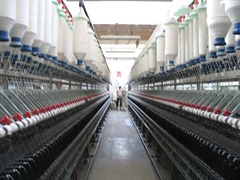
Pakistan will be able to enjoy a tariff advantage for selected textile products ranging from 1.8 percent to 6.2 percent in different years starting from 2010 to 2022 as compared with its competitors.
Pakistan’s important textile exports may receive tariff advantages in European Commission and United States on account of being disproportionately affected by the preference erosion decision.
According to a brief of the Ministry of Commerce, the Uruguay Round imposed no reduction commitments for industrial tariffs for Pakistan. However, Pakistan bound its 36 percent tariff lines in the WTO forum. Almost all of the bindings were ceiling bindings like there was considerable difference between the applied rates and bound rates. The bound tariff was sometimes as high as the applied rate.
Pakistan’s import regime had been considerably liberalised since 1998 through reduction in tariffs, rationalisation and removal of import quotas, import surcharges and regulatory duties. The simple average tariff came down from 47 percent in 2007-08 to 20 percent in 2001-02 and to an average 14 percent in 2008-09. Pakistan’s coverage of tariff bindings rose considerably from October 26, 2005. Some 97.2 percent of tariff lines are now fully bound and a further 0.8 percent, including mainly certain paper and paper products, are partially bound.
Pakistan unilaterally bound its remaining industrial tariffs in anticipation of the conclusion of Doha Round in near future. Under Doha Round modalities, tariff reduction of the unbound tariff lines will commence from applied rates of 2001 plus 25 percentage points whereas Pakistan bound its unbound lines at applied rate plus 50 percentage points.
As far as other import related measures are concerned, Pakistan did not maintain import licensing regime neither did it impose quantitative restrictions, which were required to be eliminated under Uruguay Round.
Under Doha Round, modalities have not been finalised. However, on the basis of what has been agreed so far, the implications for Pakistan will be beneficial.
Since developed countries traditionally have no water between applied and bound rates, their applied tariff will be reduced. In the case United States, both applied and bound average tariff will be reduced from 3.2 percent to 2 percent and tariff on dutiable lines shall be reduced from 9 percent to 3 percent.
Under the Doha Round additional disciplines on non-tariff barriers will be adopted. Pakistan along with other developing countries may get resources at a low cost dispute resolution mechanism for problem related to non-tariff barriers. As a result of the Doha Round formula cuts in bound rates, the water between applied and bound rates will be reduced or eliminated. Pakistan’s bound rate will be reduced from 55 percent to 14 percent, if no flexibility is availed. Pakistan will be able to protect its sensitive sectors (through half formula cuts) using the flexibility in the current modalities text of 775 lines.
As a result of little or no difference between bound and applied rates, Pakistan may have to increasingly resort to trade remedy measures such as imposition of anti-dumping, safeguards and countervailing duties to control on surge in its imports.
Pakistan will be able to enjoy a tariff advantage for selected textile products ranging from 1.8 percent to 6.2 percent in different years starting from 2010 to 2022 as compared with its competitors.
Pakistan’s important textile exports may receive tariff advantages in European Commission and United States on account of being disproportionately affected by the preference erosion decision.
According to a brief of the Ministry of Commerce, the Uruguay Round imposed no reduction commitments for industrial tariffs for Pakistan. However, Pakistan bound its 36 percent tariff lines in the WTO forum. Almost all of the bindings were ceiling bindings like there was considerable difference between the applied rates and bound rates. The bound tariff was sometimes as high as the applied rate.
Pakistan’s import regime had been considerably liberalised since 1998 through reduction in tariffs, rationalisation and removal of import quotas, import surcharges and regulatory duties. The simple average tariff came down from 47 percent in 2007-08 to 20 percent in 2001-02 and to an average 14 percent in 2008-09. Pakistan’s coverage of tariff bindings rose considerably from October 26, 2005. Some 97.2 percent of tariff lines are now fully bound and a further 0.8 percent, including mainly certain paper and paper products, are partially bound.
Pakistan unilaterally bound its remaining industrial tariffs in anticipation of the conclusion of Doha Round in near future. Under Doha Round modalities, tariff reduction of the unbound tariff lines will commence from applied rates of 2001 plus 25 percentage points whereas Pakistan bound its unbound lines at applied rate plus 50 percentage points.
As far as other import related measures are concerned, Pakistan did not maintain import licensing regime neither did it impose quantitative restrictions, which were required to be eliminated under Uruguay Round.
Under Doha Round, modalities have not been finalised. However, on the basis of what has been agreed so far, the implications for Pakistan will be beneficial.
Since developed countries traditionally have no water between applied and bound rates, their applied tariff will be reduced. In the case United States, both applied and bound average tariff will be reduced from 3.2 percent to 2 percent and tariff on dutiable lines shall be reduced from 9 percent to 3 percent.
Under the Doha Round additional disciplines on non-tariff barriers will be adopted. Pakistan along with other developing countries may get resources at a low cost dispute resolution mechanism for problem related to non-tariff barriers. As a result of the Doha Round formula cuts in bound rates, the water between applied and bound rates will be reduced or eliminated. Pakistan’s bound rate will be reduced from 55 percent to 14 percent, if no flexibility is availed. Pakistan will be able to protect its sensitive sectors (through half formula cuts) using the flexibility in the current modalities text of 775 lines.
As a result of little or no difference between bound and applied rates, Pakistan may have to increasingly resort to trade remedy measures such as imposition of anti-dumping, safeguards and countervailing duties to control on surge in its imports.
Staff Report
Sunday, January 24, 2010
Source: www.dailytimes.com.pk
Sunday, January 24, 2010
Source: www.dailytimes.com.pk
Các tin khác
- Following the imposition of the highest tariff of 37.13%, the Ministry of Industry and Trade is reviewing galvanized steel from China (19/06/2026)
- Official tariffs have been imposed on colorless float glass imported from Indonesia and Malaysia (19/06/2026)
- India seeks to continue anti-dumping duties on Bangladesh’s jute products (19/06/2026)
- Turkey Initiates Anti-Dumping Investigation into Polyester Cord Fabric from Viet Nam (19/06/2026)
- Chinese dumping in Brazil affected the entire garlic supply chain (19/06/2026)