Home
Home
 About Us



Industry in a spot over Bangladeshi jute products
28/12/2009 12:00
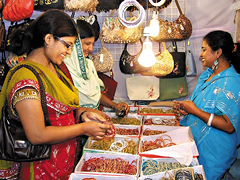
KOLKATA: The Indian jute manufacturers are facing double trouble. On one hand subsidized Bangladeshi jute products are flooding the domestic market, and on the other they are being deprived of the raw jute contracted for buying from Bangladesh.
So the jute industry has made a strong plea to ban duty-free imports of Bangladeshi jute goods or examine if an anti-dumping duty can be imposed on such subsidized goods. The authorities may also consider withdrawing duty concession given to Bangladeshi exporters.
In this context, it may be mentioned that the Union government took a number of promotional measures to encourage open trade between Bangladesh and India in January last year. As jute is an important export item for the neighbouring country, the Centre had withdrawn duty on import of Bangladeshi raw jute and jute goods.
But the measures have adversely affected the domestic jute industry during the past 12 months.
The country is being constantly flooded with duty-free imports of jute goods, according to Indian jute industry sources.
Meanwhile, Bangladesh has recently taken drastic measures — these include special allocation to restart state-owned mills, capacity expansion in existing operational mills and 10% cash subsidy on exports —to boost the ailing industry.
As a result, imports of subsidized jute products from Bangladesh has further increased. The imports mostly comprise jute bags, which are largely used for packing food grain and sugar. But according to the Jute Packaging Materials Act, 1987 (JPMA), Indian jute bags should be strictly used for such packaging. But the current situation is a complete violation of the jute reservation order.
Also, Bangladesh has recently banned exports of all varieties of raw jute. As a result, all outstanding contracts have been cancelled by Bangladeshi jute suppliers. It has particularly helped those who did not want to supply against their outstanding contracts as the prices of raw jute have increased.
Bangladesh’s move only puts the Indian importers in a disadvantageous position. The domestic jute industry strongly feels that any contracts entered into or L/Cs opened before this ban on all varieties of raw jute should be exempted from this ban.
So the jute industry has made a strong plea to ban duty-free imports of Bangladeshi jute goods or examine if an anti-dumping duty can be imposed on such subsidized goods. The authorities may also consider withdrawing duty concession given to Bangladeshi exporters.
In this context, it may be mentioned that the Union government took a number of promotional measures to encourage open trade between Bangladesh and India in January last year. As jute is an important export item for the neighbouring country, the Centre had withdrawn duty on import of Bangladeshi raw jute and jute goods.
But the measures have adversely affected the domestic jute industry during the past 12 months.
The country is being constantly flooded with duty-free imports of jute goods, according to Indian jute industry sources.
Meanwhile, Bangladesh has recently taken drastic measures — these include special allocation to restart state-owned mills, capacity expansion in existing operational mills and 10% cash subsidy on exports —to boost the ailing industry.
As a result, imports of subsidized jute products from Bangladesh has further increased. The imports mostly comprise jute bags, which are largely used for packing food grain and sugar. But according to the Jute Packaging Materials Act, 1987 (JPMA), Indian jute bags should be strictly used for such packaging. But the current situation is a complete violation of the jute reservation order.
Also, Bangladesh has recently banned exports of all varieties of raw jute. As a result, all outstanding contracts have been cancelled by Bangladeshi jute suppliers. It has particularly helped those who did not want to supply against their outstanding contracts as the prices of raw jute have increased.
Bangladesh’s move only puts the Indian importers in a disadvantageous position. The domestic jute industry strongly feels that any contracts entered into or L/Cs opened before this ban on all varieties of raw jute should be exempted from this ban.
24 Dec 2009, 0157 hrs IST, Arup Pal, ET Bureau
Source: economictimes.indiatimes.com
Source: economictimes.indiatimes.com
Các tin khác
- Following the imposition of the highest tariff of 37.13%, the Ministry of Industry and Trade is reviewing galvanized steel from China (19/06/2026)
- Official tariffs have been imposed on colorless float glass imported from Indonesia and Malaysia (19/06/2026)
- India seeks to continue anti-dumping duties on Bangladesh’s jute products (19/06/2026)
- Turkey Initiates Anti-Dumping Investigation into Polyester Cord Fabric from Viet Nam (19/06/2026)
- Chinese dumping in Brazil affected the entire garlic supply chain (19/06/2026)