Home
Home
 About Us



Indiana lawmaker speaks on steel dumping
07/12/2009 12:00
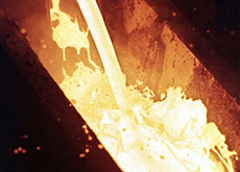
U.S. Rep. Pete Visclosky, D-Ind., was among many legislators and business executives who spoke at a Tuesday public hearing in Washington on whether certain types of steel pipe imported from China should face further trade restrictions.
Visclosky said in prepared remarks that the surge of products sent to the United States has led to 2,000 Americans losing their jobs.
He admitted while companies such as U.S. Steel don't manufacture the product in Northwest Indiana, if the company doesn't do well, then every facility it has in the country will feel the effects. The steel pipe -- or oil country tubular goods -- is used in oil and gas exploration or transmission and is produced in 12 states including Ohio, Texas and Alabama.
"You are in a position to protect American jobs by ensuring that our trade laws are not violated by dumped Chinese steel," Visclosky said. "You also have the ability to create the expectation that when our trade laws are broken there will be consequences.
"As I have said before in this room, if we are to maintain a manufacturing base in the United States, we must have zero tolerance for unfair and illegal imports."
The hearing was a step in the U.S. International Trade Commission's process to determine if domestic businesses have been injured by imports of the product. A final decision from the ITC is expected in January. In a May 22 vote, the commission found in its preliminary investigation there was a reasonable indication of a threat of material injury to businesses from the subsidized goods.
The Commerce Department said in its countervailing duty investigation Chinese producers and exporters of steel pipe received subsidies to artificially lower the cost of the goods sent to the U.S. As a result, the department set duties on the Chinese companies.
Pittsburgh-based United States Steel Corp., Downers Grove, Ill.-based TMK Ipsco, the United Steelworkers union, and other companies filed a petition April 8 to initiate an antidumping and countervailing duty investigation claiming products from China have flooded the market. The petitioners said the result is crowding out domestic competition by unfairly subsidized products.
Visclosky said in prepared remarks that the surge of products sent to the United States has led to 2,000 Americans losing their jobs.
He admitted while companies such as U.S. Steel don't manufacture the product in Northwest Indiana, if the company doesn't do well, then every facility it has in the country will feel the effects. The steel pipe -- or oil country tubular goods -- is used in oil and gas exploration or transmission and is produced in 12 states including Ohio, Texas and Alabama.
"You are in a position to protect American jobs by ensuring that our trade laws are not violated by dumped Chinese steel," Visclosky said. "You also have the ability to create the expectation that when our trade laws are broken there will be consequences.
"As I have said before in this room, if we are to maintain a manufacturing base in the United States, we must have zero tolerance for unfair and illegal imports."
The hearing was a step in the U.S. International Trade Commission's process to determine if domestic businesses have been injured by imports of the product. A final decision from the ITC is expected in January. In a May 22 vote, the commission found in its preliminary investigation there was a reasonable indication of a threat of material injury to businesses from the subsidized goods.
The Commerce Department said in its countervailing duty investigation Chinese producers and exporters of steel pipe received subsidies to artificially lower the cost of the goods sent to the U.S. As a result, the department set duties on the Chinese companies.
Pittsburgh-based United States Steel Corp., Downers Grove, Ill.-based TMK Ipsco, the United Steelworkers union, and other companies filed a petition April 8 to initiate an antidumping and countervailing duty investigation claiming products from China have flooded the market. The petitioners said the result is crowding out domestic competition by unfairly subsidized products.
By Bowdeya Tweh - bowdeya.tweh@nwi.com, (219) 933-3316 | Posted: Wednesday, December 2, 2009 12:00 am
Source: nwitimes.com
Source: nwitimes.com
Các tin khác
- Following the imposition of the highest tariff of 37.13%, the Ministry of Industry and Trade is reviewing galvanized steel from China (19/06/2026)
- Official tariffs have been imposed on colorless float glass imported from Indonesia and Malaysia (19/06/2026)
- India seeks to continue anti-dumping duties on Bangladesh’s jute products (19/06/2026)
- Turkey Initiates Anti-Dumping Investigation into Polyester Cord Fabric from Viet Nam (19/06/2026)
- Chinese dumping in Brazil affected the entire garlic supply chain (19/06/2026)