Home
Home
 About Us



India: Safeguard duty on rubber chemical notified
20/06/2011 12:00
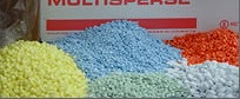
The Revenue Department has notified the imposition of safeguard duty on imported rubber chemical widely used in treating natural rubber, following a petition filed by NOCIL Limited which account for more than 50 per cent of production.
In a notification issued, the Office of the Director General of Safeguards -DG(S)- said the product is a rubber chemical PX-13 or 6PPD which is extensively used in treating natural rubber, synthetic rubber (SBR, Butadiene rubber, nitrilie rubber and carboxylated rubber and other synthetic rubber-based compound) used for the manufacture of various rubber products.
In its petition, the domestic industry forwarded the import and injury related data from 2000-01 to 2010-11(December 2010) with the argument that the product has a dumping history since 2003.
The Director General (Safeguards) Mr I.D. Majumder said that the petitioner claimed that there has been “a sudden, sharp and significant increase” during the injury period despite the anti-dumping duty on the same product being in force.
Sluggish Global Market
Stating that the global market for tyre continues to be sluggish after global recession but the Indian market is quite strong, the Office of the DG(S) said the information furnished by the tyre industry and its association is also clearly indicative of the increase in demand/consumption.
Consequently, the Indian market is increasingly becoming “lucrative” to the foreign producers, it said adding that as per the petitioner’s statement there is decline in exports of tyres in Europe and EU markets and resultant decline in PX-13 consumption in third countries exporting to Europe.
This has led to pile-up of inventories with the producers and the only option for them was to increase their export into markets less hit by the recession. India being one such market was targeted and the imports increased in huge quantities, it held.
Domestic Industry
The notification mentioned that the domestic industry was cautious of the situation that it was not entitled to dual remedy for the same injury as there is already an anti-dumping duty in force on the subject goods.
Hence on its own, the domestic industry clarified to the DG(S) that it is looking for safeguard duty only to the extent of “unaddressed injury as a result of imposition of anti-dumping duty”.
It even pointed out that in the recent case of caustic soda, the DG(S) has recommended for levy of safeguard duty in addition to the anti-dumping duty on it being in force.
The government accepted the recommendation and imposed safeguard duty along with anti-dumping duty, it added.
The DG(S) stated that the purpose of definitive safeguard measure is to provide the domestic producers with a limited period of time in which to restructure so as to more effectively compete with the imports.
Hence, it called for details of the restructuring plan and the claim of the domestic industry in this regard was well backed by Chartered Engineer Certificate on expansion and expenditure for new plant and practising Chartered Accountant Certificate on the cost incurred and the claim of cost reduction. The DG(S) noted that the adjustment plan of the company is ‘reasonable and feasible’.
On the public interest, the DG(S) noted that the applicants have submitted that the share of PX-13 in the tyre industry ranges between 0.71 per cent to 1.11 per cent and on non-tyre segment is 0.5 per cent and the fact was not disputed by the All India Tyre Manufacturers’ Association.
The DG(S) also examined the percentage of imports from developing countries which were all individually less than 3 per cent of total imports in India, except China which constitute 18.14 per cent in 2009-10 and 15.09 per cent in 2010-11.
Hence the import of product originating from developing countries except China would not attract Safeguard duty, while all such imports from advanced countries would attract the safeguard duty, it held.
The safeguard duty proposed is 30 per cent minus anti-dumping duty payable in the first year and 25 per cent minus anti-dumping duty payable in the second year on ad-valorem basis for a period of two years as the minimum requirement to protect the domestic industry from serious injury, it held.
Source: thehindubusinessline.com
Các tin khác
- Following the imposition of the highest tariff of 37.13%, the Ministry of Industry and Trade is reviewing galvanized steel from China (19/06/2026)
- Official tariffs have been imposed on colorless float glass imported from Indonesia and Malaysia (19/06/2026)
- India seeks to continue anti-dumping duties on Bangladesh’s jute products (19/06/2026)
- Turkey Initiates Anti-Dumping Investigation into Polyester Cord Fabric from Viet Nam (19/06/2026)
- Chinese dumping in Brazil affected the entire garlic supply chain (19/06/2026)