Home
Home
 About Us



China, Vietnam furniture makers compete for Vietnam's domestic market
31/08/2010 12:00
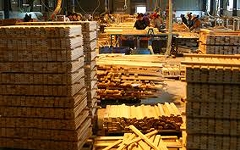
The world of global trade is a dynamic place. On one hand, furniture importers in the United States regularly shift sourcing among countries, while foreign exporters seek entry to various international markets. This is obviously how China and Vietnam came to be such important players in the U.S. market over the past decade.
These days, Vietnam is an even more important source than China for wood bedroom furniture, as U.S. importers shifted their sourcing there to avoid paying antidumping duties on Chinese-made bedrooms. But now China is getting some of the business back in another way: by shipping goods to the Vietnamese domestic market.
The irony, according to recent articles in Vietnam-based publications, is that Vietnam has the raw materials to produce domestically. China buys much of these raw materials from Vietnam, and ships it back in competitively priced finished goods.
Many Vietnam producers reportedly have ignored the domestic market because they've focused on exports. Now, the publications report, some producers want to reinstate tariffs on exported timber and raise tariffs on imported furniture from places like China to make Vietnam made goods more price competitive to the domestic market.
Such trade debates are nothing new. Still, they show how domestic producers seek to regain some cost advantage.
Some U.S. producers successfully had duties imposed on wood bedroom furniture in 2004 to help level the playing field of what they considered to be unfairly priced imports. Unlike a tariff, this is a punitive action aimed at addressing illegal activity in the marketplace. Many believe the U.S. duties haven't been high enough to protect the remaining domestic industry from further job losses.
But there's something notable in the China/Vietnam dynamic: Foreign markets can sometimes be profitable. U.S. producers certainly have lost jobs to China. But furniture exports from North Carolina to China are way up, according to the N.C. Department of Commerce. Is there a lesson to be learned here? What do you think?
These days, Vietnam is an even more important source than China for wood bedroom furniture, as U.S. importers shifted their sourcing there to avoid paying antidumping duties on Chinese-made bedrooms. But now China is getting some of the business back in another way: by shipping goods to the Vietnamese domestic market.
The irony, according to recent articles in Vietnam-based publications, is that Vietnam has the raw materials to produce domestically. China buys much of these raw materials from Vietnam, and ships it back in competitively priced finished goods.
Many Vietnam producers reportedly have ignored the domestic market because they've focused on exports. Now, the publications report, some producers want to reinstate tariffs on exported timber and raise tariffs on imported furniture from places like China to make Vietnam made goods more price competitive to the domestic market.
Such trade debates are nothing new. Still, they show how domestic producers seek to regain some cost advantage.
Some U.S. producers successfully had duties imposed on wood bedroom furniture in 2004 to help level the playing field of what they considered to be unfairly priced imports. Unlike a tariff, this is a punitive action aimed at addressing illegal activity in the marketplace. Many believe the U.S. duties haven't been high enough to protect the remaining domestic industry from further job losses.
But there's something notable in the China/Vietnam dynamic: Foreign markets can sometimes be profitable. U.S. producers certainly have lost jobs to China. But furniture exports from North Carolina to China are way up, according to the N.C. Department of Commerce. Is there a lesson to be learned here? What do you think?
August 30, 2010
Source: www.furnituretoday.com
Source: www.furnituretoday.com
Các tin khác
- Following the imposition of the highest tariff of 37.13%, the Ministry of Industry and Trade is reviewing galvanized steel from China (19/06/2026)
- Official tariffs have been imposed on colorless float glass imported from Indonesia and Malaysia (19/06/2026)
- India seeks to continue anti-dumping duties on Bangladesh’s jute products (19/06/2026)
- Turkey Initiates Anti-Dumping Investigation into Polyester Cord Fabric from Viet Nam (19/06/2026)
- Chinese dumping in Brazil affected the entire garlic supply chain (19/06/2026)