Home
Home
 About Us



China: Long-awaited complaint against US filed with MOFCOM
24/07/2012 12:00
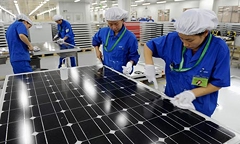
Concerns of Chinese retaliation against US countervailing and anti-dumping duties have manifested themselves in a complaint filed to the Chinese Ministry of Commerce. MOFCOM has today released a statement regarding an application requesting an anti-dumping investigation into US and South Korean exports to China. On behalf of the Chinese solar industry, Jiangsu Silicon Technology Development, LDK Solar, Luoyan Sino-Silicon high-tech and New Energy, filed the complaint on July 2. Interested parties have 20 days to respond to the complaint.
The applicants are required to provide preliminary evidence of the effects of importing polysilicon to the domestic industry. Evidence will cover imports from 2008 – 2011 and January to April 2012.
The largest supplier of polysilicon, GCL Poly Energy Holdings and Daqo New Energy were reported, in June, to have raised these concerns with MOFCOM, demanding it bear down on US manufacturers in retaliation for similar actions taken by the US Department of Commerce.
According to Reuters, Washington has been reported to have stated that “China's attacks are largely tit-for-tat retaliations for valid US complaints.”
Unsurprisingly, China has suggested the White House is simply "China-bashing" in an election year.
However, retaliatory measures by China were thought to have already been taken when the country petitioned the World Trade Organization last month. It called the WTO to penalize six renewable energy initiatives in the US that it believes is flouting WTO rules on subsidies and countervailing measures in addition to the 1994 GATT Agreement.
Speaking to PV-Tech, Robert Hansen, president and CEO, Dow Corning and the majority shareholder of Hemlock Semiconductor Group, said, “I am disappointed that the United States and China have yet to negotiate a sustainable, mutually beneficial settlement to the global trade issues that have arisen in the solar industry.”
Hansen continued, “This review is part of a broader trade conflict extending far beyond the polysilicon and solar industries, as an escalating number of trade disputes have been initiated throughout the globe in the last 12 months. This issue is serious and could impact Hemlock Semiconductor’s ability to sell material to China – its largest market – if the Chinese government assesses duties against US manufactured polysilicon sold into China.
“This case proves that no country or industry wins when trade disputes escalate. In China, these actions threaten the Chinese solar industry’s access to the critical technical collaboration and material supply companies like Hemlock Semiconductor currently provide Chinese solar cell and module producers. This could lead to higher costs and potentially less globally competitive solar products from China. In the United States, more than US$1 billion of US exports and potentially thousands of US jobs across the solar value chain are at risk –as is the steady growth of the US solar industry.”
In conclusion, Hanson told us, “Dow Corning and Hemlock Semiconductor will continue to work closely with government officials from the US and China to express the need for trade policies that acknowledge the dynamics and opportunities of a new and emerging global industry. Ultimately, I am optimistic that a reasonable and mutually acceptable resolution is within reach which will enable and foster growth and cooperation.”
Speaking to Reuters, research firm JI Asia analyst Felix Fok said that downstream customers, such as wafer manufacturers, would also struggle if China passed on the import tariffs against polysilicon imports. Around 50 Chinese PV manufacturers companies have already taken a bashing, as confirmed by John Lefebvre, president of Suntech Power America, during Intersolar North America in San Francisco.
"China is doing this because some of its companies are basically on their knees," Fok said, referring to more than a year of losses suffered by the sector.
Since the start of this debacle, the Coalition for Affordable Solar Energy has urged both the United States and China to avoid duties, saying tariffs from either end cost jobs and make solar energy less competitive against fossil fuels.
Furthermore, CASE's president Jigar Shah said in an emailed statement that, “There's no place in the global solar industry for companies who utilize unilateral trade remedies instead of competitive business strategies. Tariffs at any point in the global solar value chain are counterproductive and make solar energy less competitive against fossil fuels.
"Looking at the preliminary tariffs set in the US it’s clear that the free flow of solar goods is already disrupted, prices are increasing, jobs are being eliminated and businesses are adversely impacted at every level of the global solar industry. We urge all countries to avoid unilateral actions that impede trade and resolve conflicts in a bilateral or multilateral context. Specifically, we urge the US and China to rise above SolarWorld’s selfish action and engage in productive dialogue to prevent this destructive trade war. Lowering, not artificially raising, the cost of solar should be a global goal.”
The applicants are required to provide preliminary evidence of the effects of importing polysilicon to the domestic industry. Evidence will cover imports from 2008 – 2011 and January to April 2012.
The largest supplier of polysilicon, GCL Poly Energy Holdings and Daqo New Energy were reported, in June, to have raised these concerns with MOFCOM, demanding it bear down on US manufacturers in retaliation for similar actions taken by the US Department of Commerce.
According to Reuters, Washington has been reported to have stated that “China's attacks are largely tit-for-tat retaliations for valid US complaints.”
Unsurprisingly, China has suggested the White House is simply "China-bashing" in an election year.
However, retaliatory measures by China were thought to have already been taken when the country petitioned the World Trade Organization last month. It called the WTO to penalize six renewable energy initiatives in the US that it believes is flouting WTO rules on subsidies and countervailing measures in addition to the 1994 GATT Agreement.
Speaking to PV-Tech, Robert Hansen, president and CEO, Dow Corning and the majority shareholder of Hemlock Semiconductor Group, said, “I am disappointed that the United States and China have yet to negotiate a sustainable, mutually beneficial settlement to the global trade issues that have arisen in the solar industry.”
Hansen continued, “This review is part of a broader trade conflict extending far beyond the polysilicon and solar industries, as an escalating number of trade disputes have been initiated throughout the globe in the last 12 months. This issue is serious and could impact Hemlock Semiconductor’s ability to sell material to China – its largest market – if the Chinese government assesses duties against US manufactured polysilicon sold into China.
“This case proves that no country or industry wins when trade disputes escalate. In China, these actions threaten the Chinese solar industry’s access to the critical technical collaboration and material supply companies like Hemlock Semiconductor currently provide Chinese solar cell and module producers. This could lead to higher costs and potentially less globally competitive solar products from China. In the United States, more than US$1 billion of US exports and potentially thousands of US jobs across the solar value chain are at risk –as is the steady growth of the US solar industry.”
In conclusion, Hanson told us, “Dow Corning and Hemlock Semiconductor will continue to work closely with government officials from the US and China to express the need for trade policies that acknowledge the dynamics and opportunities of a new and emerging global industry. Ultimately, I am optimistic that a reasonable and mutually acceptable resolution is within reach which will enable and foster growth and cooperation.”
Speaking to Reuters, research firm JI Asia analyst Felix Fok said that downstream customers, such as wafer manufacturers, would also struggle if China passed on the import tariffs against polysilicon imports. Around 50 Chinese PV manufacturers companies have already taken a bashing, as confirmed by John Lefebvre, president of Suntech Power America, during Intersolar North America in San Francisco.
"China is doing this because some of its companies are basically on their knees," Fok said, referring to more than a year of losses suffered by the sector.
Since the start of this debacle, the Coalition for Affordable Solar Energy has urged both the United States and China to avoid duties, saying tariffs from either end cost jobs and make solar energy less competitive against fossil fuels.
Furthermore, CASE's president Jigar Shah said in an emailed statement that, “There's no place in the global solar industry for companies who utilize unilateral trade remedies instead of competitive business strategies. Tariffs at any point in the global solar value chain are counterproductive and make solar energy less competitive against fossil fuels.
"Looking at the preliminary tariffs set in the US it’s clear that the free flow of solar goods is already disrupted, prices are increasing, jobs are being eliminated and businesses are adversely impacted at every level of the global solar industry. We urge all countries to avoid unilateral actions that impede trade and resolve conflicts in a bilateral or multilateral context. Specifically, we urge the US and China to rise above SolarWorld’s selfish action and engage in productive dialogue to prevent this destructive trade war. Lowering, not artificially raising, the cost of solar should be a global goal.”
20 July 2012
By Nilima Choudhury
Source: pv-tech.org
By Nilima Choudhury
Source: pv-tech.org
Các tin khác
- Following the imposition of the highest tariff of 37.13%, the Ministry of Industry and Trade is reviewing galvanized steel from China (19/06/2026)
- Official tariffs have been imposed on colorless float glass imported from Indonesia and Malaysia (19/06/2026)
- India seeks to continue anti-dumping duties on Bangladesh’s jute products (19/06/2026)
- Turkey Initiates Anti-Dumping Investigation into Polyester Cord Fabric from Viet Nam (19/06/2026)
- Chinese dumping in Brazil affected the entire garlic supply chain (19/06/2026)