Home
Home
 About Us



China Beats Brazil in Backyard as Summit Seeks Unity
20/04/2010 12:00
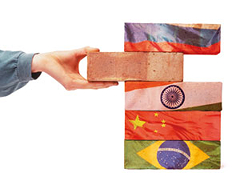
April 15 (Bloomberg) -- When Brazilian President Luiz Inacio Lula da Silva hosts his Chinese counterpart today, he will welcome a leader whose economy is growing faster than his own -- and whose exporters are outstripping Brazil in its own backyard.
Chinese President Hu Jintao, 67, arrived last night to Brasilia to attend the second heads-of-state summit of the largest emerging economies, or so-called BRIC nations, along with the leaders of Russia and India.
China boosted exports to Argentina, Uruguay and Paraguay, members of the Brazil-led Mercosur trade bloc, by 7.3 percent to $4.8 billion in the first eight months of 2009 from two years earlier, while Brazilian sales to its neighbors fell 18 percent to $9.6 billion during the same period. Chinese-made products such as tires and stereo speakers are the target of 26 Brazilian anti-dumping measures, more than any other country and nearly half of all 68 in place, according to Brazil’s Trade Ministry.
“We’re sleeping with the enemy,” said Christian Lohbauer, a trade specialist and head of Sao Paulo-based Orange Juice Exporters Association. “How can you call it a strategic alliance if we can’t export value added products?”
China’s economic growth accelerated to 11.9 percent in the first quarter from a year earlier, the fastest pace in almost three years, the country’s statistic bureau said today. Its global hunt for raw materials and markets to sell manufacturing goods has allowed it to make inroads across the region.
Chinese Exports
Chinese exports to Latin America and the Caribbean jumped 26 percent since 2005, more than with any other region and double the average pace of growth with the rest of the world, according to an April 13 report by the United Nations.
That’s made it harder for Lula, 64, to reach his goal of transforming Brazil into a global supplier of airplanes, software and oil platforms -- beginning in Latin America, where its $1.6 trillion economy is the biggest. Since 2003, foreign investment by Brazilian companies has surged to over $20 billion a year from $2.5 billion, the bulk in the region, according to the UN.
“China is Brazil’s main competitor and the biggest threat to its industrial expansion strategy” because the two produce similar goods, said Mauricio Mesquita Moreira, the Inter- American Development Bank’s top trade economist.
Qinghai Earthquake
The state visit to Brazil is Hu’s second to the country. He is cutting short his trip to return to China today after an earthquake struck the western province of Qinghai, China’s foreign affairs ministry said. Hu had planned to visit Chile and Venezuela after leaving Brazil.
“We have problems to solve” including exchange rate distortions,” Welber Barral, Brazil’s trade secretary, said in an interview. “The increase in trade and investments may help us overcome these hurdles.”
China’s policy of pegging the yuan to the dollar, lower wages than those paid in Brazil and subsidies to manufacturers have allowed the country to gain market share in the region, said Moreira.
China’s Commerce Ministry didn’t immediately respond to a phone call and fax requesting comment.
While China surpassed the U.S. as the biggest buyer of Brazil’s exports last year, after the global recession reduced sales to the U.S. by 43 percent to $15.6 billion, most of its purchases are raw materials. Soy and iron ore accounted for 66 percent of $20 billion in Brazilian sales to China last year.
17th Century
“This is the same pattern of trade Brazil had in the 17th and 18th century,” Moreira said in a phone interview from Washington.
Exports to Venezuela from China surpassed those from Brazil in 2008, according to the state-run, Caracas-based export bank known as Bancoex. While Brazilian sales to Mexico, Latin America’s second biggest economy, increased three-fold since 1998, those from China surged 20 times to $32.5 billion last year, according to Mexico’s Economy Ministry.
China’s push into Latin America also is helping Brazil as investments in industries from energy to metals production creates jobs and improves infrastructure.
Wuhan Iron & Steel Group, China’s third-largest steelmaker, paid $400 million in November for almost 22 percent of Rio de Janeiro-based MMX Mineracao e Metalicos SA, an iron-ore company belonging to billionaire Eike Batista. The companies said they may jointly build a $5-billion steel mill at his LLX Logistica SA’s port project, Porto Acu, in northern Rio de Janeiro state.
In the first two months of the year, China’s direct investment in Brazil surged to $354 million, more than four times the $83 million it invested all of last year.
China’s Backyard
“The world is China’s backyard and Brazilians shouldn’t be so hyped up about it,” Jim O’Neill, London-based chief global economist for Goldman Sachs Group Inc, said in an interview. “There’s a natural symbiosis in trade between the two countries despite Brazil’s legitimate desire to be a manufacturing powerhouse.”
O’Neill coined the term BRIC in 2001 to describe the four nations that he estimates will collectively equal the U.S. in economic size by 2020.
At their first summit in the Ural Mountains city of Yekaterinburg, Russia last June, the BRIC heads of state called for emerging economies to have a greater voice in international financial institutions and for a more diversified global monetary system.
That agenda will be joined in Brasilia by a discussion of ways to deepen trade in local currencies.
Obama’s Request
Hu told President Barack Obama in Washington April 13 that China won’t bow to pressure after the U.S. leader urged the Asian country to adopt a “more market-oriented exchange rate.”
Twelve-month non-deliverable yuan forwards rose 0.02 percent to 6.6178 per dollar yesterday, according to Bloomberg data, reflecting bets the currency will strengthen 3 percent from the current peg of about 6.83 against the dollar.
Brazil’s real has gained 34 percent against the dollar since China last revalued its currency by 2.1 percent in July 2005, more than any major currency tracked by Bloomberg.
O’Neill said Russia’s Micex Index, which has jumped 11.4 percent this year, is poised to be the best-performing among the BRIC equity markets this year because of stronger oil prices. The Shanghai Composite Index lost 3.5 percent this year while Indian stocks have gained 2 percent. Brazilian equities are up 3.6 percent.
Brazil’s Central Bank President Henrique Meirelles said in an interview that Brazil faces fewer problems than other countries from an undervalued Chinese currency.
“Brazilian companies are strong,” Meirelles, 64, said when asked whether he expects China step up acquisitions in the country. The Chinese “are looking at some opportunities, but I don’t see that as a large scale move or something extremely relevant.”
--With assistance by Iuri Dantas and Arnaldo Galvao in Brasilia, Jens Gould in Mexico City, Daniel Cancel in Caracas, Michael Forsythe in Beijing, Bill Faries in Buenos Aires and Lyubov Pronina in Moscow. Editors: Laura Zelenko, Ken Fireman
To contact the reporters on this story: Andre Soliani in Brasilia at asoliani@bloomberg.net; Joshua Goodman in Rio de Janeiro at jgoodman19@bloomberg.net
Chinese President Hu Jintao, 67, arrived last night to Brasilia to attend the second heads-of-state summit of the largest emerging economies, or so-called BRIC nations, along with the leaders of Russia and India.
China boosted exports to Argentina, Uruguay and Paraguay, members of the Brazil-led Mercosur trade bloc, by 7.3 percent to $4.8 billion in the first eight months of 2009 from two years earlier, while Brazilian sales to its neighbors fell 18 percent to $9.6 billion during the same period. Chinese-made products such as tires and stereo speakers are the target of 26 Brazilian anti-dumping measures, more than any other country and nearly half of all 68 in place, according to Brazil’s Trade Ministry.
“We’re sleeping with the enemy,” said Christian Lohbauer, a trade specialist and head of Sao Paulo-based Orange Juice Exporters Association. “How can you call it a strategic alliance if we can’t export value added products?”
China’s economic growth accelerated to 11.9 percent in the first quarter from a year earlier, the fastest pace in almost three years, the country’s statistic bureau said today. Its global hunt for raw materials and markets to sell manufacturing goods has allowed it to make inroads across the region.
Chinese Exports
Chinese exports to Latin America and the Caribbean jumped 26 percent since 2005, more than with any other region and double the average pace of growth with the rest of the world, according to an April 13 report by the United Nations.
That’s made it harder for Lula, 64, to reach his goal of transforming Brazil into a global supplier of airplanes, software and oil platforms -- beginning in Latin America, where its $1.6 trillion economy is the biggest. Since 2003, foreign investment by Brazilian companies has surged to over $20 billion a year from $2.5 billion, the bulk in the region, according to the UN.
“China is Brazil’s main competitor and the biggest threat to its industrial expansion strategy” because the two produce similar goods, said Mauricio Mesquita Moreira, the Inter- American Development Bank’s top trade economist.
Qinghai Earthquake
The state visit to Brazil is Hu’s second to the country. He is cutting short his trip to return to China today after an earthquake struck the western province of Qinghai, China’s foreign affairs ministry said. Hu had planned to visit Chile and Venezuela after leaving Brazil.
“We have problems to solve” including exchange rate distortions,” Welber Barral, Brazil’s trade secretary, said in an interview. “The increase in trade and investments may help us overcome these hurdles.”
China’s policy of pegging the yuan to the dollar, lower wages than those paid in Brazil and subsidies to manufacturers have allowed the country to gain market share in the region, said Moreira.
China’s Commerce Ministry didn’t immediately respond to a phone call and fax requesting comment.
While China surpassed the U.S. as the biggest buyer of Brazil’s exports last year, after the global recession reduced sales to the U.S. by 43 percent to $15.6 billion, most of its purchases are raw materials. Soy and iron ore accounted for 66 percent of $20 billion in Brazilian sales to China last year.
17th Century
“This is the same pattern of trade Brazil had in the 17th and 18th century,” Moreira said in a phone interview from Washington.
Exports to Venezuela from China surpassed those from Brazil in 2008, according to the state-run, Caracas-based export bank known as Bancoex. While Brazilian sales to Mexico, Latin America’s second biggest economy, increased three-fold since 1998, those from China surged 20 times to $32.5 billion last year, according to Mexico’s Economy Ministry.
China’s push into Latin America also is helping Brazil as investments in industries from energy to metals production creates jobs and improves infrastructure.
Wuhan Iron & Steel Group, China’s third-largest steelmaker, paid $400 million in November for almost 22 percent of Rio de Janeiro-based MMX Mineracao e Metalicos SA, an iron-ore company belonging to billionaire Eike Batista. The companies said they may jointly build a $5-billion steel mill at his LLX Logistica SA’s port project, Porto Acu, in northern Rio de Janeiro state.
In the first two months of the year, China’s direct investment in Brazil surged to $354 million, more than four times the $83 million it invested all of last year.
China’s Backyard
“The world is China’s backyard and Brazilians shouldn’t be so hyped up about it,” Jim O’Neill, London-based chief global economist for Goldman Sachs Group Inc, said in an interview. “There’s a natural symbiosis in trade between the two countries despite Brazil’s legitimate desire to be a manufacturing powerhouse.”
O’Neill coined the term BRIC in 2001 to describe the four nations that he estimates will collectively equal the U.S. in economic size by 2020.
At their first summit in the Ural Mountains city of Yekaterinburg, Russia last June, the BRIC heads of state called for emerging economies to have a greater voice in international financial institutions and for a more diversified global monetary system.
That agenda will be joined in Brasilia by a discussion of ways to deepen trade in local currencies.
Obama’s Request
Hu told President Barack Obama in Washington April 13 that China won’t bow to pressure after the U.S. leader urged the Asian country to adopt a “more market-oriented exchange rate.”
Twelve-month non-deliverable yuan forwards rose 0.02 percent to 6.6178 per dollar yesterday, according to Bloomberg data, reflecting bets the currency will strengthen 3 percent from the current peg of about 6.83 against the dollar.
Brazil’s real has gained 34 percent against the dollar since China last revalued its currency by 2.1 percent in July 2005, more than any major currency tracked by Bloomberg.
O’Neill said Russia’s Micex Index, which has jumped 11.4 percent this year, is poised to be the best-performing among the BRIC equity markets this year because of stronger oil prices. The Shanghai Composite Index lost 3.5 percent this year while Indian stocks have gained 2 percent. Brazilian equities are up 3.6 percent.
Brazil’s Central Bank President Henrique Meirelles said in an interview that Brazil faces fewer problems than other countries from an undervalued Chinese currency.
“Brazilian companies are strong,” Meirelles, 64, said when asked whether he expects China step up acquisitions in the country. The Chinese “are looking at some opportunities, but I don’t see that as a large scale move or something extremely relevant.”
--With assistance by Iuri Dantas and Arnaldo Galvao in Brasilia, Jens Gould in Mexico City, Daniel Cancel in Caracas, Michael Forsythe in Beijing, Bill Faries in Buenos Aires and Lyubov Pronina in Moscow. Editors: Laura Zelenko, Ken Fireman
To contact the reporters on this story: Andre Soliani in Brasilia at asoliani@bloomberg.net; Joshua Goodman in Rio de Janeiro at jgoodman19@bloomberg.net
To contact the editors responsible for this story: Laura Zelenko at lzelenko@bloomberg.net
By Andre Soliani and Joshua Goodman
April 15, 2010, 9:56 AM EDT
Source: www.businessweek.com
By Andre Soliani and Joshua Goodman
April 15, 2010, 9:56 AM EDT
Source: www.businessweek.com
Các tin khác
- Following the imposition of the highest tariff of 37.13%, the Ministry of Industry and Trade is reviewing galvanized steel from China (19/06/2026)
- Official tariffs have been imposed on colorless float glass imported from Indonesia and Malaysia (19/06/2026)
- India seeks to continue anti-dumping duties on Bangladesh’s jute products (19/06/2026)
- Turkey Initiates Anti-Dumping Investigation into Polyester Cord Fabric from Viet Nam (19/06/2026)
- Chinese dumping in Brazil affected the entire garlic supply chain (19/06/2026)