Home
Home
 About Us



BDMA terms proposed anti-dumping duty on Pen G, 6 APA violation of customs rules
06/05/2010 12:00
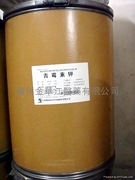
The Bulk Drug Manufacturers Association (BDMA) has termed the Union Commerce Ministry's proposal for anti-dumping duty on Pencillin G and 6 APA as violation of the provisions of Rule 4 and Rule 5 of Customs Tariff Rules, 1995.
In a letter to the union finance ministry, the BDMA said that the union commerce ministry's recommendation to impose provisional anti-dumping duty on imports of penicillin G (Pen G) and 6 APA is violation of basic anti-dumping laws and rules of the country as Penicillin-G and 6 APA are two distinct products having two distinct custom codes. One cannot substitute the other. Besides, 6 APA is an intermediate produced by processing Penicillin G and used for manufacture of derivatives such as Ampicillin, Amoxycillin, Cloxacillin, etc.
The domestic industries for the two products are different. While Alembic Ltd and SPIC constitute the domestic industry for Penicillin G, Alembic Ltd and Alka Remedies constitute the domestic industry for 6 APA. It is, therefore, submitted that the single application as against two applications separately for two distinct products made by the petitioner for the initiation of anti dumping investigation for any of the two products is invalid ab initio, the BDMA said its letter.
It is argued that the anti-dumping rules of the country do not permit a single investigation for two distinct products involving two different domestic industries. Hence, the investigation is in violation of the provisions of Rule 4 and Rule 5 of Customs Tariff (Identification, assessment and collection of anti dumping duty on dumped articles and for determination of injury) Rules, 1995.
Cautioning the government about the impact of the government move to impose anti-dumping duty on Pen G and 6 APA on the common man in the country, BDMA said that Penicillin-G is used as raw material for manufacture of many life saving drugs and medicines. In view of the proposed recommendations for anti dumping duty, the raw material cost of Penicillin-G will increase resulting in higher manufacturing cost which will be required to pass on to formulation manufacturers. With increased cost of these life saving bulk drugs by more than 38 per cent, the life saving medicinal formulations will be costlier by more than 76 per cent, as the DPCO allows 100 per cent MAPE (Maximum Allowable Post Manufacturing Expenses) on material cost. The 38 per cent increase in material cost will result in 76 per cent increase in medicine prices. Antibiotics and cephalosporins manufactured by using Penicillin-G and 6 APA as basic raw materials are the only prescribed medicines for all types of infections across the country, which means millions of Indians will have to bear the escalated cost of these life saving drugs.
Besides, the bulk drug manufacturers will find it difficult to continue production of antibiotics as the basic raw materials cost would be unreasonably high if the envisaged anti dumping duty is imposed. And the formulators would shift to import of antibiotics directly from China and Mexico. Besides, such imposition would lead to closure of more than 30 bulk drug manufacturing companies and they will be subjected to larger injury as against the injury alleged to have been caused to only two petitioners.
In a letter to the union finance ministry, the BDMA said that the union commerce ministry's recommendation to impose provisional anti-dumping duty on imports of penicillin G (Pen G) and 6 APA is violation of basic anti-dumping laws and rules of the country as Penicillin-G and 6 APA are two distinct products having two distinct custom codes. One cannot substitute the other. Besides, 6 APA is an intermediate produced by processing Penicillin G and used for manufacture of derivatives such as Ampicillin, Amoxycillin, Cloxacillin, etc.
The domestic industries for the two products are different. While Alembic Ltd and SPIC constitute the domestic industry for Penicillin G, Alembic Ltd and Alka Remedies constitute the domestic industry for 6 APA. It is, therefore, submitted that the single application as against two applications separately for two distinct products made by the petitioner for the initiation of anti dumping investigation for any of the two products is invalid ab initio, the BDMA said its letter.
It is argued that the anti-dumping rules of the country do not permit a single investigation for two distinct products involving two different domestic industries. Hence, the investigation is in violation of the provisions of Rule 4 and Rule 5 of Customs Tariff (Identification, assessment and collection of anti dumping duty on dumped articles and for determination of injury) Rules, 1995.
Cautioning the government about the impact of the government move to impose anti-dumping duty on Pen G and 6 APA on the common man in the country, BDMA said that Penicillin-G is used as raw material for manufacture of many life saving drugs and medicines. In view of the proposed recommendations for anti dumping duty, the raw material cost of Penicillin-G will increase resulting in higher manufacturing cost which will be required to pass on to formulation manufacturers. With increased cost of these life saving bulk drugs by more than 38 per cent, the life saving medicinal formulations will be costlier by more than 76 per cent, as the DPCO allows 100 per cent MAPE (Maximum Allowable Post Manufacturing Expenses) on material cost. The 38 per cent increase in material cost will result in 76 per cent increase in medicine prices. Antibiotics and cephalosporins manufactured by using Penicillin-G and 6 APA as basic raw materials are the only prescribed medicines for all types of infections across the country, which means millions of Indians will have to bear the escalated cost of these life saving drugs.
Besides, the bulk drug manufacturers will find it difficult to continue production of antibiotics as the basic raw materials cost would be unreasonably high if the envisaged anti dumping duty is imposed. And the formulators would shift to import of antibiotics directly from China and Mexico. Besides, such imposition would lead to closure of more than 30 bulk drug manufacturing companies and they will be subjected to larger injury as against the injury alleged to have been caused to only two petitioners.
Friday, April 30, 2010 14:45 IST
Ramesh Shankar, Mumbai
Source: www.pharmabiz.com
Ramesh Shankar, Mumbai
Source: www.pharmabiz.com
Các tin khác
- Following the imposition of the highest tariff of 37.13%, the Ministry of Industry and Trade is reviewing galvanized steel from China (19/06/2026)
- Official tariffs have been imposed on colorless float glass imported from Indonesia and Malaysia (19/06/2026)
- India seeks to continue anti-dumping duties on Bangladesh’s jute products (19/06/2026)
- Turkey Initiates Anti-Dumping Investigation into Polyester Cord Fabric from Viet Nam (19/06/2026)
- Chinese dumping in Brazil affected the entire garlic supply chain (19/06/2026)