Home
Home
 About Us



Australia: “Protectionist campaign decked out in Green”
24/02/2011 12:00
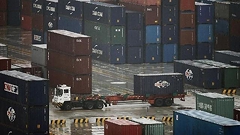
The AWU’s drive to strengthen anti-dumping measures is misguided, writes Alan Oxley
Paul Howse, the National Secretary of the Australian Workers Union (AWU) has announced a campaign to increase the use of anti-dumping measures to keep unfair imports from “cheating” Chinese out of Australia. He has pitched his case to protectionist sentiment, both old – save Australian jobs from foreigners; and new – create and protect Green jobs. He is moving wholly in the wrong direction. What Australia needs now is to regain competitiveness across the economy, not reduce it further.
Howse has in the past described himself as a free trader. Commentary suggests he is playing a different game – beating the protectionist drum to recruit new members or expand AWU turf. Certainly, the conflicting interests of the businesses covered by AWU don’t identify a clear interest for his case. The AWU does have members in industries which are feeling the pinch from more competitive foreign products, such as Capral Aluminium and Bluescope Steel. Competition from China has been intense and the rising Aussie dollar has made it more so. On the other hand, the AWU also has members in businesses, like Rio Tinto, which are booming and whose mineral exports are a primary driver in the rise of the dollar.
The AWU has Australia’s two speed economy problem. While growth and mineral exports in WA and Queensland are booming, the economies of the South eastern states are flagging. The Productivity Commission has warned annual productivity growth is slipping, running at only around 1.5 percent. A decade ago, it was a world leading 3.5 percent. This means business does not have the flexibility it needs to manage the impact of the rising dollar.
So why has the AWU jumped instead on the anti-dumping bandwagon? It is the mood of the times. As in previous recessions, the Global Financial crisis has fostered an upsurge in calls for protection against imports.
One of the few areas where the rules of the World Trade Organization (WTO) permit Governments to impose ad hoc controls on imports is “anti-dumping”. If the price of an import is lower than its price at home, and if the import trade is large enough to damage domestic competitors, those imports are deemed “dumped” and can be restricted. Each country sets the rules on how to measure the damage.
This is where rorting occurs. Dan Ikensen at the Cato Institute in Washington DC has just published a monograph explaining how the Congress has so finetuned the US rules that they now just block cheap imports. The European Commission has moved in the same direction. Australia’s system, finds in favour of about half of the complaints lodged. So it is not stacked strongly against importers, like the US and EU systems.
Australia’s rules are constantly debated and are again under review. The Productivity Commission has examined them and has reported they allow abuse and should be tightened. The Commission dislikes the whole concept. It can’t see a difference between a business selling products at low prices inside Australia, for example loss-leadering to gain market share, and one outside. So why should “dumped” imports be treated differently?
This issue is raised about every five years. The usual result is that Government tampers with the procedures slightly, sometimes improving things, sometimes not. Lodging an anti-dumping complaint is often the last resort of a failing business. Kimberley Clark last year complained tissue paper from Indonesia was dumped. The authorities disagreed and this year the company closed a paper plant in South Australia. It could not compete with the imports. Its unionized workforce was one of the most expensive in Australian manufacturing.
Worthy of more attention is Howse’s contention that stopping cheap imports will advance development of a new, Green economy. Here Howse is echoing the grand strategy developed by the AWU’s counterpart in the United States, the United Steelworkers (USW). They have cloaked a rabid anti-dumping habit in a grand strategy to build the low carbon Green economy to which Obama has rhetorically committed, like the Rudd and Gillard Governments. What is the USW plan? Washington should foster wind turbine construction to build a Green industrial base in America and protect it from imports. USW recently championed blocking the import of a Chinese built wind turbine – because it was subsidized. Wind turbines are not saleable unless renewable energy is subsidized. The new Green industry is uncompetitive and protected.
Haven’t we heard this before? Wasn’t the case for high tariffs in the seventies to protect the jobs of workers and give industry time to regear to compete in the new world economy and to re-skill workers?
In this case, the AWU understands very well how the CPRS and a carbon price will push up costs and jeopardize jobs in the industries it covers. It proposed that offsets for credits in its export exposed industries be set aside in a fund to support AWU members. Maybe we should thank Howse for at least opening debate on one vital subject which has not yet been properly yet canvassed in our climate change debate - how the tools proposed so far by Canberra and the Garnaut reports to restructure Australia’s economy as a Green economy will bring exactly the same costs and vices as a protected economy.
We don’t need a US style anti-dumping system which blocks cheap products. As the billionaire retailers, Gerry Harvey and Sol Lew, just discovered, Australians appear to like cheap, foreign imports. We need instead urgent action to increase productivity – less regulation, better transport infrastructure, lower taxes and more flexible labor markets.
Alan Oxley, Managing Director
Alan Oxley is Head of ITS Global and Chairman of the APEC Study Centre at RMIT University
Source: Australian Financial Review
Các tin khác
- Following the imposition of the highest tariff of 37.13%, the Ministry of Industry and Trade is reviewing galvanized steel from China (19/06/2026)
- Official tariffs have been imposed on colorless float glass imported from Indonesia and Malaysia (19/06/2026)
- India seeks to continue anti-dumping duties on Bangladesh’s jute products (19/06/2026)
- Turkey Initiates Anti-Dumping Investigation into Polyester Cord Fabric from Viet Nam (19/06/2026)
- Chinese dumping in Brazil affected the entire garlic supply chain (19/06/2026)