Home
Home
 About Us


ASEAN trade barriers to be lifted
18/01/2010 12:00
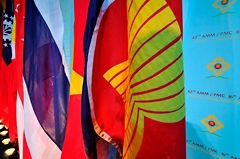
Le Quang Lan, deputy director of the Multilateral Trade Policy Department under the Ministry of Industry and Trade, spoke with Tien Phong (Vanguard) newspaper about the removal of non-tariff barriers.
Why do non-tariff barriers need to be removed?
Non-tariff barriers are not merely quotas and regulations designated to forbid imports that are easy to discover. They are also measures to prevent anti-dumping and to reduce the distortion of geographical origins.
Viet Nam began reducing nearly 10,000 import taxes in 1996 after the Common Effective Preferential Tariff (CEPT) scheme, a preferential tariff agreement which applied to goods originating from ASEAN member states, was signed.
Yet, CEPT had certain shortcomings. The ASEAN bloc has not yet developed to its full potential. Absolute value in trade has increased at a slower rate than the growth of total regional trade.
CEPT also caused a big gap between enterprises of ASEAN countries, partially because they lacked information to participate in the scheme.
ASEAN is trying to address these difficulties by creating favourable conditions for enterprises through the removal of non-tariff barriers. This means economic co-operation in ASEAN is not only required to reduce taxes to 0-5 per cent but also to remove non-tariff barriers while taking the interests of enterprises into account.
Besides this, the removal of non-tariff barriers is scheduled to be completed by 2015 or 2018 as the latest. Once this process has completed, all common trade barriers betweenASEAN countries will be removed in an attempt to create an ASEAN economic block by 2015.
Could you elaborate some steps for the removal of non-tariff barriers from now untill 2015. Which barriers will Viet Nam have to skip during this period?
All ASEAN countries must examine their own non-tariff measures that are under implementation and send them to the ASEAN secretariat for processing. This process will assist the secretariat to decide which non-tariff barriers need to be removed.
ASEAN-6, except for the Philippines, have agreed to remove all non-tariff barriers before 2010. Viet Nam, meanwhile, has agreed to implement it before 2015.
Many ASEAN countries are already removing non-tariff barriers. Viet Nam, however, is still harmonising its legislation to meet World Trade Organisation rules and has yet to remove non-tariff barriers.
How will domestic enterprises benefit once non-tariff barriers are removed?
The removal will surely speed up a positive reform for trade and investment. But unlike tax reduction, it will be difficult to assess the benefits earned from removing non-tariff barriers right away. One certainty is that import-export enterprises in ASEAN are still faced with many problems and obstructed by non-tariff barriers.
Further, the removal of non-tariff barriers will create favourable conditions for import-export enterprises in ASEAN because they will no longer be weighed down with cumbersome procedures.
The move will only be effective with the active participation of enterprises. Their initiative will serve as the basis for the Ministry of Industry and Trade to work together with other ASEAN countries to lift problems facing businesses.
What about advantages for the area of services such as finance, banking and aviation?
ASEAN has already shortened the time in which member states must liberalise services from 2020 to 2015. Some services, such as tourism, health, aviation and transport, have been prioritised for liberalisation between 2008 and 2010. Aviation services are an issue under negotiation and an agreement is anticipated in the near future. — VNS
Why do non-tariff barriers need to be removed?
Non-tariff barriers are not merely quotas and regulations designated to forbid imports that are easy to discover. They are also measures to prevent anti-dumping and to reduce the distortion of geographical origins.
Viet Nam began reducing nearly 10,000 import taxes in 1996 after the Common Effective Preferential Tariff (CEPT) scheme, a preferential tariff agreement which applied to goods originating from ASEAN member states, was signed.
Yet, CEPT had certain shortcomings. The ASEAN bloc has not yet developed to its full potential. Absolute value in trade has increased at a slower rate than the growth of total regional trade.
CEPT also caused a big gap between enterprises of ASEAN countries, partially because they lacked information to participate in the scheme.
ASEAN is trying to address these difficulties by creating favourable conditions for enterprises through the removal of non-tariff barriers. This means economic co-operation in ASEAN is not only required to reduce taxes to 0-5 per cent but also to remove non-tariff barriers while taking the interests of enterprises into account.
Besides this, the removal of non-tariff barriers is scheduled to be completed by 2015 or 2018 as the latest. Once this process has completed, all common trade barriers betweenASEAN countries will be removed in an attempt to create an ASEAN economic block by 2015.
Could you elaborate some steps for the removal of non-tariff barriers from now untill 2015. Which barriers will Viet Nam have to skip during this period?
All ASEAN countries must examine their own non-tariff measures that are under implementation and send them to the ASEAN secretariat for processing. This process will assist the secretariat to decide which non-tariff barriers need to be removed.
ASEAN-6, except for the Philippines, have agreed to remove all non-tariff barriers before 2010. Viet Nam, meanwhile, has agreed to implement it before 2015.
Many ASEAN countries are already removing non-tariff barriers. Viet Nam, however, is still harmonising its legislation to meet World Trade Organisation rules and has yet to remove non-tariff barriers.
How will domestic enterprises benefit once non-tariff barriers are removed?
The removal will surely speed up a positive reform for trade and investment. But unlike tax reduction, it will be difficult to assess the benefits earned from removing non-tariff barriers right away. One certainty is that import-export enterprises in ASEAN are still faced with many problems and obstructed by non-tariff barriers.
Further, the removal of non-tariff barriers will create favourable conditions for import-export enterprises in ASEAN because they will no longer be weighed down with cumbersome procedures.
The move will only be effective with the active participation of enterprises. Their initiative will serve as the basis for the Ministry of Industry and Trade to work together with other ASEAN countries to lift problems facing businesses.
What about advantages for the area of services such as finance, banking and aviation?
ASEAN has already shortened the time in which member states must liberalise services from 2020 to 2015. Some services, such as tourism, health, aviation and transport, have been prioritised for liberalisation between 2008 and 2010. Aviation services are an issue under negotiation and an agreement is anticipated in the near future. — VNS
(14-01-2010)
Source: vietnamnews.vnagency.com.vn
Source: vietnamnews.vnagency.com.vn
Các tin khác
- Following the imposition of the highest tariff of 37.13%, the Ministry of Industry and Trade is reviewing galvanized steel from China (19/06/2026)
- Official tariffs have been imposed on colorless float glass imported from Indonesia and Malaysia (19/06/2026)
- India seeks to continue anti-dumping duties on Bangladesh’s jute products (19/06/2026)
- Turkey Initiates Anti-Dumping Investigation into Polyester Cord Fabric from Viet Nam (19/06/2026)
- Chinese dumping in Brazil affected the entire garlic supply chain (19/06/2026)