Home
Home
 About Us



Argentina urges talks on China soy export ban
23/08/2010 12:00
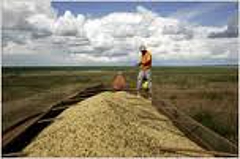
BEIJING, Aug 19 - Argentina hopes to begin talks with China later in the year to help resolve a tit-for-tat trade dispute that ended with the ban of Argentinian soyoil shipments in April, the country's ambassador to Beijing said on Thursday.
China suspended Argentinian soyoil deliveries in April in response to a series of anti-dumping measures against Chinese steel, shoes and textile products, but Argentina has invited a Chinese delegation to visit the country in November and try to ease the frictions, Cesar Mayoral told Reuters in an interview.
"Our main objectives are to create a good and new environment for bilateral trade," he said.
"We'd like to create a mechanism to talk about everything -- market, prices and anti-dumping too of course -- to resolve exports of soyoil. We are awaiting the answer from the Chinese government."
He said he hoped the problems could all be resolved by the end of the year.
Argentinian President Cristina Fernandez failed to get Beijing to lift a ban on Argentine soyoil exports worth $1.4 billion a year, during a visit to China last month.
Argentina has sought to protect its economy by limiting imports, upsetting major trading partners such as China, Brazil and the European Union.
Mayoral did not go into details about the subjects to be discussed in November, but he defended his country's policies, saying they were responsible for its strong economic growth.
"China has to understand our position. We are not against Chinese goods: we are in favour of national industry," he said.
"It is impossible to open our markets to China. If we open completely, our industries will disappear and we will have lots of unemployment."
He said while China's exports to Argentina account for only a small part of the total, 75 percent of China's soyoil comes from Argentina.
Due to limited farmland, China cannot produce enough oilseeds to meet rising demand for cooking oil. China is already the world's largest buyer of soybeans, which is crushed into soymeal and soyoil.
Because of the suspension of trade with China, Argentina has shifted its exports to other countries, including India and Bangladesh. Buenos Aires has also raised the blend requirement for biodiesel to 7 percent from 5 percent, which will increase its own domestic soyoil demand, Mayoral said..
Traders say China can at least guarantee soyoil supplies for the rest of the year by increasing soybean imports. The government also holds a large amount of soyoil and rapeseed oil reserves.
But a recent rise of domestic edible oil prices, as China moves into a peak consumption period before October, could indicate supply problems later this year.
Mayoral said Argentina was also promoting other agriculture products to China, including beef, fresh fruits as well as grains.
"We have a very good relationship with China in everything -- maritime affairs, at the security council of the U.N. and on the environment at the (climate change) conference in Copenhagen ... It is a pity that with this small problem in trade we do not come to a complete solution."
China suspended Argentinian soyoil deliveries in April in response to a series of anti-dumping measures against Chinese steel, shoes and textile products, but Argentina has invited a Chinese delegation to visit the country in November and try to ease the frictions, Cesar Mayoral told Reuters in an interview.
"Our main objectives are to create a good and new environment for bilateral trade," he said.
"We'd like to create a mechanism to talk about everything -- market, prices and anti-dumping too of course -- to resolve exports of soyoil. We are awaiting the answer from the Chinese government."
He said he hoped the problems could all be resolved by the end of the year.
Argentinian President Cristina Fernandez failed to get Beijing to lift a ban on Argentine soyoil exports worth $1.4 billion a year, during a visit to China last month.
Argentina has sought to protect its economy by limiting imports, upsetting major trading partners such as China, Brazil and the European Union.
Mayoral did not go into details about the subjects to be discussed in November, but he defended his country's policies, saying they were responsible for its strong economic growth.
"China has to understand our position. We are not against Chinese goods: we are in favour of national industry," he said.
"It is impossible to open our markets to China. If we open completely, our industries will disappear and we will have lots of unemployment."
He said while China's exports to Argentina account for only a small part of the total, 75 percent of China's soyoil comes from Argentina.
Due to limited farmland, China cannot produce enough oilseeds to meet rising demand for cooking oil. China is already the world's largest buyer of soybeans, which is crushed into soymeal and soyoil.
Because of the suspension of trade with China, Argentina has shifted its exports to other countries, including India and Bangladesh. Buenos Aires has also raised the blend requirement for biodiesel to 7 percent from 5 percent, which will increase its own domestic soyoil demand, Mayoral said..
Traders say China can at least guarantee soyoil supplies for the rest of the year by increasing soybean imports. The government also holds a large amount of soyoil and rapeseed oil reserves.
But a recent rise of domestic edible oil prices, as China moves into a peak consumption period before October, could indicate supply problems later this year.
Mayoral said Argentina was also promoting other agriculture products to China, including beef, fresh fruits as well as grains.
"We have a very good relationship with China in everything -- maritime affairs, at the security council of the U.N. and on the environment at the (climate change) conference in Copenhagen ... It is a pity that with this small problem in trade we do not come to a complete solution."
Published: 19 Aug 2010 00:28:30 PST
Source: news.alibaba.com
Source: news.alibaba.com
Các tin khác
- Following the imposition of the highest tariff of 37.13%, the Ministry of Industry and Trade is reviewing galvanized steel from China (19/06/2026)
- Official tariffs have been imposed on colorless float glass imported from Indonesia and Malaysia (19/06/2026)
- India seeks to continue anti-dumping duties on Bangladesh’s jute products (19/06/2026)
- Turkey Initiates Anti-Dumping Investigation into Polyester Cord Fabric from Viet Nam (19/06/2026)
- Chinese dumping in Brazil affected the entire garlic supply chain (19/06/2026)