Home
Home
 About Us


Africa: Kenya Retains Higher Import Quota of Tax-Free Sugar
26/10/2011 12:00
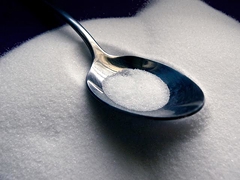
Kenya will retain the current enlarged import quota of duty-free sugar from the Africa's largest market as part of a deal that saw the country granted a two-year extension to fully liberalise its sugar sector.
The lowly 10 per cent duty presently charged on consignments outside the 340,000 tonnes special quota from the Common Market for Eastern and Southern Africa (Comesa) will also be continued as a strategy to wean the local sugar industry to competition.
"The other terms and conditions to be retained as contained in the Comesa Council directive of 2007 and the extension will be last," Trade permanent secretary, Mr Abdulrazaq Ali, told Business Daily.
The safeguards were due to end by March next year, but Kenya last week won a reprieve after the leadership of Comesa granted it an additional two years to complete key tasks such as privatisation that are aimed at making the sector more competitive.Other issues embedded in the deal with Comesa included requirements that the Government adopts an energy policy aimed at promoting co-generation and other forms of bio-fuel energy production to improve the industry's competitiveness.
The pact also requires sugar sector operators to deepen research on high sucrose and early maturing cane varieties while the Kenya Sugar Board (KSB) and the Kenya Sugar Research Foundation (Kesref) should spearhead adoption of research findings by cane growers.
A key target of this policy is a sugarcane waste product known as bagasse that most millers have not put to sound economic use and usually rots away despite the huge potential for power generation.
Agriculture permanent secretary, Romano Kiome, said the government is committed to finalising reforms in the sugar even though a delay in getting approvals from Parliament was holding back progress.
"We are ready to complete the planned sale in six months once Parliament gives consent.
We are done with all preparations and the onus is now on Parliament to rise to the occasion," he told Business Daily.
A blueprint released by the ministry in 2010 showed that the government plans to sell a 51 per cent stake in five sugar companies to strategic investors and reserve another 30 per cent for farmers.
The government will then sell the remaining 19 per cent stake in the milling companies in an initial public offering once the factories are profitable.
"The sale plan is currently before a Parliament's Finance committee and we cannot proceed until the give direction. We are ready to move on with the sale and open the door for fresh capital to improve the industry," Dr Kiome said.
The Kenya Sugar Board (KSB) projects to tap Sh55 billion in fresh capital from the sale of the sugar firms, paving the way for expansion and modernisation of the sub-sector.
The Kenyan sugar industry remains uncompetitive largely due to high operation costs linked to ageing and inefficient machinery, poor road infrastructure and poor crop husbandry.
Dr Kiome said the planned privatisation of the millers also faces a further hitch in that Parliament is yet to approve a list of nominees to serve in the management board of the Privatisation Commission of Kenya that holds the mandate of managing the sale of all public institutions.
Strategic investors
The Parliamentary committee on Finance, Planning and Trade is yet to approve a list nominees handed to it by Treasury, leaving the Commission crippled in carrying out its mandate.
"All we can do now is to hold onto the transactions because we can only move up to certain far without the blessing of the board as required by law," the Commission CEO Solomon Kitungu, said last month.
Dr Kiome said despite the regulatory hitches, the government would carry on with reforms to boost the competitiveness of the sugar industry.
"We are to carry on with reforms even as we wait for Parliament to play its part. We agreed with Comesa last time on the key areas to be tackled and we will pursue them over the extra period granted to us," he said.
He said the government had already published new laws allowing strategic investors to take up at least a 51 per cent stake in the five government run sugar companies that are scheduled for sale.
By Allan Odhiambo
Source: allafrica.com
Các tin khác
- Following the imposition of the highest tariff of 37.13%, the Ministry of Industry and Trade is reviewing galvanized steel from China (19/06/2026)
- Official tariffs have been imposed on colorless float glass imported from Indonesia and Malaysia (19/06/2026)
- India seeks to continue anti-dumping duties on Bangladesh’s jute products (19/06/2026)
- Turkey Initiates Anti-Dumping Investigation into Polyester Cord Fabric from Viet Nam (19/06/2026)
- Chinese dumping in Brazil affected the entire garlic supply chain (19/06/2026)