Home
Home
 About Us



Viet Nam’s Textile Exports Soar To $22.2B In H1: Embracing Sustainability And Tech For Future Growth
08/07/2026 02:22
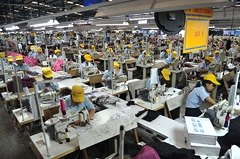
Viet Nam’s textile and garment industry saw a slight increase in exports for the first half of the year, reaching an estimated $22.2 billion, marking a 1.7% rise compared to the same period in the previous year. This information was released by the Viet Nam Textile and Apparel Association (VITAS), which also noted that certain areas of the industry, including fibre, fabric, accessory, and nonwoven material exports, experienced a more substantial growth, with rates between 5.6% and 10.6%. However, the garment sector experienced a slight downturn, with exports decreasing by 0.4% due to weakened consumer demand in key markets.
Export Markets and Trade Surplus
In the first five months of the year, the U.S. continued to be the largest export market for Viet Nam, with shipments amounting to $6.81 billion. This was a 1.3% increase, and represented approximately 45% of total exports. The E.U. market showed the strongest growth, with an increase of 8.8%, equating to $1.94 billion, whereas exports to Japan and the Republic of Korea dropped by 6.2% and 8.9% respectively. The industry was able to maintain a trade surplus of nearly $10 billion in the first half of the year.
Challenges remain for the industry, despite the overall positive performance. VITAS outlined these obstacles, which include weak demand in key markets, high price competition, a heavy reliance on imported raw materials, increasing costs related to environmental, social and governance (ESG) standards and product traceability, and a growing uncertainty surrounding global trade policies.
Future Focus and Strategy
VITAS Chairman Vu Duc Giang spoke about the industry’s limited scope for expansion through solely increasing production volume. He expressed that the future growth of the industry hinges on enhancing productivity and creating higher-value products. This will be achieved by developing domestic sources of raw materials, diversifying export markets, and speeding up the digital and green transformations.
To facilitate this shift, VITAS has given the green light for the establishment of four specialised committees during the 2025–2030 term. These committees will focus on fashion and domestic market development, international business and supply chains, sustainable development, and technology, innovation, and digital transformation. The committees are expected to commence their pilot operations in the third quarter of 2026.
As the industry’s exports reached $22.2 billion in the first half of the year, the goal is to sustain an average monthly export revenue exceeding $4 billion in the remaining months. This will help to achieve the full-year target of roughly $48 billion. The industry’s key priorities in this endeavor include adapting to new purchasing strategies of global brands, expanding domestic supplies of raw materials, diversifying markets and products, preparing for potential legal and trade risks, and increasing investment in technology, automation, and digital transformation.
Questions & Answers
What growth did Viet Nam’s textile and garment exports experience in the first half of the year?
They experienced a slight increase of 1.7%, reaching an estimated $22.2 billion.
What are the major challenges faced by Viet Nam’s textile and garment industry?
Major challenges include weakened demand in key markets, high price competition, reliance on imported raw materials, rising costs related to ESG standards and product traceability, and growing uncertainty regarding global trade policies.
What strategies does the industry plan to implement for future growth?
Strategies include enhancing productivity, creating high-value products, developing domestic raw material sources, diversifying export markets, and accelerating the digital and green transformations.
Source: Retailnews
Các tin khác
- EU tire tariffs hit China as Korea recalibrates supply chains (08/07/2026)
- UK extends anti-dumping duties on Indonesian biodiesel for five more years (08/07/2026)
- EU announces definitive measures against Chinese tire imports (08/07/2026)
- As Viet Nam's banana exports mature, digital farm management comes into focus (08/07/2026)
- Branding: the key to raising the value of Vietnamese farm produce (08/07/2026)