Home
Home
 About Us



US investigates Asian nations and Canada for dumping wind towers
19/07/2019 12:00
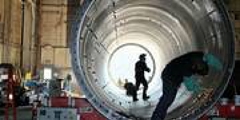
The Trump administration also launches probe into whether the governments of Canada, Indonesia and Vietnam improperly subsidise their tower industries.
The US government has set a 23 August deadline to reach a preliminary injury determination in anti-dumping and countervailing duty (CVD) probes into imports of utility-scale wind structural towers from n Canada, Indonesia, South Korea and Vietnam.
The International Trade Commission (ITC), a quasi-judicial federal agency of the US government, launched the investigations in response to petitions filed 9 July by the Wind Tower Trade Coalition (WTTC), an association of domestic manufacturers.
WTTC contends that as a result of dumping and improper subsidies, the US industry is suffering severe harm in its employment levels, pricing, production and profits. Finished tower pieces grabbed about 25% of 7.6GW of US wind capacity installs in 2018.
Law firm Wiley Rein, which represents WTTC, said in a statement that imports of wind towers have escalated significantly.
“The Canadian, Korean, Indonesian and Vietnamese industries are using unfair pricing practices to capture critical sales from the US industry,” asserts Alan H. Price, chair of the Wiley Rein’s internal trade practice.
“As a result, the industry and its workers have been injured by these unfairly priced imports,” he adds.
Aside from the alleged sales here at less than fair value, ITC in a notice in the Federal Register, the official record of the US government, said it will also investigate whether the governments of Canada, Indonesia and Vietnam were improperly subsidising their tower industries.
Countervailable subsidies are financial assistance from foreign governments provided to their manufacturers that unfairly benefit the assembly, production or exportation of goods in that country.
WTTC’s petitions request that the Department of Commerce impose “significant” remedial duties on tower imports from those four nations, whether they are imported partially or fully assembled.
Tower producers in the US are Arcosa (formerly Trinity), Broadwind, GRI, Marmen Energy, Ventower and Vestas.
Tariff on steel
Dumping and subsidies aside, domestic producers have also been hurt by a 25% tariff on most imported steel imposed by President Donald Trump. Domestic steel prices have risen more than 50% since then. The tower is roughly 20% of a turbine’s installed cost.
US producers are trying to pass most steel cost increases on to their customers, but this practice will only go so far with federal subsidy support for wind set to expire at the end of this year.
Add in low natural gas prices and intense competition for rock-bottom priced off-take, and little wonder p roject developers are pressuring the supply chain to become more cost-efficient.
Source: Rechargenews
The US government has set a 23 August deadline to reach a preliminary injury determination in anti-dumping and countervailing duty (CVD) probes into imports of utility-scale wind structural towers from n Canada, Indonesia, South Korea and Vietnam.
The International Trade Commission (ITC), a quasi-judicial federal agency of the US government, launched the investigations in response to petitions filed 9 July by the Wind Tower Trade Coalition (WTTC), an association of domestic manufacturers.
WTTC contends that as a result of dumping and improper subsidies, the US industry is suffering severe harm in its employment levels, pricing, production and profits. Finished tower pieces grabbed about 25% of 7.6GW of US wind capacity installs in 2018.
Law firm Wiley Rein, which represents WTTC, said in a statement that imports of wind towers have escalated significantly.
“The Canadian, Korean, Indonesian and Vietnamese industries are using unfair pricing practices to capture critical sales from the US industry,” asserts Alan H. Price, chair of the Wiley Rein’s internal trade practice.
“As a result, the industry and its workers have been injured by these unfairly priced imports,” he adds.
Aside from the alleged sales here at less than fair value, ITC in a notice in the Federal Register, the official record of the US government, said it will also investigate whether the governments of Canada, Indonesia and Vietnam were improperly subsidising their tower industries.
Countervailable subsidies are financial assistance from foreign governments provided to their manufacturers that unfairly benefit the assembly, production or exportation of goods in that country.
WTTC’s petitions request that the Department of Commerce impose “significant” remedial duties on tower imports from those four nations, whether they are imported partially or fully assembled.
Tower producers in the US are Arcosa (formerly Trinity), Broadwind, GRI, Marmen Energy, Ventower and Vestas.
Tariff on steel
Dumping and subsidies aside, domestic producers have also been hurt by a 25% tariff on most imported steel imposed by President Donald Trump. Domestic steel prices have risen more than 50% since then. The tower is roughly 20% of a turbine’s installed cost.
US producers are trying to pass most steel cost increases on to their customers, but this practice will only go so far with federal subsidy support for wind set to expire at the end of this year.
Add in low natural gas prices and intense competition for rock-bottom priced off-take, and little wonder p roject developers are pressuring the supply chain to become more cost-efficient.
Source: Rechargenews
Các tin khác
- MoIT tightens 'Made in Viet Nam' criteria to combat trade fraud (12/06/2026)
- Viet Nam receives AD petition against Chinese prestressed steel bars (12/06/2026)
- India’s anti-dumping shield on Asian aluminium foil to stay up through 2026 (12/06/2026)
- Amended Customs Law: Removing 'bottlenecks' to help businesses accelerate import and export (12/06/2026)
- Expanding export markets in the era of integration (12/06/2026)