Home
Home
 About Us



U.S. imposes anti-dumping duties on Canada and five other nations
27/08/2018 12:00
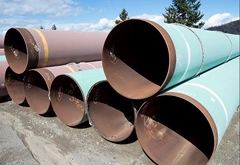
The United States has opened a new battleground in its trade war with the world, announcing preliminary anti-dumping duties on large-diameter welded pipe from Canada and five other countries.
U.S. relations with the rest of the world took another tumble this week when the Department of Commerce imposed a 24.38 percent anti-dumping duty on large-diameter welded pipe imports from Canada and five other countries.
The U.S. is to begin "immediately collecting cash deposits" on imports from Canada, China, Greece, India, Korea, and Turkey. Penalties for not paying up range from 3.45 percent for Turkey to over 132 percent for China, according to the Financial Post.
Of the countries on the list, only India, with US$295 million in exports of the pipe to the U.S. in 2017 had more than Canada, which had almost US$180 million in 2017.
Joe Galimberti, president of the Canadian Steel Producers Association that represents the $15-billion primary steel production industry, said the news was “disappointing," but only affects one member, the Canadian arm of Chicago-based Evraz North America. It is the only manufacturer of large-diameter welded pipe in Canada.
Adam Austen, a spokesperson for Foreign Affairs Minister Chrystia Freeland said in an email the targeted company has been contacted and the situation is being monitored. “The United States has a $2-billion surplus in steel trade with Canada. Canada buys more steel from the U.S. than any other country, accounting for more than 50 percent of U.S. exports.”
Trade laws the key focus of Trump administration
The Commerce Department claims it has found the six countries have been selling their pipe at less than the fair market value in the United States.
“Commerce currently maintains 458 anti-dumping and countervailing duty orders which provide relief to American companies and industries impacted by unfair trade,” it said in a statement. The final anti-dumping duty determinations will be handed down in early November for China and India and in January for Canada and the other three countries.
The Commerce Department also noted that trade laws were the primary focus of the Trump administration, pointing out that this administration has initiated 120 new investigations already, over twice as many as the Obama administration in eight years.
A quick refresher course on anti-dumping - Dumping occurs when manufacturers export a product to another country at a price below what would be considered the normal price with the intent of increasing the market share in a foreign market, in an attempt to drive out the competition, creating a monopoly.
In the legal sense, if a company exports a product at a price that is lower than the price it normally charges in its own home market or sells at a price that does not meet its full cost of production, it is said to be "dumping" the product. So this is what the Trump administration says the six countries are doing.
Although the anti-dumping measure has been provided as a tool in preventing protectionism and promoting free trade, many instances of anti-dumping practices suggest that anti-dumping measures have been used as a tool of protectionism, which is what the Trump administration may be doing say critics.
U.S. relations with the rest of the world took another tumble this week when the Department of Commerce imposed a 24.38 percent anti-dumping duty on large-diameter welded pipe imports from Canada and five other countries.
The U.S. is to begin "immediately collecting cash deposits" on imports from Canada, China, Greece, India, Korea, and Turkey. Penalties for not paying up range from 3.45 percent for Turkey to over 132 percent for China, according to the Financial Post.
Of the countries on the list, only India, with US$295 million in exports of the pipe to the U.S. in 2017 had more than Canada, which had almost US$180 million in 2017.
Joe Galimberti, president of the Canadian Steel Producers Association that represents the $15-billion primary steel production industry, said the news was “disappointing," but only affects one member, the Canadian arm of Chicago-based Evraz North America. It is the only manufacturer of large-diameter welded pipe in Canada.
Adam Austen, a spokesperson for Foreign Affairs Minister Chrystia Freeland said in an email the targeted company has been contacted and the situation is being monitored. “The United States has a $2-billion surplus in steel trade with Canada. Canada buys more steel from the U.S. than any other country, accounting for more than 50 percent of U.S. exports.”
Trade laws the key focus of Trump administration
The Commerce Department claims it has found the six countries have been selling their pipe at less than the fair market value in the United States.
“Commerce currently maintains 458 anti-dumping and countervailing duty orders which provide relief to American companies and industries impacted by unfair trade,” it said in a statement. The final anti-dumping duty determinations will be handed down in early November for China and India and in January for Canada and the other three countries.
The Commerce Department also noted that trade laws were the primary focus of the Trump administration, pointing out that this administration has initiated 120 new investigations already, over twice as many as the Obama administration in eight years.
A quick refresher course on anti-dumping - Dumping occurs when manufacturers export a product to another country at a price below what would be considered the normal price with the intent of increasing the market share in a foreign market, in an attempt to drive out the competition, creating a monopoly.
In the legal sense, if a company exports a product at a price that is lower than the price it normally charges in its own home market or sells at a price that does not meet its full cost of production, it is said to be "dumping" the product. So this is what the Trump administration says the six countries are doing.
Although the anti-dumping measure has been provided as a tool in preventing protectionism and promoting free trade, many instances of anti-dumping practices suggest that anti-dumping measures have been used as a tool of protectionism, which is what the Trump administration may be doing say critics.
Aug 23, 2018
Source: Digital Journal
Source: Digital Journal
Các tin khác
- MoIT tightens 'Made in Viet Nam' criteria to combat trade fraud (12/06/2026)
- Viet Nam receives AD petition against Chinese prestressed steel bars (12/06/2026)
- India’s anti-dumping shield on Asian aluminium foil to stay up through 2026 (12/06/2026)
- Amended Customs Law: Removing 'bottlenecks' to help businesses accelerate import and export (12/06/2026)
- Expanding export markets in the era of integration (12/06/2026)