Home
Home
 About Us


NAFTA Renegotiation and its Supply Chain Implications Explored
04/08/2017 12:00
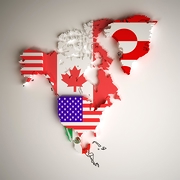
Editor’s note: Supply chain managers are now trying to understand the implications of the upcoming NAFTA renegotiation to begin this month. In an exclusive interview with two prominent trade attorneys, the complexity of the development becomes more evident. Michelle Schulz and Elsa Manzanares are Co-Chairs of the International Trade Group with Gardere.
Michelle Schulz represents primarily Fortune 500 companies, large manufacturers and distributors, defense and aerospace contractors, and oil and gas companies in international trade enforcement and compliance matters. She represents exporters and importers in U.S. government investigations, fines and penalties, third-party audits, disclosures, licensing and counseling on international trade regulations governing exports and imports. Her work focuses on trade in dual-use items as well as defense articles, including software and technology.
Alejandro Gómez-Strozzi focuses his practice on providing advisory and consulting services related to international trade, antidumping, customs, foreign trade and Mexican administrative law. He has advised major multinational companies in the automotive, steel and consumer products sectors. He provides advice regarding available foreign trade programs, tax implications of foreign trade operations, implementation of free trade agreements entered into by Mexico, customs procedures, trade compliance and unfair trade practices.
Supply Chain Management Review: When may we expect changes in the existing trade agreement?
Gardere: The first round of the negotiations among the United States, Canada and Mexico will take place in Washington, D.C. from August 16 – 20, 2017. Because NAFTA modernization is a high priority for this administration, we anticipate the negotiators will move relatively quickly. We could see changes as early as 2018. It is difficult to predict when any revisions would take effect, but we do know that now is the time to begin planning for change.
SCMR: How should supply chain managers prepare for these changes?
Gardere: Logistics managers can begin by reviewing the company’s current NAFTA procedures, for example in the company’s Import Compliance Manual. These procedures will need to be updated to reflect any changes, and logistics should play a role in those updates if they want to help prevent shipping delays. For example, how is the company currently qualifying imported goods as NAFTA-originating? Are there tariff shifts involved? Also, are the company’s current certificates of origin correct? Logistics managers and other stakeholders should refresh their memories on the company’s current NAFTA processes and risk areas so they will be ready to make adjustments in a timely manner.
SCMR: What is likely to happen to the agreement?
Gardere: According to the US Trade Representative’s Trade Policy Agenda for 2017, the administration will place emphasis on enforcement across the board. We expect there could be increased enforcement on NAFTA qualification, for example. Also, the plan is to modernize the agreement, which is now over 20 years old.
SCMR: Worst case scenario?
Gardere: We do not anticipate the agreement would be eliminated altogether. Perhaps the worst case would be if the US were to increase tariffs on imports to the disadvantage of US importers. Many US companies rely on NAFTA for preferential tariff treatment, and any import tariff increases could have a significant financial impact on US companies. Also, retaliation from our NAFTA partners (e.g., with their own tariff increases) would potentially create new trade barriers with our trading partners.
Michelle Schulz represents primarily Fortune 500 companies, large manufacturers and distributors, defense and aerospace contractors, and oil and gas companies in international trade enforcement and compliance matters. She represents exporters and importers in U.S. government investigations, fines and penalties, third-party audits, disclosures, licensing and counseling on international trade regulations governing exports and imports. Her work focuses on trade in dual-use items as well as defense articles, including software and technology.
Alejandro Gómez-Strozzi focuses his practice on providing advisory and consulting services related to international trade, antidumping, customs, foreign trade and Mexican administrative law. He has advised major multinational companies in the automotive, steel and consumer products sectors. He provides advice regarding available foreign trade programs, tax implications of foreign trade operations, implementation of free trade agreements entered into by Mexico, customs procedures, trade compliance and unfair trade practices.
Supply Chain Management Review: When may we expect changes in the existing trade agreement?
Gardere: The first round of the negotiations among the United States, Canada and Mexico will take place in Washington, D.C. from August 16 – 20, 2017. Because NAFTA modernization is a high priority for this administration, we anticipate the negotiators will move relatively quickly. We could see changes as early as 2018. It is difficult to predict when any revisions would take effect, but we do know that now is the time to begin planning for change.
SCMR: How should supply chain managers prepare for these changes?
Gardere: Logistics managers can begin by reviewing the company’s current NAFTA procedures, for example in the company’s Import Compliance Manual. These procedures will need to be updated to reflect any changes, and logistics should play a role in those updates if they want to help prevent shipping delays. For example, how is the company currently qualifying imported goods as NAFTA-originating? Are there tariff shifts involved? Also, are the company’s current certificates of origin correct? Logistics managers and other stakeholders should refresh their memories on the company’s current NAFTA processes and risk areas so they will be ready to make adjustments in a timely manner.
SCMR: What is likely to happen to the agreement?
Gardere: According to the US Trade Representative’s Trade Policy Agenda for 2017, the administration will place emphasis on enforcement across the board. We expect there could be increased enforcement on NAFTA qualification, for example. Also, the plan is to modernize the agreement, which is now over 20 years old.
SCMR: Worst case scenario?
Gardere: We do not anticipate the agreement would be eliminated altogether. Perhaps the worst case would be if the US were to increase tariffs on imports to the disadvantage of US importers. Many US companies rely on NAFTA for preferential tariff treatment, and any import tariff increases could have a significant financial impact on US companies. Also, retaliation from our NAFTA partners (e.g., with their own tariff increases) would potentially create new trade barriers with our trading partners.
Các tin khác
- MoIT tightens 'Made in Viet Nam' criteria to combat trade fraud (12/06/2026)
- Viet Nam receives AD petition against Chinese prestressed steel bars (12/06/2026)
- India’s anti-dumping shield on Asian aluminium foil to stay up through 2026 (12/06/2026)
- Amended Customs Law: Removing 'bottlenecks' to help businesses accelerate import and export (12/06/2026)
- Expanding export markets in the era of integration (12/06/2026)