Home
Home
 About Us



China execs say processing, re-export sector safe from 25% tariffs
19/06/2018 12:00
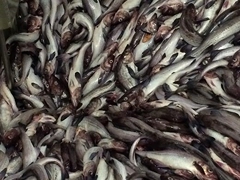
Chinese firms importing, processing and re-exporting Alaska salmon, pollock, cod and other US seafood said they will not be hit with 25% tariffs the former plans to impose on a raft of seafood products from the latter.
On Friday, China announced it would impose 25% punitive tariffs on a wide range of US seafood products, including Pacific salmon, cod, Alaska pollock and flatfish, all staples of the processing and re-exporting sector. They go into effect on July 6 and will be calculated as an additional tax on top of previous tariffs.
However, the tariffs have little impact on some of the big US export categories, primarily from Alaska, as they are raw material for processing, sources said. The main products that will be impacted are those for sale to the Chinese domestic market, such as lobster, crab and geoduck, sources said.
In 2017, China imported $295.36 million-worth of salmon from the US (see the full table below), with almost all coming from Alaska, $183.65m of flatfish; $145.69m of cod; and $59.71m of Alaska pollock. The bulk of this is for processing and re-exporting. According to the 2017 figures, salmon is the number one import category in value, flatfish number two and cod number three. In return, China exported $288.73m of cod fillets to the US, $217.54m of Pacific salmon fillets and $30.93m of pollock. This will be from a mix of US and Russian raw material.
“I don’t think the processing industry will be affected, because they import duty-free if they are re-exporting,” Fan Xubing, a Chinese seafood sector veteran who also sites on the board of the China Aquatic Products Processing and Marketing Alliance (CAPPMA), told Undercurrent News.
“Why would the Chinese industry use this policy to destroy our own local processing industry?” I think the US seafood is divided into two groups. The first group is raw material for processing and export. That I don’t think will have any effect, a very little effect,” said Fan, who is the former sales director of Marine Harvest in China and now the CEO of Beijing Seabridge Marketing, a marketing firm specialized in helping overseas seafood and meat firms get into China.
The second group, the products for consumption in China, will be hit hard, Fan said.
Undercurrent was unable to get an official comment from CAPPMA on the subject.
Executives with four different China-based processors and a fifth with a US seller all supported Fan’s viewpoint, however.
“They will maintain the current tariff structure [on raw material imported for processing] for exports,” an executive with one large US seafood company selling to China told Undercurrent.
“As I know, China producers do not need to pay any tariff for importing US fish, because those products will be re-exported to other countries,” said one Chinese executive.
“There are three kinds of customs clearance. One, transshipping, with no need to pay; two, importing, you pay duty; three, processing, no need to pay. If it is processing, the producer never pays duty when they imported materials, so they don't need to claim back anything,” he said.
“For us, it will be the same,” said Alex Ji of Ice Plus Foodstuffs Co, a salted fish processor and exporter.
“We do not pay import duty for APO [Alaska pollock] HG [headed and gutted], as we export it all. If we import Alaska pollock, we apply for the processing license from customs, stating the quantity. Then we export the product in quantities requested by customs. Then, we finish this circle [in terms of documentation],” Ji told Undercurrent.
“Of course, for the skin and bones left in China, we will pay the import duty and VAT [value-added tax], but that is not too much,” he said.
There is still uncertainty on the US side, however, said Glenn Reed, president of the Pacific Seafood Processors Association (PSPA), a trade group representing major US companies such as Trident Seafoods, UniSea, Westward Seafoods and Peter Pan Seafoods.
According to Reed, the PSPA will have a series of meetings on Monday aimed at getting a better understanding of how the tariffs affect product that is processed and re-exported.
“We are trying to better understand the impacts at this point, and have concerns about impacts,” he told Undercurrent, on Sunday.
China’s list came after the office of the US Trade Representative announced its revised list of 800 Chinese imports, worth a combined $50 billion, on which it will impose tariffs of 25% as of July 6. The US list does not include seafood from China.
Big US shellfish impact
There is no doubt there will be a big impact for US sellers of products for the Chinese market, mainly of shellfish, however. In 2017, the US exported $122.90m in lobster to China, the bulk of which comes from the East Coast state of Maine, as well as $43.63m of rock lobster. Then, China imported $78.47m of US crab, and $40.73m of live mollusks, such as geoducks.
“For the domestic consumption items, the US seafood does not have a price advantage or brand advantage compared to other countries and 25% added is very much. For these species, imports will stop immediately, unless they are very special items that cannot be replaced by other countries or domestic products. This second group will be impacted greatly,” said Fan.
A US-based source, who did not wish to be named, told Undercurrent the tariffs could mean more shellfish goes into China via the backdoor, through sales to Vietnam and Hong Kong.
“As far as the high value items like lobsters and geoducks, let’s just say the Chinese don’t want to lose this business. So, look for a sudden surge in US exports of these species to Vietnam and Hong Kong. A 25% tariff is more than enough to encourage people to go this route,” he said.
In 2017, the US sold $49.97m of lobster to Hong Kong and $37.95m to Vietnam.
On Friday, China announced it would impose 25% punitive tariffs on a wide range of US seafood products, including Pacific salmon, cod, Alaska pollock and flatfish, all staples of the processing and re-exporting sector. They go into effect on July 6 and will be calculated as an additional tax on top of previous tariffs.
However, the tariffs have little impact on some of the big US export categories, primarily from Alaska, as they are raw material for processing, sources said. The main products that will be impacted are those for sale to the Chinese domestic market, such as lobster, crab and geoduck, sources said.
In 2017, China imported $295.36 million-worth of salmon from the US (see the full table below), with almost all coming from Alaska, $183.65m of flatfish; $145.69m of cod; and $59.71m of Alaska pollock. The bulk of this is for processing and re-exporting. According to the 2017 figures, salmon is the number one import category in value, flatfish number two and cod number three. In return, China exported $288.73m of cod fillets to the US, $217.54m of Pacific salmon fillets and $30.93m of pollock. This will be from a mix of US and Russian raw material.
“I don’t think the processing industry will be affected, because they import duty-free if they are re-exporting,” Fan Xubing, a Chinese seafood sector veteran who also sites on the board of the China Aquatic Products Processing and Marketing Alliance (CAPPMA), told Undercurrent News.
“Why would the Chinese industry use this policy to destroy our own local processing industry?” I think the US seafood is divided into two groups. The first group is raw material for processing and export. That I don’t think will have any effect, a very little effect,” said Fan, who is the former sales director of Marine Harvest in China and now the CEO of Beijing Seabridge Marketing, a marketing firm specialized in helping overseas seafood and meat firms get into China.
The second group, the products for consumption in China, will be hit hard, Fan said.
Undercurrent was unable to get an official comment from CAPPMA on the subject.
Executives with four different China-based processors and a fifth with a US seller all supported Fan’s viewpoint, however.
“They will maintain the current tariff structure [on raw material imported for processing] for exports,” an executive with one large US seafood company selling to China told Undercurrent.
“As I know, China producers do not need to pay any tariff for importing US fish, because those products will be re-exported to other countries,” said one Chinese executive.
“There are three kinds of customs clearance. One, transshipping, with no need to pay; two, importing, you pay duty; three, processing, no need to pay. If it is processing, the producer never pays duty when they imported materials, so they don't need to claim back anything,” he said.
“For us, it will be the same,” said Alex Ji of Ice Plus Foodstuffs Co, a salted fish processor and exporter.
“We do not pay import duty for APO [Alaska pollock] HG [headed and gutted], as we export it all. If we import Alaska pollock, we apply for the processing license from customs, stating the quantity. Then we export the product in quantities requested by customs. Then, we finish this circle [in terms of documentation],” Ji told Undercurrent.
“Of course, for the skin and bones left in China, we will pay the import duty and VAT [value-added tax], but that is not too much,” he said.
There is still uncertainty on the US side, however, said Glenn Reed, president of the Pacific Seafood Processors Association (PSPA), a trade group representing major US companies such as Trident Seafoods, UniSea, Westward Seafoods and Peter Pan Seafoods.
According to Reed, the PSPA will have a series of meetings on Monday aimed at getting a better understanding of how the tariffs affect product that is processed and re-exported.
“We are trying to better understand the impacts at this point, and have concerns about impacts,” he told Undercurrent, on Sunday.
China’s list came after the office of the US Trade Representative announced its revised list of 800 Chinese imports, worth a combined $50 billion, on which it will impose tariffs of 25% as of July 6. The US list does not include seafood from China.
Big US shellfish impact
There is no doubt there will be a big impact for US sellers of products for the Chinese market, mainly of shellfish, however. In 2017, the US exported $122.90m in lobster to China, the bulk of which comes from the East Coast state of Maine, as well as $43.63m of rock lobster. Then, China imported $78.47m of US crab, and $40.73m of live mollusks, such as geoducks.
“For the domestic consumption items, the US seafood does not have a price advantage or brand advantage compared to other countries and 25% added is very much. For these species, imports will stop immediately, unless they are very special items that cannot be replaced by other countries or domestic products. This second group will be impacted greatly,” said Fan.
A US-based source, who did not wish to be named, told Undercurrent the tariffs could mean more shellfish goes into China via the backdoor, through sales to Vietnam and Hong Kong.
“As far as the high value items like lobsters and geoducks, let’s just say the Chinese don’t want to lose this business. So, look for a sudden surge in US exports of these species to Vietnam and Hong Kong. A 25% tariff is more than enough to encourage people to go this route,” he said.
In 2017, the US sold $49.97m of lobster to Hong Kong and $37.95m to Vietnam.
Source: Undercurrent News
Các tin khác
- MoIT tightens 'Made in Viet Nam' criteria to combat trade fraud (12/06/2026)
- Viet Nam receives AD petition against Chinese prestressed steel bars (12/06/2026)
- India’s anti-dumping shield on Asian aluminium foil to stay up through 2026 (12/06/2026)
- Amended Customs Law: Removing 'bottlenecks' to help businesses accelerate import and export (12/06/2026)
- Expanding export markets in the era of integration (12/06/2026)