Home
Home
 About Us



WTO urges Nigeria to eliminate trade restrictions
16/02/2017 12:00
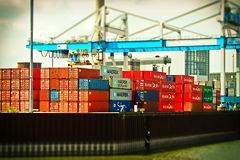
The World Trade Organisation (WTO) has called on Nigeria to remove all market restrictions in accordance with international free market policies, which foster free trade the world over.
The issue of trade prohibitions was the highlight of discussions at the WTO-Nigeria 5th trade policy review, which commenced on Wednesday in Abuja. The review carried out by a delegation from the WTO is aimed at making Nigeria’s trade policies align with global best practises.
In attendance as Counsellor at the review was the Head, African and Management Trade Polices Review Division of the WTO, Jacques Degbelo, who said that the aim of the organisation was to guarantee export promotion across the world but in so doing, no country should place restrictions on free trade and import.
“Trade means you have access to my market and I have access to your market,” Degbelo said, speaking on the need to eliminate all market restrictions, which comprise import restriction lists for accessing foreign exchange and import prohibitions on land borders.
Under the WTO trade policy review mechanism, Nigeria’s trade policy is revised every six or seven years. The WTO review in 2005 described Nigeria’s trade regime as being “protective.”
The International Monetary Fund’s Staff Report for the 2005 Article IV Consultation also declared that the country's trade policy rule “is one of the most restrictive in the world.”
Recent IMF reports show the status quo remains. The Central Bank of Nigeria’s restrictive policies on imports reinforces the perception that Nigeria is in most part, a protectionist economy.
Trade Advisor to the Trade Minister and Nigeria’s Chief Negotiator, Chiedu Osakwe, questioned Nigeria’s motives to promote export and grow foreign exchange reserves, when there is still the existence of a 0.5% levy imposed on export transactions.
Osakwe called for the review of the $600 duty charge on container import per shipment, citing it as a levy that seemed unnecessary and counter-productive. He said, the review will however, take into consideration the importance of the 1% import supervision charge.
Xinyi Li, the WTO’s Trade Policy Analyst of the Trade Policies Review Division, said continuous review of Nigeria’s trade policy will ensure proper communication and the coordination of trade issues among government agencies. He said the review will align the country with the trade policies of other nations, fostering more Nigerian export opportunities across the world.
The issue of trade prohibitions was the highlight of discussions at the WTO-Nigeria 5th trade policy review, which commenced on Wednesday in Abuja. The review carried out by a delegation from the WTO is aimed at making Nigeria’s trade policies align with global best practises.
In attendance as Counsellor at the review was the Head, African and Management Trade Polices Review Division of the WTO, Jacques Degbelo, who said that the aim of the organisation was to guarantee export promotion across the world but in so doing, no country should place restrictions on free trade and import.
“Trade means you have access to my market and I have access to your market,” Degbelo said, speaking on the need to eliminate all market restrictions, which comprise import restriction lists for accessing foreign exchange and import prohibitions on land borders.
Under the WTO trade policy review mechanism, Nigeria’s trade policy is revised every six or seven years. The WTO review in 2005 described Nigeria’s trade regime as being “protective.”
The International Monetary Fund’s Staff Report for the 2005 Article IV Consultation also declared that the country's trade policy rule “is one of the most restrictive in the world.”
Recent IMF reports show the status quo remains. The Central Bank of Nigeria’s restrictive policies on imports reinforces the perception that Nigeria is in most part, a protectionist economy.
Trade Advisor to the Trade Minister and Nigeria’s Chief Negotiator, Chiedu Osakwe, questioned Nigeria’s motives to promote export and grow foreign exchange reserves, when there is still the existence of a 0.5% levy imposed on export transactions.
Osakwe called for the review of the $600 duty charge on container import per shipment, citing it as a levy that seemed unnecessary and counter-productive. He said, the review will however, take into consideration the importance of the 1% import supervision charge.
Xinyi Li, the WTO’s Trade Policy Analyst of the Trade Policies Review Division, said continuous review of Nigeria’s trade policy will ensure proper communication and the coordination of trade issues among government agencies. He said the review will align the country with the trade policies of other nations, fostering more Nigerian export opportunities across the world.
Feb 9, 2017
Source: Financial Nigeria
Source: Financial Nigeria
Các tin khác
- New-generation FTAs open wider export opportunities to Middle East and South Asia (15/06/2026)
- Updated regulations on foreign trade management and import quotas (15/06/2026)
- Mandatory traceability for high-risk goods from July 1st: What should businesses prepare for? (15/06/2026)
- Tariff pressure is forcing businesses to restructure in order to adapt. (15/06/2026)
- Coffee Citizens model aims to lift Vietnamese value chain (15/06/2026)