Home
Home
 About Us



WTO Members clinch agriculture export competition deal, weigh next steps for negotiating future
24/12/2015 12:00
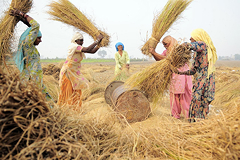
Trade ministers clinched a deal to eliminate agricultural export subsidies this Saturday, following a five-day meet in the Kenyan capital of Nairobi. The WTO Ministerial Conference, the biennial highest decision-making gathering of the multilateral trade system, also agreed a series of other deliverables on farm trade and least developed country issues, while ultimately leaving open the question of how the WTO’s negotiating arm will evolve.
Deliberations during the week of 15-19 December touched upon an array of intricate matters and politically thorny dilemmas, such that decisions adopted on Saturday make it clear that the “post-Nairobi” landscape for the global trade body both as an institution and a negotiating forum is now set to look markedly different than the one preceding the ministerial. The result has consequently drawn a mixed preliminary welcome from trade officials and observers alike, as they work to parse through the various outcomes.
The agreement disciplining agricultural export competition, for example, has been lauded as “historic” by trade officials – an achievement that eluded the trade system for 60 years since the GATT imposed similar curbs on export subsidies for industrial goods. Unsurprisingly deep divisions on the subject among members persisted up to the final hours of the ministerial, requiring round-the-clock negotiations.
On agricultural matters, despite fundamental differences, members managed to bridge their divides – and achieved a result that is likely to have significant ramifications for farm trade and for least developed countries’ participation in global trade flows.
Even so, the text of the ministerial declaration shows that members were unable to overcome profound differences in other key areas, with the document explicitly stating that WTO members remain at odds over the reaffirmation of the Doha Round and subsequent ministerial declarations and decisions.
“We recognize that many Members reaffirm the Doha Development Agenda, and the Declarations and Decisions adopted at Doha and at the Ministerial Conferences held since then, and reaffirm their full commitment to conclude the DDA on that basis. Other Members do not reaffirm the Doha mandates, as they believe new approaches are necessary to achieve meaningful outcomes in multilateral negotiations. Members have different views on how to address the negotiations,” the declaration reads.
In effectively acknowledging the opposing viewpoints without reconciling them – agreeing to disagree – the declaration has shed little light on what lies ahead for the negotiating function of the global trade body, which has long struggled to move out of the shadow cast by the continued lack of resolution in the Doha Round trade talks. The drafting of Part 3 in the ministerial declaration – on the WTO’s future – now presents both a challenge and an opportunity for members, without yet clarity on how to go about them.
“We have to be clear-sighted of the situation we’re in today,” WTO Director-General Roberto Azevêdo told members in the closing ceremony, noting specifically the unresolved divide among members. “We have to face up to this problem. We have to address it.”
The ministerial declaration does note some areas of potential agreement, not least in the “strong commitment” that all members have to continue negotiating the Doha Round issues – while at the same time noting that members do not share the same view of whether they want to continue this work using the existing Doha structure.
The declaration specifically refers to agriculture – domestic support, market access, and export competition – as well as the other two core issues of industrial market access and services as issues where members aim to advance work. It also mentions rules – an area that saw much negotiation but no separate substantive decisions at this ministerial – as well as development and the Trade-Related Aspects of Intellectual Property Rights (TRIPS) Agreement issues.
The declaration states that this “future agenda” should include work on the areas that did see substantive decisions at this ministerial, and that future work will keep development “at its core” with special and differential treatment “integral” to it.
Officials have now been instructed to “find ways to advance negotiations,” with regular reports from the Director-General to the General Council, which is the WTO’s highest-making decision body under the ministerial conference.
One question that was raised in the broader discussions on Doha was how the ministerial declaration would treat the concerns raised from some of the organisation’s newer members, who had undertaken significant market access commitments when joining on the understanding that they would not be required to take additional commitments as a result of the Doha talks, and that the other members were in on-going negotiations aimed at arriving at corresponding levels.
Sources confirmed that this had been one of the key issues under debate in the Ministerial’s final days, raised by members such as China, as well as very recently acceded members such as Russia, Saudi Arabia, Chinese Taipei, and Oman.
The ministerial declaration ultimately features a recognition of the “special situation” faced by “Article XII” members under the WTO Agreement, given these market access commitments, noting that their situation “shall be taken into account” in the negotiations.
Regarding how to engage the WTO in addressing so-called new issues – a critical demand from the almost entire membership, even if most vocally by the US and EU – the document also notes a continued disagreement, while leaving enough ambiguity in its drafting to allow a potential range of options.
“While we concur that officials should prioritize work where results have not yet been achieved, some wish to identify and discuss other issues for negotiation; others do not. Any decision to launch negotiations multilaterally on such issues would need to be agreed by all Members,” the declaration reads...
(to be continued)
Deliberations during the week of 15-19 December touched upon an array of intricate matters and politically thorny dilemmas, such that decisions adopted on Saturday make it clear that the “post-Nairobi” landscape for the global trade body both as an institution and a negotiating forum is now set to look markedly different than the one preceding the ministerial. The result has consequently drawn a mixed preliminary welcome from trade officials and observers alike, as they work to parse through the various outcomes.
The agreement disciplining agricultural export competition, for example, has been lauded as “historic” by trade officials – an achievement that eluded the trade system for 60 years since the GATT imposed similar curbs on export subsidies for industrial goods. Unsurprisingly deep divisions on the subject among members persisted up to the final hours of the ministerial, requiring round-the-clock negotiations.
On agricultural matters, despite fundamental differences, members managed to bridge their divides – and achieved a result that is likely to have significant ramifications for farm trade and for least developed countries’ participation in global trade flows.
Even so, the text of the ministerial declaration shows that members were unable to overcome profound differences in other key areas, with the document explicitly stating that WTO members remain at odds over the reaffirmation of the Doha Round and subsequent ministerial declarations and decisions.
“We recognize that many Members reaffirm the Doha Development Agenda, and the Declarations and Decisions adopted at Doha and at the Ministerial Conferences held since then, and reaffirm their full commitment to conclude the DDA on that basis. Other Members do not reaffirm the Doha mandates, as they believe new approaches are necessary to achieve meaningful outcomes in multilateral negotiations. Members have different views on how to address the negotiations,” the declaration reads.
In effectively acknowledging the opposing viewpoints without reconciling them – agreeing to disagree – the declaration has shed little light on what lies ahead for the negotiating function of the global trade body, which has long struggled to move out of the shadow cast by the continued lack of resolution in the Doha Round trade talks. The drafting of Part 3 in the ministerial declaration – on the WTO’s future – now presents both a challenge and an opportunity for members, without yet clarity on how to go about them.
“We have to be clear-sighted of the situation we’re in today,” WTO Director-General Roberto Azevêdo told members in the closing ceremony, noting specifically the unresolved divide among members. “We have to face up to this problem. We have to address it.”
The ministerial declaration does note some areas of potential agreement, not least in the “strong commitment” that all members have to continue negotiating the Doha Round issues – while at the same time noting that members do not share the same view of whether they want to continue this work using the existing Doha structure.
The declaration specifically refers to agriculture – domestic support, market access, and export competition – as well as the other two core issues of industrial market access and services as issues where members aim to advance work. It also mentions rules – an area that saw much negotiation but no separate substantive decisions at this ministerial – as well as development and the Trade-Related Aspects of Intellectual Property Rights (TRIPS) Agreement issues.
The declaration states that this “future agenda” should include work on the areas that did see substantive decisions at this ministerial, and that future work will keep development “at its core” with special and differential treatment “integral” to it.
Officials have now been instructed to “find ways to advance negotiations,” with regular reports from the Director-General to the General Council, which is the WTO’s highest-making decision body under the ministerial conference.
One question that was raised in the broader discussions on Doha was how the ministerial declaration would treat the concerns raised from some of the organisation’s newer members, who had undertaken significant market access commitments when joining on the understanding that they would not be required to take additional commitments as a result of the Doha talks, and that the other members were in on-going negotiations aimed at arriving at corresponding levels.
Sources confirmed that this had been one of the key issues under debate in the Ministerial’s final days, raised by members such as China, as well as very recently acceded members such as Russia, Saudi Arabia, Chinese Taipei, and Oman.
The ministerial declaration ultimately features a recognition of the “special situation” faced by “Article XII” members under the WTO Agreement, given these market access commitments, noting that their situation “shall be taken into account” in the negotiations.
Regarding how to engage the WTO in addressing so-called new issues – a critical demand from the almost entire membership, even if most vocally by the US and EU – the document also notes a continued disagreement, while leaving enough ambiguity in its drafting to allow a potential range of options.
“While we concur that officials should prioritize work where results have not yet been achieved, some wish to identify and discuss other issues for negotiation; others do not. Any decision to launch negotiations multilaterally on such issues would need to be agreed by all Members,” the declaration reads...
(to be continued)
Source: ICTSD
For further content of this article, please find the attached file.
| Tải tài liệu | |
|---|---|
| wto-members-clinch-agriculture-export-competition-deal | |
Các tin khác
- New-generation FTAs open wider export opportunities to Middle East and South Asia (15/06/2026)
- Updated regulations on foreign trade management and import quotas (15/06/2026)
- Mandatory traceability for high-risk goods from July 1st: What should businesses prepare for? (15/06/2026)
- Tariff pressure is forcing businesses to restructure in order to adapt. (15/06/2026)
- Coffee Citizens model aims to lift Vietnamese value chain (15/06/2026)