Home
Home
 About Us


WTO chief attempts to breathe life into Doha talks
30/06/2014 12:00
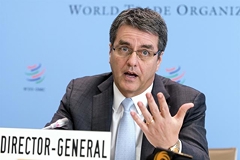
When members of the World Trade Organisation launched the Doha round of negotiations after the September 11 2001 terrorist attacks, it was billed by many as a transformative exercise for the global economy.These days, however, in and around the WTO’s headquarters the real exercise is in reducing expectations rather than raising them. If anything, after almost 13 years of fruitless negotiations the emphasis is on finding a way past the Doha round so that the world – and the WTO – can move on.“This is not the round to end all rounds,” says Roberto Azevêdo, who in September took over as director-general of the WTO from Pascal Lamy and was one of the Doha round’s original architects. Other frustrated trade officials speak longingly of a future of smaller, sectoral agreements and a more nimble WTO.But behind closed doors in Geneva and capitals around the world, Mr Azevêdo has in recent months been meeting ambassadors and ministers from the WTO’s 160 members in an effort finally to deliver the broad freeing up of the global trade in agriculture, manufactured goods and services that the Doha round promised. It is a process he hopes will accelerate in the months to come.The ultimate goal is likely to be less ambitious than the one envisioned by the likes of Mr Lamy and Robert Zoellick, who were EU trade commissioner and US trade representatives respectively when they argued for the launch of the Doha round in 2001. These days the words that emerge in meetings with key players in Geneva are “simplification” and “doability”.Mr Azevêdo also remains studiously sober. “There are no magic solutions or short-cuts here,” he told members this week.But if all goes as planned (although very little has with the Doha round) by December the WTO’s members will have agreed to a detailed road map on how to proceed. And by December 2015, when the world’s trade ministers are due to gather for the next biennial WTO ministerial, the deal will be done.Yet the obstacles are familiar and formidable. In July 2008 Mr Lamy tried to act as midwife to what was known as “Doha 2.0” in 10 days of fraught meetings in Geneva. The talks ended in deadlock.Broadly, the dominant theme today is the same as it was then: the future of the global trading system is being held up by a stand-off between the US and other rich economies on one side and emerging economies such as China on the other.The key issues are largely the same, too. Developing economies want the US, EU and other rich economies to stop generous subsidies to their farmers. Everyone wants greater access to markets for their agricultural and manufactured products.There are no magic solutions or short-cuts hereIf anything, these issues have become more complex. In a confidential paper circulated at the WTO this year, researchers for the Cairns Group of agricultural producing countries said subsidies to farmers in many emerging economies had risen substantially since 2001.Over the same period, the trade-distorting subsidies in the EU and US, traditionally the targets of criticism, had fallen significantly as a result of reform and rising commodity prices.This reflects the much broader changes the world has seen since Doha was launched in 2001. China, which joined the WTO the same year, has an economy that bears little resemblance to the one 13 years ago. Geopolitics are transformed: emerging powers such as China and Russia now engage in brazen power politics while the US views trade policy as a key component of its response.The US has responded with what Mike Froman, US trade representative, this month called a “major architectural effort” to revamp the “rules, relationships and institutions that have underpinned the global trading system”. That effort has Washington leading negotiations to form regional trading blocs in the Pacific Rim and across the Atlantic and to update the rules governing the booming trade in services.“The strategic logic of this agenda is as compelling as the economic one,” Mr Froman told the US Council on Foreign Relations last week.For all the challenges, Mr Azevêdo is carrying a quiet confidence these days, in large part because of the success he had with the WTO’s last ministerial in Bali last December. There, the body’s members delivered an agreement to reduce customs red tape at borders around the world in the WTO’s first actual negotiating outcome in the almost 20 years it has been in existence.A threat from some African members of the WTO to treat the Bali agreement as “provisional” until the Doha round is delivered in full has unsettled some in Geneva. But it appears likely to dissipate and many key players in Geneva say they are determined to move on. The cost of not doing so would be another existential crisis for the WTO and a slide further into irrelevance when it comes to negotiating trade liberalisation.As one senior trade official said of the Doha round: “You can’t kill it unless you deliver it.”
June 26, 2014
Source: ft.com
Các tin khác
- Viet Nam's steel industry takes another step forward in the anti-dumping lawsuit against Chinese goods (17/06/2026)
- Türkiye launches anti-dumping probe into car tire imports (17/06/2026)
- TRA proposes extending anti-dumping measure on wire rod (17/06/2026)
- Ample room remains for Viet Nam–India logistics cooperation (17/06/2026)
- Local authorities to directly issue fragrant rice export certificates from July 2026 (17/06/2026)