Home
Home
 About Us



Visclosky urges action against illegal steel trade
01/12/2008 12:00
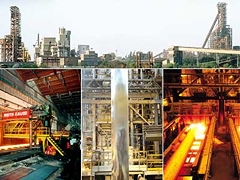
U.S. Rep. Pete Visclosky, D-Ind., this morning testified before the U.S. International Trade Commission, urging the ITC to enforce trade laws so that international trade does not further hamper the steel industry.
“The U.S. economy is struggling and Northwest Indiana is now staring 2,444 layoffs at the Burns Harbor plant right in the face,” said Visclosky, referring to Friday’s layoff announcement by Mittal Steel. “Everybody is hurting and the situation demands action. I will continue to do everything possible, such as fighting to enforce our trade laws, to revitalize our economy nationally, to stabilize steel, and to build a new economy in Northwest Indiana. We cannot allow countries like China and Korea to ship their unemployment to the United States.”
Today’s ITC hearing sought to determine whether injury is caused to domestic producers of circular welded carbon quality steel line pipe by subsidized imports from China and Korea. The U.S. Department of Commerce had previously determined that those countries illegally subsidize such products. If the ITC finds that those subsidies cause injury to domestic producers, it would lead to antidumping and countervailing duties against them.
In his testimony, Visclosky argued that the evidence of illegal subsidies by China and Korea and their subsequent injury to U.S. producers is “indisputably clear.” He also urged the ITC to think beyond the limits of today’s case and consider the greater economic trends at hand.
Visclosky, chair of the bipartisan Congressional Steel Caucus, argued that with the global economic downturn, other countries are trying to boost their own industries by dumping products on the United States, undercutting American industry and workers. He said the situation demands vigilance and enforcement of trade laws across all products and all sectors of the economy.
“If we are to maintain a manufacturing base in the United States, we must have zero tolerance for unfair and illegal imports,” Visclosky said.
He continued: “As we work on rebuilding our economy, we cannot leave ourselves vulnerable to illegally subsidized imports from others who will be tempted to rebuild their economies the easy way, by dumping. Given our past experiences I am concerned that others will be incentivized to ‘dump’ their unemployment on the United States. Thus, we must be especially vigilant and work to ensure that the letter and spirit of our laws are followed and, when appropriate and necessary, to impose warranted sanctions under the law.”
“The U.S. economy is struggling and Northwest Indiana is now staring 2,444 layoffs at the Burns Harbor plant right in the face,” said Visclosky, referring to Friday’s layoff announcement by Mittal Steel. “Everybody is hurting and the situation demands action. I will continue to do everything possible, such as fighting to enforce our trade laws, to revitalize our economy nationally, to stabilize steel, and to build a new economy in Northwest Indiana. We cannot allow countries like China and Korea to ship their unemployment to the United States.”
Today’s ITC hearing sought to determine whether injury is caused to domestic producers of circular welded carbon quality steel line pipe by subsidized imports from China and Korea. The U.S. Department of Commerce had previously determined that those countries illegally subsidize such products. If the ITC finds that those subsidies cause injury to domestic producers, it would lead to antidumping and countervailing duties against them.
In his testimony, Visclosky argued that the evidence of illegal subsidies by China and Korea and their subsequent injury to U.S. producers is “indisputably clear.” He also urged the ITC to think beyond the limits of today’s case and consider the greater economic trends at hand.
Visclosky, chair of the bipartisan Congressional Steel Caucus, argued that with the global economic downturn, other countries are trying to boost their own industries by dumping products on the United States, undercutting American industry and workers. He said the situation demands vigilance and enforcement of trade laws across all products and all sectors of the economy.
“If we are to maintain a manufacturing base in the United States, we must have zero tolerance for unfair and illegal imports,” Visclosky said.
He continued: “As we work on rebuilding our economy, we cannot leave ourselves vulnerable to illegally subsidized imports from others who will be tempted to rebuild their economies the easy way, by dumping. Given our past experiences I am concerned that others will be incentivized to ‘dump’ their unemployment on the United States. Thus, we must be especially vigilant and work to ensure that the letter and spirit of our laws are followed and, when appropriate and necessary, to impose warranted sanctions under the law.”
Posted 11/24/2008
Source: www.chestertontribune.com
Source: www.chestertontribune.com
Các tin khác
- Rising global shipping costs put pressure on Viet Nam’s seafood exporters (22/06/2026)
- India likely to retain anti-dumping duties on Bangladeshi jute products (22/06/2026)
- Japan slaps anti-dumping duties on Chinese, Taiwanese steel (22/06/2026)
- India initiates anti-dumping probe against a Chinese, Japanese chemical used in tyre, rubber items (22/06/2026)
- Reasons why the US continues to suspend customs clearance for Vietnamese trailers (22/06/2026)