Home
Home
 About Us


Vietnamese businesses face US tariff wall
25/08/2025 11:09
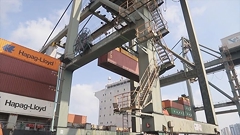
Vietnam's import-export activities are facing great opportunities and new challenges as global trade policies change, especially from the United States.
Businesses emphasize the importance of strategic flexibility, ensuring stable supply chains and maintaining Vietnam's attractiveness to international investors.
Vietnam's import and export seek direction in the context of global trade fluctuations
Vietnam's import-export activities are facing both great opportunities and new challenges due to trade policy adjustments from major economies - especially the United States. This is an issue discussed by businesses at the 2025 Import-Export Forum with the theme "New Strategy in Global Flows".
In two in-depth discussion sessions, delegates said that the new tax rate of 19% compared to 20% is not much different. Vietnam still maintains a competitive advantage of about 1%. This is a completely manageable gap, and if there are appropriate policies, Vietnam will continue to be attractive to investors. However, the issue of concern is the 40% reciprocal tax rate for transit goods.
Mr. Kantrud Matthew Justin - General Director of Northstar Precision Co., Ltd. (Vietnam) said: "Normally, companies only grasp information at the direct supplier level, but do not go deeper. Therefore, businesses need to analyze the entire supply chain, understand their products, know the origin, as well as the standards that partners are applying."
Mr. Surakij Kiatthanakorn – General Director of Amata Bien Hoa Urban Joint Stock Company shared: “In the past, one of the main reasons for strong FDI inflows into Vietnam was to take advantage of production for export. Therefore, ensuring clarity and stability in transit policies is essential to maintain investor confidence.”
Mr. Zhu Ming An - Chief Financial Officer (CFO) of Kingmaker III (Vietnam) Footwear Co., Ltd. proposed the solution: "Our current countermeasures are to increase the localization of supply sources in Vietnam, specifically developing new products in Vietnam, and at the same time transferring some production processes to Vietnam, followed by discussing with brands about a common tariff sharing plan."
Speakers also said that to promote the private economy and deeply penetrate the global supply chain, businesses need to build long-term strategies to flexibly adapt to the requirements of the international market - from responding to trade defense investigations to product orientation when export markets change.
Source: VietnamVN
Các tin khác
- U.S. to Impose Duties on Mexican, Thai, Vietnamese Chassis (03/06/2026)
- Mexican sugar producers push to scrap U.S. import quotas (03/06/2026)
- Japan launched an anti-dumping investigation into flat steel imports from three countries (03/06/2026)
- Eurochem challenges anti-dumping duties in the EU (03/06/2026)
- Pangasius prices in Viet Nam surge due to high export demand (03/06/2026)