Home
Home
 About Us



US Tariffs on Vietnamese Exports: Analyzing the New Framework
04/07/2025 04:17
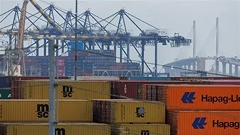
In a significant move, US President Donald Trump has announced new tariffs on Vietnamese exports, imposing a 20 percent duty along with a 40 percent levy on goods deemed to be transshipped. This development could reshape trade dynamics between the two nations.
It is here. US President Donald Trump has announced a 20 percent tariff on several of Vietnam’s exports and a 40 percent duty on transshipments from third countries. Before these rates were announced, on July 2, President Trump and Vietnam’s President To Lam had spoken on the phone.
With the official rates significantly lower than the 46 percent initially threatened, both sides claim that the trade negotiations, which lasted more than two months, have yielded a win-win result.
Vietnam has become the third country to announce a tariff agreement with the US, following that of the UK and China.
What did the US say?
The US President Trump made his announcement via Truth Social ( a social media platform), just days before the July 9 deadline of the 90-day tariff truce. While providing no substantive clarification on how “transshipped” products will be identified, Trump claimed the deal means Vietnam will “open their market to the United States” with US businesses being able to sell products into Vietnam at “ZERO Tariff.” He also predicted that sport utility vehicles (SUVs) will be among the US exports benefiting from the agreement with Vietnam.
While mentioning the 20 percent tariff on imports from Vietnam, President Trump has not clarified whether this new levy is an addition to or a replacement for previous tariffs.
What did Vietnam say?
On July 2, Vietnam’s Ministry of Foreign Affairs announced the tariff agreement, noting that the US President reaffirmed his administration’s commitment to working with Vietnam on issues affecting bilateral trade, especially in areas both sides prioritize. Meanwhile, To Lam urged the US to promptly recognize Vietnam as a market economy and remove export restrictions on certain high-tech products.
The two leaders also discussed steps to strengthen the Comprehensive Strategic Partnership in the years to come. They agreed to enhance delegation exchanges and high-level contacts, and to boost cooperation in economics, trade, and investment, with a focus on key areas such as science and advanced technology.
Impacts of the 20 percent levy on imports from Vietnam
Despite being significantly lower than the 46 percent rate, the newly announced 20 percent tariff is double the current 10 percent tariff rate that the US imposed on Vietnamese imports on April 21, 2025.
Many experts believe that the new tariff can be seen either as a relief from the earlier threat or as a greater burden to US importers and consumers. Increasing the tariff on Vietnamese goods to 20 percent will raise costs for US importers, potentially leading to pass-down costs for suppliers or higher prices for consumers.
According to CNBC, a 10 percent US tariff on Vietnamese goods would result in an approximate 8 percent increase in the cost of imported men’s sweaters. Meanwhile, under the 46 percent tariff initially imposed by President Trump on Vietnam, the price of such sweaters would rise by approximately 35 percent.
One notion is that, according to Bloomberg, some officials in the US government want tariffs for Vietnam and others in Southeast Asia to be sufficiently lower than those imposed on China, in order to encourage production to leave that country.
How to determine ‘transhipments’ subject to a 40 percent tariff
A 40 percent rate is set to be imposed on goods deemed to be “transshipping,” which has not been supported by guidelines. Experts suggest this targets Chinese-origin goods minimally processed in Vietnam before re-export to the US.
Currently, a key tool for determining transhipments is the Country of Origin Marking on US imports.
General provisions of the Country of Origin Marking
According to the US Customs and Border Protection (USCBP), every article of foreign origin entering the US must be legibly marked with the English name of the country of origin unless an exception from marking is provided for in the law. The marking’s purpose is to inform the final buyer in the US about where the product was manufactured.
The most effective marking integrates with the product itself, such as via branding, stenciling, stamping, printing, molding, or similar techniques. Other marking methods can also be acceptable, provided that they remain legible and visible until the product reaches the final US purchaser. The marking must withstand handling, meaning it should only be defaced, destroyed, removed, altered, obliterated, or obscured through intentional actions.
How country of origin is determined under the regime
USCBP clarifies that the country of origin is where the article is manufactured, produced, or grown. The country of origin of an article may change in a secondary country in one of the following situations:
Additional work or material is added in the second country, resulting in a substantial transformation. A substantial transformation is when a new article with a different name, character, and use is created.
For a good from a NAFTA country: if under the NAFTA Marking Rules (19 CFR Part 102), the second country is determined to be the country of origin; or
For an article considered a textile or apparel product (regardless of whether it is from a NAFTA country), if the country of origin is determined by the general rules in Part 102.21 of 19 Code of Federal Regulations (CFR) to be the second country. To determine if a textile or apparel product is from Israel, the general rules in Part 12.130 of 19 CFR apply.
While waiting for further guidelines from both countries, businesses shall refer to this regime to avoid possible product labels as “transshipment”.
Source: Vietnam Briefing
Các tin khác
- U.S. to Impose Duties on Mexican, Thai, Vietnamese Chassis (03/06/2026)
- Mexican sugar producers push to scrap U.S. import quotas (03/06/2026)
- Japan launched an anti-dumping investigation into flat steel imports from three countries (03/06/2026)
- Eurochem challenges anti-dumping duties in the EU (03/06/2026)
- Pangasius prices in Viet Nam surge due to high export demand (03/06/2026)