Home
Home
 About Us



US Plans Further Duties On Chinese Steel
20/07/2016 12:00
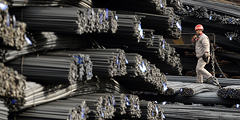
On July 12, the US Department of Commerce (Commerce) announced its affirmative preliminary decision to impose anti-subsidy countervailing duties (CVDs) on imports of stainless steel sheet and strip from China.
Commerce has calculated preliminary CVD margins on the product of between 57.30 percent and 193.12 percent. The latter rate is applicable to those Chinese companies who were mandatory respondents, but who were considered not to have participated in Commerce's investigation.
As a result of its determination, Commerce will instruct US Customs and Border Protection (CBP) to require cash deposits on imports based on the preliminary rates. As critical circumstances were also found to exist with respect to all Chinese exporters of stainless steel sheet and strip, CBP will be instructed to impose those provisional measures on a 90-day retroactive basis.
Commerce is scheduled to announce its final CVD determination on November 23, 2016, and the US International Trade Commission is scheduled to make its final injury determination approximately 45 days after Commerce issues that determination.
In addition, Commerce is currently scheduled to issue a preliminary anti-dumping duty (AD) decision on the same product on September 12, 2016. The US steel producers, which petitioned for the investigation in February this year, have requested ADs ranging from about 50 percent to 75 percent to offset alleged unfair low pricing.
The United States imported about USD302m of the products from China in 2015. US producers contend that imports of stainless steel sheet and strip from China increased by 133 percent between 2013 and that year.
This dispute is, of course, only one in a series of current trade disputes involving the US steel sector and Chinese producers, over which Commerce has begun to impose very substantial CVD and AD margins that are far higher than those on other countries' exporters. Other investigations include imports of cold-rolled steel flat products, non-oriented electrical steel, corrosion-resistant steel products, and carbon and alloy steel cut-to-length plate.
Following the latest decision by Commerce, the Chinese Ministry of Commerce (MOC) has reacted swiftly. In previous statements, it has emphasized that, in its opinion, the current overcapacity in the global steel industry is due to weak economic growth and reduced global demand, and that the US steel industry is also suffering from a lack of investment in new technology. All countries, it has said, should strengthen their cooperation, rather than resorting to frequent trade protection measures.
In this dispute, an MOC official has immediately stated that China believes the United States "has deliberately misinterpreted the relevant World Trade Organization (WTO) rules and rulings [while obtaining of information from Chinese producers], and expressed strong dissatisfaction with its unreasonable practices." It was confirmed that the MOC "will use the WTO dispute settlement mechanism to resolutely defend the interests of Chinese exporters."
Commerce has calculated preliminary CVD margins on the product of between 57.30 percent and 193.12 percent. The latter rate is applicable to those Chinese companies who were mandatory respondents, but who were considered not to have participated in Commerce's investigation.
As a result of its determination, Commerce will instruct US Customs and Border Protection (CBP) to require cash deposits on imports based on the preliminary rates. As critical circumstances were also found to exist with respect to all Chinese exporters of stainless steel sheet and strip, CBP will be instructed to impose those provisional measures on a 90-day retroactive basis.
Commerce is scheduled to announce its final CVD determination on November 23, 2016, and the US International Trade Commission is scheduled to make its final injury determination approximately 45 days after Commerce issues that determination.
In addition, Commerce is currently scheduled to issue a preliminary anti-dumping duty (AD) decision on the same product on September 12, 2016. The US steel producers, which petitioned for the investigation in February this year, have requested ADs ranging from about 50 percent to 75 percent to offset alleged unfair low pricing.
The United States imported about USD302m of the products from China in 2015. US producers contend that imports of stainless steel sheet and strip from China increased by 133 percent between 2013 and that year.
This dispute is, of course, only one in a series of current trade disputes involving the US steel sector and Chinese producers, over which Commerce has begun to impose very substantial CVD and AD margins that are far higher than those on other countries' exporters. Other investigations include imports of cold-rolled steel flat products, non-oriented electrical steel, corrosion-resistant steel products, and carbon and alloy steel cut-to-length plate.
Following the latest decision by Commerce, the Chinese Ministry of Commerce (MOC) has reacted swiftly. In previous statements, it has emphasized that, in its opinion, the current overcapacity in the global steel industry is due to weak economic growth and reduced global demand, and that the US steel industry is also suffering from a lack of investment in new technology. All countries, it has said, should strengthen their cooperation, rather than resorting to frequent trade protection measures.
In this dispute, an MOC official has immediately stated that China believes the United States "has deliberately misinterpreted the relevant World Trade Organization (WTO) rules and rulings [while obtaining of information from Chinese producers], and expressed strong dissatisfaction with its unreasonable practices." It was confirmed that the MOC "will use the WTO dispute settlement mechanism to resolutely defend the interests of Chinese exporters."
Source: Tax News
Các tin khác
- New-generation FTAs open wider export opportunities to Middle East and South Asia (15/06/2026)
- Updated regulations on foreign trade management and import quotas (15/06/2026)
- Mandatory traceability for high-risk goods from July 1st: What should businesses prepare for? (15/06/2026)
- Tariff pressure is forcing businesses to restructure in order to adapt. (15/06/2026)
- Coffee Citizens model aims to lift Vietnamese value chain (15/06/2026)