Home
Home
 About Us



US officially exempts some key food items from reciprocal tariffs
19/11/2025 04:18
US President Donald Trump on November 13 signed an executive order exempting a range of imported food items, including beef, tomatoes, coffee, and bananas, from the widespread reciprocal tariffs introduced earlier this year.
This move is part of a broader effort by the Trump administration to address growing concerns among American citizens about persistently high food prices.
The Viet Nam News Agency's correspondent in Washington cited a statement from the White House indicating that the new exemptions, effective retroactively as of midnight on November 13 (local time), represent a significant shift in Trump's previously firm stance that his import tax policy does not contribute to inflation.
This reversal follows a series of Democratic victories in state and local elections in Virginia, New Jersey and New York on November 4, which underscored affordability as a pressing issue for the electorate.
In recent weeks, Trump has shifted his focus entirely to affordability, asserting that any additional costs should be attributed to the policies of his predecessor, Joe Biden, rather than his own tariff strategies.
The American consumer is frustrated with the high cost of food. Economists suggest that the high food prices, which many Americans continue to experience, are partly the result of these import tariffs. This situation could worsen next year as companies begin to pass the full burden of tariffs onto consumers.
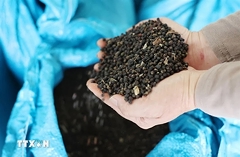
According to the Viet Nam Pepper and Spice Association (VPSA), spices are also on the exemption list, which is a positive signal for imported spice products.
For Viet Nam, a major exporter of pepper and spices, this presents a favourable opportunity to regain market share in the US, provided that businesses meet the necessary import standards, quality and certification requirements.
However, the association cautioned that exemptions from countervailing duties do not equate to waivers of all import tariffs. Companies are still required to comply with standard US import taxes, customs procedures, food safety standards, and certifications.
Moreover, not all agricultural products qualify for tariff exemptions.
Although spices are included in the list, Vietnamese businesses are advised to verify details with US importers and to stay updated on non-tariff risks, including sanitary and phytosanitary standards, residue testing, and traceability requirements.
Source: Việt Nam News
Các tin khác
- U.S. to Impose Duties on Mexican, Thai, Vietnamese Chassis (03/06/2026)
- Mexican sugar producers push to scrap U.S. import quotas (03/06/2026)
- Japan launched an anti-dumping investigation into flat steel imports from three countries (03/06/2026)
- Eurochem challenges anti-dumping duties in the EU (03/06/2026)
- Pangasius prices in Viet Nam surge due to high export demand (03/06/2026)