Home
Home
 About Us



US faults Chinese company’s aluminium exports over antidumping rules
15/11/2016 12:00
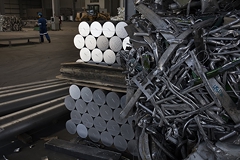
The US Commerce Department, in a preliminary finding, said certain aluminium exports by China Zhongwang Holdings to the US circumvented antidumping restrictions imposed on the company in 2010.
The investigation was initiated last year in response to allegations by a US trade group that China Zhongwang and companies affiliated with its founder, Liu Zhongtian, were shipping aluminium in the form of shipping pallets into the US to evade punitive tariffs. The Commerce Department in 2010 punished China Zhongwang and other Chinese producers with tariffs as high as 374.15 per cent after finding they were receiving illegal subsidies and dumping, or selling products in the US below market prices.
The preliminary determination, detailed in a Nov. 3 memorandum from Christian Marsh, the Commerce Department’s deputy assistant secretary for antidumping and countervailing duty operations, found that a type of aluminium that didn’t fall under the scope of the 2010 ruling should be subject to restrictive tariffs.
The aluminium is so similar to restricted metal that it can be passed off as virtually the same kind, the memo said.
The findings apply to all Chinese aluminium exporters and US importers.
“We are gratified by Commerce’s preliminary determination to take steps to shut down what has been a significant avenue of circumvention for Zhongwang and other Chinese producers,” Alan Price, counsel to the US trade group and chair of international trade practice at Wiley Rein LLP, a Washington, D.C., law firm.
The decision comes as US metals producers are struggling to compete against a flood of aluminium and steel produced in China, which they say is subsidised by the Chinese government, depressing prices. Alcoa, the largest American aluminium maker by volume, last week split away from its profitable parts-making unit. By the end of the year, only five aluminium smelters will be operating in the US, down from 23 in 2000.
After the US this year imposed a raft of new tariffs on Chinese steel imports, Chinese steelmakers figured out another way to penetrate US markets, shipping their steel via Vietnam, according to American steel producers. The Commerce Department on Monday opened two investigations into the practice. By shipping the metal to Vietnam before sending it to the US, the companies effectively mask its origin, hoping to skirt tariffs against Chinese-made steel.
China Zhongwang, initially contacted by US government officials in April, didn’t respond to questions, the Commerce Department said. By withholding information, “Zhongwang significantly impeded the proceeding, “ Commerce said.
By not responding, “Zhongwang has failed to co-operate to the best of its ability in providing the requested information,” Commerce said.
China Zhongwang President Lu Changquing, in a written response to the findings, said it chose not to participate in the inquiry because it ceased production of the products addressed by the Commerce Department’s investigation in early 2015. “[W]e have no plans to produce or sell such products in the future,” he wrote.
The Wall Street Journal reported in September that the Commerce Department was investigating whether thousands of tons of aluminium at a factory in a Philadelphia suburb formed part of an alleged scheme by Mr Zhongtian to evade tariffs by disguising the metal as shipping pallets. Aluminium Shapes LLC, which said it didn’t control any of the pallets at its facility, wasn’t specifically mentioned in the Commerce Department’s Nov. 3 memo.
A US trade group has alleged to the Commerce Department that the pallets at Aluminum Shapes were imported as a way of circumventing tariffs on so-called extrusions, products made by heating and squeezing aluminium into shapes such as pipes and construction beams. Pallets, made by welding multiple extrusions together, aren’t on the Commerce Department’s list of penalised items.
Mr Liu and China Zhongwang were also subjects of a Journal article in September detailing allegations that firms linked to Mr Liu tried to disguise the Chinese origin of large quantities of aluminium and avoid US tariffs by routing it through Mexico. Mr Liu denied any connection to the metal stockpiled in Mexico.
In October, the Journal reported that the Department of Homeland Security and Justice Department launched a probe into whether some US companies linked to Mr Liu illegally avoided punitive tariffs. Homeland Security agents have questioned former employees of companies associated with Mr Liu in the investigation, which involves whether the companies committed criminal or civil violations that could include smuggling, conspiracy and wire fraud.
Last week, a dozen US senators asked the Obama administration to block a $US1.1 billion deal reached in August for Zhongwang USA LLC, controlled by Mr Liu, to purchase a Cleveland-based aluminium company, Aleris Corp. The senators, in a letter sent to Treasury Secretary Jack Lew, said the deal would “directly undermine our national security, including by jeopardising the US manufacturing base for sensitive technologies,” including military applications.
Zhongwang USA is an investment company owned by Zhongwang International Group Ltd., the parent company of China Zhongwang.
An Aleris spokesman, responding to the letter, said last week that less than 1 per cent of its 2015 volume went to defence applications. A Zhongwang spokeswoman said the deal “will bring in additional resources and capital” to Aleris.
The investigation was initiated last year in response to allegations by a US trade group that China Zhongwang and companies affiliated with its founder, Liu Zhongtian, were shipping aluminium in the form of shipping pallets into the US to evade punitive tariffs. The Commerce Department in 2010 punished China Zhongwang and other Chinese producers with tariffs as high as 374.15 per cent after finding they were receiving illegal subsidies and dumping, or selling products in the US below market prices.
The preliminary determination, detailed in a Nov. 3 memorandum from Christian Marsh, the Commerce Department’s deputy assistant secretary for antidumping and countervailing duty operations, found that a type of aluminium that didn’t fall under the scope of the 2010 ruling should be subject to restrictive tariffs.
The aluminium is so similar to restricted metal that it can be passed off as virtually the same kind, the memo said.
The findings apply to all Chinese aluminium exporters and US importers.
“We are gratified by Commerce’s preliminary determination to take steps to shut down what has been a significant avenue of circumvention for Zhongwang and other Chinese producers,” Alan Price, counsel to the US trade group and chair of international trade practice at Wiley Rein LLP, a Washington, D.C., law firm.
The decision comes as US metals producers are struggling to compete against a flood of aluminium and steel produced in China, which they say is subsidised by the Chinese government, depressing prices. Alcoa, the largest American aluminium maker by volume, last week split away from its profitable parts-making unit. By the end of the year, only five aluminium smelters will be operating in the US, down from 23 in 2000.
After the US this year imposed a raft of new tariffs on Chinese steel imports, Chinese steelmakers figured out another way to penetrate US markets, shipping their steel via Vietnam, according to American steel producers. The Commerce Department on Monday opened two investigations into the practice. By shipping the metal to Vietnam before sending it to the US, the companies effectively mask its origin, hoping to skirt tariffs against Chinese-made steel.
China Zhongwang, initially contacted by US government officials in April, didn’t respond to questions, the Commerce Department said. By withholding information, “Zhongwang significantly impeded the proceeding, “ Commerce said.
By not responding, “Zhongwang has failed to co-operate to the best of its ability in providing the requested information,” Commerce said.
China Zhongwang President Lu Changquing, in a written response to the findings, said it chose not to participate in the inquiry because it ceased production of the products addressed by the Commerce Department’s investigation in early 2015. “[W]e have no plans to produce or sell such products in the future,” he wrote.
The Wall Street Journal reported in September that the Commerce Department was investigating whether thousands of tons of aluminium at a factory in a Philadelphia suburb formed part of an alleged scheme by Mr Zhongtian to evade tariffs by disguising the metal as shipping pallets. Aluminium Shapes LLC, which said it didn’t control any of the pallets at its facility, wasn’t specifically mentioned in the Commerce Department’s Nov. 3 memo.
A US trade group has alleged to the Commerce Department that the pallets at Aluminum Shapes were imported as a way of circumventing tariffs on so-called extrusions, products made by heating and squeezing aluminium into shapes such as pipes and construction beams. Pallets, made by welding multiple extrusions together, aren’t on the Commerce Department’s list of penalised items.
Mr Liu and China Zhongwang were also subjects of a Journal article in September detailing allegations that firms linked to Mr Liu tried to disguise the Chinese origin of large quantities of aluminium and avoid US tariffs by routing it through Mexico. Mr Liu denied any connection to the metal stockpiled in Mexico.
In October, the Journal reported that the Department of Homeland Security and Justice Department launched a probe into whether some US companies linked to Mr Liu illegally avoided punitive tariffs. Homeland Security agents have questioned former employees of companies associated with Mr Liu in the investigation, which involves whether the companies committed criminal or civil violations that could include smuggling, conspiracy and wire fraud.
Last week, a dozen US senators asked the Obama administration to block a $US1.1 billion deal reached in August for Zhongwang USA LLC, controlled by Mr Liu, to purchase a Cleveland-based aluminium company, Aleris Corp. The senators, in a letter sent to Treasury Secretary Jack Lew, said the deal would “directly undermine our national security, including by jeopardising the US manufacturing base for sensitive technologies,” including military applications.
Zhongwang USA is an investment company owned by Zhongwang International Group Ltd., the parent company of China Zhongwang.
An Aleris spokesman, responding to the letter, said last week that less than 1 per cent of its 2015 volume went to defence applications. A Zhongwang spokeswoman said the deal “will bring in additional resources and capital” to Aleris.
Nov 9, 2015
Source: The Australian
Source: The Australian
Các tin khác
- New-generation FTAs open wider export opportunities to Middle East and South Asia (15/06/2026)
- Updated regulations on foreign trade management and import quotas (15/06/2026)
- Mandatory traceability for high-risk goods from July 1st: What should businesses prepare for? (15/06/2026)
- Tariff pressure is forcing businesses to restructure in order to adapt. (15/06/2026)
- Coffee Citizens model aims to lift Vietnamese value chain (15/06/2026)