Home
Home
 About Us



US deals fatal blow to world trade talks
11/03/2009 12:00
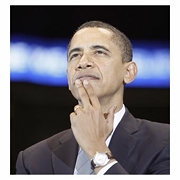
Under pressure from business lobbies and organised labour, the Obama administration has just dealt a potentially fatal blow to long-stalled world trade negotiations.
This first foreign policy blunder has an eerie echo of the 1930s. The United States may come to regret having spurned an opportunity to reconfirm its commitment to an open trading system.
Worst recession
By accepting what is on the table now, Washington could also have prevented emerging countries raising trade barriers as it seeks to export its way out of the worst recession since the Great Depression.
Washington’s demand that other nations offer better market access for US goods sounds like a death knell for negotiations designed to benefit developing states rather than the rich.
Far from forcing down those countries’ trade barriers, the absence of a World Trade Organisation agreement leaves them free to raise tariffs that are often below legally binding WTO levels.
That process is already under way, under political pressure, despite pledges by the G20 nations that represent 85 per cent of world economic output not to take new protectionist measures during the financial crisis.
The volume of world trade is falling for the first time since the early 1980s. World Bank officials Elisa Gamberoni and Richard Newfarmer calculate that 47 new trade restrictions have been implemented, including by 17 of the G20 countries, and more such measures are in the pipeline.
For example, Russia has raised tariffs on used cars, Ecuador has raised tariffs on more than 900 items, Argentina has imposed licensing requirements on a range of goods, Indonesia has restricted the number of import gateways, India has banned Chinese toys, while China has banned Irish pork.
Export subsidies
Rich countries have used subsidies to boost their exports or rescue exporting industries such as the automobile sector. The United States has given a direct $17.4 billion subsidy to its three national manufacturers.
The European Union has announced new export subsidies on butter, cheese and milk powder, and stepped up anti-dumping duties on imports notably from China.
The US and European governments have pressured banks and car companies receiving state aid to give priority to lending and preserving jobs at home rather than abroad.
The creeping erosion of open markets is likely to accelerate as unemployment soars and more companies go bust unless a new world trade pact stops the rot.
WTO Director-General Pascal Lamy is keen to make another attempt to break the deadlock before August.
The only hope is if the Obama administration changes its initial stance and takes a more realistic position once its trade negotiating team is confirmed by the Senate.
This first foreign policy blunder has an eerie echo of the 1930s. The United States may come to regret having spurned an opportunity to reconfirm its commitment to an open trading system.
Worst recession
By accepting what is on the table now, Washington could also have prevented emerging countries raising trade barriers as it seeks to export its way out of the worst recession since the Great Depression.
Washington’s demand that other nations offer better market access for US goods sounds like a death knell for negotiations designed to benefit developing states rather than the rich.
Far from forcing down those countries’ trade barriers, the absence of a World Trade Organisation agreement leaves them free to raise tariffs that are often below legally binding WTO levels.
That process is already under way, under political pressure, despite pledges by the G20 nations that represent 85 per cent of world economic output not to take new protectionist measures during the financial crisis.
The volume of world trade is falling for the first time since the early 1980s. World Bank officials Elisa Gamberoni and Richard Newfarmer calculate that 47 new trade restrictions have been implemented, including by 17 of the G20 countries, and more such measures are in the pipeline.
For example, Russia has raised tariffs on used cars, Ecuador has raised tariffs on more than 900 items, Argentina has imposed licensing requirements on a range of goods, Indonesia has restricted the number of import gateways, India has banned Chinese toys, while China has banned Irish pork.
Export subsidies
Rich countries have used subsidies to boost their exports or rescue exporting industries such as the automobile sector. The United States has given a direct $17.4 billion subsidy to its three national manufacturers.
The European Union has announced new export subsidies on butter, cheese and milk powder, and stepped up anti-dumping duties on imports notably from China.
The US and European governments have pressured banks and car companies receiving state aid to give priority to lending and preserving jobs at home rather than abroad.
The creeping erosion of open markets is likely to accelerate as unemployment soars and more companies go bust unless a new world trade pact stops the rot.
WTO Director-General Pascal Lamy is keen to make another attempt to break the deadlock before August.
The only hope is if the Obama administration changes its initial stance and takes a more realistic position once its trade negotiating team is confirmed by the Senate.
Written by Paul Taylor
Taylor is a Reuters columnist. The opinions expressed are his own.
Taylor is a Reuters columnist. The opinions expressed are his own.
March 10, 2009
Source: www.bdafrica.com
Source: www.bdafrica.com
Các tin khác
- Rising global shipping costs put pressure on Viet Nam’s seafood exporters (22/06/2026)
- India likely to retain anti-dumping duties on Bangladeshi jute products (22/06/2026)
- Japan slaps anti-dumping duties on Chinese, Taiwanese steel (22/06/2026)
- India initiates anti-dumping probe against a Chinese, Japanese chemical used in tyre, rubber items (22/06/2026)
- Reasons why the US continues to suspend customs clearance for Vietnamese trailers (22/06/2026)