Home
Home
 About Us


U.S. cranks up antidumping machine
14/04/2009 12:00
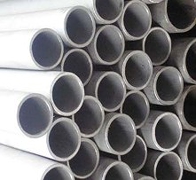
LONDON (Reuters) - Right on cue, U.S. steel producers have filed antidumping and anti-subsidy (countervailing duty) complaints against imports of high-quality steel pipe from China.
The core of the dumping and subsidization accusations is not new. It centers on alleged benefits China's steel producers derive from a legacy of state ownership and aid, as well as their willingness to continue exporting surplus product that cannot be absorbed into the domestic market. But until recently the industry was hampered in bringing a case because of high levels of profitability.
To succeed, the petitioner for antidumping relief must prove (1) that goods have been dumped at below the cost of production, the selling price in the home country or in comparable third countries; and (2) that the dumping caused or threatened "material injury" to producers of the "like product" in the United States.
Because steel producers had been making record profits until last summer, it would have been impossible to prove "material injury." But industry lawyers believe six months of lower prices will be enough to convince officials the industry is suffering real hardship.
In reality, the industry's problems have been caused by the global downturn rather than dumping and subsidization. But U.S. producers will point to the combination of slumping demand at home and continued strong imports from China to make the case that dumped and subsidized Chinese pipe are causing real harm to American competitors.
U.S. producers are complaining because China's steelmakers have not cooperated in their efforts to support prices by closing capacity and preventing a build up of inventory.
RISKS RISE FOR IMPORTERS
The case now moves to the United States International Trade Commission (USITC), which will make a determination about "material injury," and the US Department of Commerce (USDOC), which will determine whether the goods are being dumped below cost or comparable home or third-country prices, and if so by how much.
In the parallel countervailing duty case, USDOC will determine whether the goods have benefited from subsidies that are not consistent with the World Trade Organization (WTO) agreement.
Preliminary determinations are due within the next couple of months, definitive ones later in the year.
But if USDOC and USITC reach preliminary decisions pipe is being dumped or subsidized and causing material injury, U.S. Customs will begin assessing antidumping and countervailing duties on a provisional basis.
From that moment, importers of Chinese steel will be liable to the full (as yet undetermined) duties if the preliminary findings are confirmed later in the year and made definitive.
Given pressure on domestic steel producers, the petitioners may also ask for a "critical circumstances" ruling that could allow antidumping and countervailing duties to be imposed retroactively on imports at any time.
From now on importers of Chinese steel pipe face an uncertain and potentially punitive tariff liability for any pipe entering the country. It will make imports prohibitively risky and is likely to choke off the flow almost immediately -- whatever the eventual outcome of the case.
POLITICS WEIGHS HEAVILY
In theory, antidumping and countervailing duty investigations are a quasi-judicial process governed by statue and the WTO agreements. In practice, the process is at least partly political.
USDOC is an agency of the executive branch. USITC is an independent regulatory agency, but the six commissioners (three from each party) are nominated by the president and confirmed by the Senate.
Senators from states with producers bringing antidumping actions have been known to turn up, sometimes en masse, at Commission hearings to support material injury claims, and make sure commissioners understand what is at stake.
The final stage of the antidumping and countervailing duty process is for the president to "proclaim" the duties and make them active. In theory, the president could decline to make a proclamation and end the process. But it would be exceptionally rare, and even less likely in the current environment.
Despite bold rhetoric from US and European leaders about the need to reaffirm commitment to the open trading system, antidumping and countervailing duty actions in sensitive sectors are gearing up, and G20 leaders are unlikely to risk unpopularity by blocking them.
It would be a mistake, however, to see this as a return to the tariff wars of the 1930s. WTO disciplines on antidumping and countervailing duties actions have tightened the rules for member countries significantly.
U.S. and European officials will argue that they need flexibility to provide exceptional protection for sensitive sectors facing sudden stress, and defuse political opposition, to sustain broader support for an open multilateral trading system.
It may not be pretty, but appeasing protectionist sentiment by permitting controversial antidumping and countervailing duties actions in steel and other basic industries is, unfortunately, the price for protecting the wider WTO-based trading system.
By John Kemp
-- John Kemp is a Reuters columnist. The views expressed are his own --
(Editing by Richard Hubbard)
Thu Apr 9, 2009 10:02am EDT
Source: www.reuters.com
Các tin khác
- Rising global shipping costs put pressure on Viet Nam’s seafood exporters (22/06/2026)
- India likely to retain anti-dumping duties on Bangladeshi jute products (22/06/2026)
- Japan slaps anti-dumping duties on Chinese, Taiwanese steel (22/06/2026)
- India initiates anti-dumping probe against a Chinese, Japanese chemical used in tyre, rubber items (22/06/2026)
- Reasons why the US continues to suspend customs clearance for Vietnamese trailers (22/06/2026)