Home
Home
 About Us



U.S., China Paper Over Trade Frictions in Run-Up to Obama Visit
03/11/2009 12:00
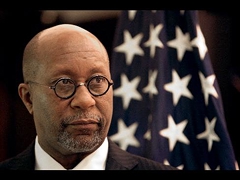
Oct. 29 (Bloomberg) -- U.S. and Chinese trade officials ended talks with a pledge to steer clear of protectionism, even as China announced a probe of imports by Detroit carmakers.
The U.S. won concessions on pork and wind power during the discussions in the Chinese city of Hangzhou aimed at smoothing friction before President Barack Obama’s visit next month. China’s confirmation it planned an investigation into U.S. car imports “did not stand in the way of what was a very productive and necessary” meeting, U.S. Trade Representative Ron Kirk said.
The governments of China and the U.S. must “stand firmly together against trade protectionism,” Chinese Vice Premier Wang Qishan said today.
His comment underscored an effort to resolve disputes between the two economies, which have $409 billion of trade between them. Obama on Sept. 11 levied a 35 percent duty on $1.8 billion of China-made tires. Two days later China said it would look into dumping of U.S. auto parts and chicken products.
China, poised to surpass Japan as the world’s No. 2 economy in 2010, is the second-biggest trading partner for the U.S. after Canada. The Asian nation, which consumes half of the world’s pork, earlier this year blocked shipments of the meat from 49 U.S. states following the outbreak of the H1N1, or swine flu, virus that began in April. The World Health Organization has said the disease is not transmitted through pork.
China wants to “quickly resume” U.S. pork imports, Agriculture Minister Sun Zhengcai told reporters, adding that it wants the U.S. to ensure the quality of its products.
The U.S. is “encouraged” by China’s intent to lift the ban on U.S. pork imports, which is “consistent with science- based international standards,” Agriculture Secretary Tom Vilsack said. We “look forward to an official announcement soon,” he said.
Pork Plunge
U.S. pork exports to China and Hong Kong plunged 70 percent in the first eight months of 2009 from the corresponding period last year, U.S. Department of Agriculture data show. The region was the largest buyer of U.S. pork last year after Japan.
Total U.S. exports of live swine and swine products to China in 2008 were estimated at more than $500 million, the USDA Foreign Agricultural Service said in a September report.
Hog futures, the third-worst commodity investment of 2009, have dropped about 22 percent in Chicago since April 23, when swine flu began making headlines.
Smithfield Foods Inc., the biggest U.S. pork producer, posted its first annual loss since 1975 in June and reported a $162.1 million deficit for its hog-production unit in the three months through Aug. 2.
Wind Power
China also agreed to scrap a requirement for wind-power equipment to be made in the country for government tenders, U.S. Commerce Secretary Gary Locke said. The U.S. is targeting alternative energy as an area where its companies can win business and American technology help China cut carbon emissions.
China pledged to begin a four-month campaign to combat Internet piracy, Kirk said. China’s lack of protection for intellectual property rights have been another key U.S. concern.
The U.S. and China will not impose any further measures to bar each other’s products and eschew trade protectionism, Chen said. The U.S. will stop accepting trade protection cases, while both countries agreed to avoid “abusing” mediation remedies such as filing complaints to the World Trade Organization, he said.
The U.S. side said that China will be treated as a “market economy” trading partner, a classification that makes it harder for anti-dumping measures against Chinese goods.
Auto Probe
Still, Chen confirmed that China is investigating whether U.S. carmakers including General Motors Co. and Ford Motor Co. benefited unfairly from government assistance.
China “has the right to investigate” U.S. auto imports, Chen said. China “will conduct the investigations in a just and transparent review,” he said.
Trade frictions are a “normal part of a growing, mature relationship” that should not derail broader ties, Kirk said.
Exports of U.S. cars to China -- about 9,000 last year, according to the Associated Press -- are dwarfed by sales of American autos manufactured there.
GM, the largest overseas automaker in China, sold 1.29 million cars in the country, surpassing the tally for the whole of 2008 in its second-largest market. Ford’s sales jumped 32 percent to 316,639 vehicles and the company is building a $490 million plant to tap a market that is set to pass the U.S. as the world’s largest this year.
The U.S. won concessions on pork and wind power during the discussions in the Chinese city of Hangzhou aimed at smoothing friction before President Barack Obama’s visit next month. China’s confirmation it planned an investigation into U.S. car imports “did not stand in the way of what was a very productive and necessary” meeting, U.S. Trade Representative Ron Kirk said.
The governments of China and the U.S. must “stand firmly together against trade protectionism,” Chinese Vice Premier Wang Qishan said today.
His comment underscored an effort to resolve disputes between the two economies, which have $409 billion of trade between them. Obama on Sept. 11 levied a 35 percent duty on $1.8 billion of China-made tires. Two days later China said it would look into dumping of U.S. auto parts and chicken products.
China, poised to surpass Japan as the world’s No. 2 economy in 2010, is the second-biggest trading partner for the U.S. after Canada. The Asian nation, which consumes half of the world’s pork, earlier this year blocked shipments of the meat from 49 U.S. states following the outbreak of the H1N1, or swine flu, virus that began in April. The World Health Organization has said the disease is not transmitted through pork.
China wants to “quickly resume” U.S. pork imports, Agriculture Minister Sun Zhengcai told reporters, adding that it wants the U.S. to ensure the quality of its products.
The U.S. is “encouraged” by China’s intent to lift the ban on U.S. pork imports, which is “consistent with science- based international standards,” Agriculture Secretary Tom Vilsack said. We “look forward to an official announcement soon,” he said.
Pork Plunge
U.S. pork exports to China and Hong Kong plunged 70 percent in the first eight months of 2009 from the corresponding period last year, U.S. Department of Agriculture data show. The region was the largest buyer of U.S. pork last year after Japan.
Total U.S. exports of live swine and swine products to China in 2008 were estimated at more than $500 million, the USDA Foreign Agricultural Service said in a September report.
Hog futures, the third-worst commodity investment of 2009, have dropped about 22 percent in Chicago since April 23, when swine flu began making headlines.
Smithfield Foods Inc., the biggest U.S. pork producer, posted its first annual loss since 1975 in June and reported a $162.1 million deficit for its hog-production unit in the three months through Aug. 2.
Wind Power
China also agreed to scrap a requirement for wind-power equipment to be made in the country for government tenders, U.S. Commerce Secretary Gary Locke said. The U.S. is targeting alternative energy as an area where its companies can win business and American technology help China cut carbon emissions.
China pledged to begin a four-month campaign to combat Internet piracy, Kirk said. China’s lack of protection for intellectual property rights have been another key U.S. concern.
The U.S. and China will not impose any further measures to bar each other’s products and eschew trade protectionism, Chen said. The U.S. will stop accepting trade protection cases, while both countries agreed to avoid “abusing” mediation remedies such as filing complaints to the World Trade Organization, he said.
The U.S. side said that China will be treated as a “market economy” trading partner, a classification that makes it harder for anti-dumping measures against Chinese goods.
Auto Probe
Still, Chen confirmed that China is investigating whether U.S. carmakers including General Motors Co. and Ford Motor Co. benefited unfairly from government assistance.
China “has the right to investigate” U.S. auto imports, Chen said. China “will conduct the investigations in a just and transparent review,” he said.
Trade frictions are a “normal part of a growing, mature relationship” that should not derail broader ties, Kirk said.
Exports of U.S. cars to China -- about 9,000 last year, according to the Associated Press -- are dwarfed by sales of American autos manufactured there.
GM, the largest overseas automaker in China, sold 1.29 million cars in the country, surpassing the tally for the whole of 2008 in its second-largest market. Ford’s sales jumped 32 percent to 316,639 vehicles and the company is building a $490 million plant to tap a market that is set to pass the U.S. as the world’s largest this year.
By Bloomberg News
To contact the reporter on this story: Michael Forsythe in Beijing at mforsythe@bloomberg.netStephanie Wong in Shanghai at swong139@bloomberg.net;
Last Updated: October 29, 2009 08:21 EDT
Source: www.bloomberg.com
To contact the reporter on this story: Michael Forsythe in Beijing at mforsythe@bloomberg.netStephanie Wong in Shanghai at swong139@bloomberg.net;
Last Updated: October 29, 2009 08:21 EDT
Source: www.bloomberg.com
Các tin khác
- Rising global shipping costs put pressure on Viet Nam’s seafood exporters (22/06/2026)
- India likely to retain anti-dumping duties on Bangladeshi jute products (22/06/2026)
- Japan slaps anti-dumping duties on Chinese, Taiwanese steel (22/06/2026)
- India initiates anti-dumping probe against a Chinese, Japanese chemical used in tyre, rubber items (22/06/2026)
- Reasons why the US continues to suspend customs clearance for Vietnamese trailers (22/06/2026)