Home
Home
 About Us


US: CASE Calls on SolarWorld to End Dumping Allegations
18/06/2015 10:27
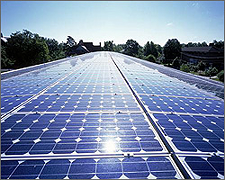
The Coalition for Affordable Solar Energy (CASE) today called on SolarWorld to stop charging that its China-based competitors are selling solar cells below the cost of production.
SolarWorld is a founding member of the Coalition for American Solar Manufacturing (CASM), which, in late 2011, filed a trade case against Chinese PV manufacturers, charging them with illegally dumping them into the American market.
According to CASE, SolarWorld has admitted to selling its solar cells and modules at a loss, as all solar manufacturers globally are struggling to remain profitable amidst a highly competitive market environment for solar cells and modules.
In testimony before the US International Trade Commission (ITC) and media interviews, SolarWorld has stated it is selling its products below the cost of production in an effort to maintain market share, which is what German-based SolarWorld accuses its China-based competitors of doing as part of petitions before the US Department of Commerce’s anti-dumping investigation, CASE says.
A ruling for preliminary tariffs on anti-dumping is expected to be announced by the Department on 17 May.
Industry analysts have pointed to the huge increase in silicon and solar cell production capacity, which has outpaced growing demand, as responsible for the rapid drop in global solar cell and module prices. Solar manufacturers around the world, not just in the United States, are confronted with extremely competitive cell and module price pressures in the current oversupply environment.
“It’s certainly an extremely competitive global market for solar cells and modules, and we don’t fault SolarWorld for cutting its prices to compete,” said Jigar Shah, CASE president. “But we do fault SolarWorld for hypocritically attacking its competitors at the expense of the American solar industry.”
CASE sites the following examples:
•According to Handelsblatt, a German publication, SolarWorld has received 130 million Euros in direct subsidies in Germany between 2003 and 2011.
•According to the Portland Tribune, SolarWorld received a US$11 million Business Energy Tax Credit in Oregon that it immediately sold to Walmart for US$7.3 million in 2009. It then applied for a second round of tax credits and received an additional US$19.4 million.
•According the US Department of Energy, SolarWorld was “awarded a clean energy manufacturing tax credit of $82.2 million to expand its existing 100 MW solar photovoltaic manufacturing plant to 500 MW.”
•According to PV Tech, SolarWorld received around US$19 million in preferential export financing for projects in India.
•According to a SolarWorld press release, SolarWorld has entered a joint-venture partnership with the Qatar Development Bank, a Qatar government-backed investment bank, for the construction of polysilicon facility in Qatar.
SolarWorld is a founding member of the Coalition for American Solar Manufacturing (CASM), which, in late 2011, filed a trade case against Chinese PV manufacturers, charging them with illegally dumping them into the American market.
According to CASE, SolarWorld has admitted to selling its solar cells and modules at a loss, as all solar manufacturers globally are struggling to remain profitable amidst a highly competitive market environment for solar cells and modules.
In testimony before the US International Trade Commission (ITC) and media interviews, SolarWorld has stated it is selling its products below the cost of production in an effort to maintain market share, which is what German-based SolarWorld accuses its China-based competitors of doing as part of petitions before the US Department of Commerce’s anti-dumping investigation, CASE says.
A ruling for preliminary tariffs on anti-dumping is expected to be announced by the Department on 17 May.
Industry analysts have pointed to the huge increase in silicon and solar cell production capacity, which has outpaced growing demand, as responsible for the rapid drop in global solar cell and module prices. Solar manufacturers around the world, not just in the United States, are confronted with extremely competitive cell and module price pressures in the current oversupply environment.
“It’s certainly an extremely competitive global market for solar cells and modules, and we don’t fault SolarWorld for cutting its prices to compete,” said Jigar Shah, CASE president. “But we do fault SolarWorld for hypocritically attacking its competitors at the expense of the American solar industry.”
CASE sites the following examples:
•According to Handelsblatt, a German publication, SolarWorld has received 130 million Euros in direct subsidies in Germany between 2003 and 2011.
•According to the Portland Tribune, SolarWorld received a US$11 million Business Energy Tax Credit in Oregon that it immediately sold to Walmart for US$7.3 million in 2009. It then applied for a second round of tax credits and received an additional US$19.4 million.
•According the US Department of Energy, SolarWorld was “awarded a clean energy manufacturing tax credit of $82.2 million to expand its existing 100 MW solar photovoltaic manufacturing plant to 500 MW.”
•According to PV Tech, SolarWorld received around US$19 million in preferential export financing for projects in India.
•According to a SolarWorld press release, SolarWorld has entered a joint-venture partnership with the Qatar Development Bank, a Qatar government-backed investment bank, for the construction of polysilicon facility in Qatar.
03 May 2012
Source: solarnovus.com
Source: solarnovus.com
Các tin khác
- New-generation FTAs open wider export opportunities to Middle East and South Asia (15/06/2026)
- Updated regulations on foreign trade management and import quotas (15/06/2026)
- Mandatory traceability for high-risk goods from July 1st: What should businesses prepare for? (15/06/2026)
- Tariff pressure is forcing businesses to restructure in order to adapt. (15/06/2026)
- Coffee Citizens model aims to lift Vietnamese value chain (15/06/2026)