Home
Home
 About Us


UK business wants free trade with EU and access to skilled labour
19/06/2017 12:00
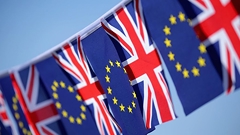
British business, large and small, overwhelmingly wishes to be able to trade with the EU with no new tariff or non-tariff barriers and to be able to access skilled labour from the bloc, as Brexit negotiations between the UK and Brussels began.
Research by the FT into what business would like to see as a result of these negotiations shows broad agreement across sectors about preserving trade ties that are as close as possible to those currently in existence, and for the British government to take measures to offset any new constraints.
One FTSE 100 chief executive said it was not the mechanism of any new trade arrangement with the EU that mattered, but the outcome.
“We’d like to end up with no tariff and non-tariff barriers with the EU and with the countries it trades with [on those terms],” he said. “What we want is as little change as we can get away with, and at as gentle a pace of change as we can have.”
Although Theresa May’s failure to win an overall majority for her vision of Brexit at the UK election appears to have created an opening for a different approach, the prime minister has vowed to stick to her original plan to leave the single market and customs union and to limit immigration.
The FT asked every FTSE 100 company, as well as a range of trade bodies representing both large and small businesses, what kind of market access and immigration regime they wanted post-Brexit, and whether they felt their message was getting across to government.
Related article
British business on Brexit: what companies said
The FT asked the FTSE 100 and business lobbies for their views on Brexit as negotiations begin

The responses suggest that a trade deal that mirrors as closely as possible the access provided by the single market is considered vital by most sectors, as is the need to avoid exiting the EU with no agreement. TechUK, representing the technology industry, said this did not necessarily mean full membership of the single market in the long term “if a comprehensive deal which works for digital goods and services can be achieved”.
“Whatever the eventual outcome it is vital that we avoid a sudden cliff edge to our EU relationship,” it said. “We need a soft landing for Brexit and that will require a long runway.”
Companies and groups suggested that a liberal immigration regime would best ensure they had access to the skilled labour that they needed. Most also emphasised the urgency of confirming the right of existing EU workers to remain in the UK.
Merlin Entertainment, the FTSE 100 company, said any new immigration regime should be phased and “evidence-based” and warned of the dangers of any “knee-jerk reaction or arbitrary policy”.
“Currently the talk is all about exemptions for astrophysicists, doctors and engineers. However without chefs, cleaners and front-of-house staff, the hospitality industry will equally grind to a halt,” it said.
Although some companies and industry bodies have complained of inadequate access to government in the run-up to the Brexit negotiations, and a failure to get their views across, many FTSE 100 companies refused to go on the record with their views, giving a variety of excuses for the decision. Several, like Admiral Group, said they did not comment on politics.
Severn Trent, the FTSE 100 water company, said: “Given we’re a [largely] UK-focused operation we’ve tended to leave the Brexit debate to more multinational organisations.”
Research by the FT into what business would like to see as a result of these negotiations shows broad agreement across sectors about preserving trade ties that are as close as possible to those currently in existence, and for the British government to take measures to offset any new constraints.
One FTSE 100 chief executive said it was not the mechanism of any new trade arrangement with the EU that mattered, but the outcome.
“We’d like to end up with no tariff and non-tariff barriers with the EU and with the countries it trades with [on those terms],” he said. “What we want is as little change as we can get away with, and at as gentle a pace of change as we can have.”
Although Theresa May’s failure to win an overall majority for her vision of Brexit at the UK election appears to have created an opening for a different approach, the prime minister has vowed to stick to her original plan to leave the single market and customs union and to limit immigration.
The FT asked every FTSE 100 company, as well as a range of trade bodies representing both large and small businesses, what kind of market access and immigration regime they wanted post-Brexit, and whether they felt their message was getting across to government.
Related article
British business on Brexit: what companies said
The FT asked the FTSE 100 and business lobbies for their views on Brexit as negotiations begin
The responses suggest that a trade deal that mirrors as closely as possible the access provided by the single market is considered vital by most sectors, as is the need to avoid exiting the EU with no agreement. TechUK, representing the technology industry, said this did not necessarily mean full membership of the single market in the long term “if a comprehensive deal which works for digital goods and services can be achieved”.
“Whatever the eventual outcome it is vital that we avoid a sudden cliff edge to our EU relationship,” it said. “We need a soft landing for Brexit and that will require a long runway.”
Companies and groups suggested that a liberal immigration regime would best ensure they had access to the skilled labour that they needed. Most also emphasised the urgency of confirming the right of existing EU workers to remain in the UK.
Merlin Entertainment, the FTSE 100 company, said any new immigration regime should be phased and “evidence-based” and warned of the dangers of any “knee-jerk reaction or arbitrary policy”.
“Currently the talk is all about exemptions for astrophysicists, doctors and engineers. However without chefs, cleaners and front-of-house staff, the hospitality industry will equally grind to a halt,” it said.
Although some companies and industry bodies have complained of inadequate access to government in the run-up to the Brexit negotiations, and a failure to get their views across, many FTSE 100 companies refused to go on the record with their views, giving a variety of excuses for the decision. Several, like Admiral Group, said they did not comment on politics.
Severn Trent, the FTSE 100 water company, said: “Given we’re a [largely] UK-focused operation we’ve tended to leave the Brexit debate to more multinational organisations.”
June 19, 2017
Source: ft.com
Source: ft.com
Các tin khác
- New-generation FTAs open wider export opportunities to Middle East and South Asia (15/06/2026)
- Updated regulations on foreign trade management and import quotas (15/06/2026)
- Mandatory traceability for high-risk goods from July 1st: What should businesses prepare for? (15/06/2026)
- Tariff pressure is forcing businesses to restructure in order to adapt. (15/06/2026)
- Coffee Citizens model aims to lift Vietnamese value chain (15/06/2026)