Home
Home
 About Us


Türkiye tightens trade defense: Warning of risks for Vietnamese exports
24/09/2025 01:46
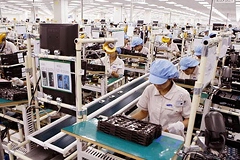
Although Turkey is a potential market, it is emerging as one of the countries using trade defense tools with high frequency.
The latest developments show an increasingly clear tightening trend, requiring Vietnamese enterprises to proactively improve their response capacity to minimize risks when entering this market.
In September 2025, Türkiye officially imposed anti-dumping duties on thick-rolled steel imported from South Korea, after a year-long investigation into dumping between January and December 2023. This move reflects efforts to protect the domestic steel industry from what is considered unfair competition from outside, and shows the country's initiative in establishing market discipline.
According to the Trade Defense Department (Ministry of Industry and Trade), this tax imposition is part of a general picture where many countries are increasing the use of defense tools to protect domestic production from pressure from low-cost competitors. As one of the major steel producers in the region, Türkiye aims to maintain the stability of the domestic industry while affirming the principle of fairness in international trade.
Along with that, this market recently continued to apply self-defense measures on imported Ethyl Acetate (ethyl acetate) chemical products. Vietnam is not excluded from the scope of application, because the import turnover of this item from Vietnam to Türkiye is assessed as significant.
Statistics from the Department of Trade Defense (Ministry of Industry and Trade) show that, to date, there have been 26 trade defense cases applied by Türkiye against Vietnamese export goods. This number shows the significant risk level when Vietnamese enterprises increase access to the Turkish market. Being a legal tool in nature, trade defense measures have many advantages over normal tariffs: Tax rates can be high, the duration is long, the scope of application is specific and flexible in review and adjustment. The fact that Vietnamese goods often face investigations is not unusual in the current global trade context, but it also means that businesses must be better prepared to avoid being caught off guard.
With a large economic scale, a vibrant market and a population of nearly 84 million people, Turkey is a promising destination for Vietnamese goods. Not only is it an attractive consumer market, this country is also an important gateway to the Middle East and a strategic transit point to the European Union (EU). Thanks to that, many key Vietnamese commodity groups such as rice, milk and dairy products, pepper, wood, rubber, tea, fiber, fabric, garments, footwear, electronics, etc. have the opportunity to penetrate and grow.
Building a suitable export strategy
To minimize trade defense risks, the Trade Defense Department recommends that businesses regularly monitor early warnings from authorities and promptly share information with industry associations and related units. This is an important step to help prepare response plans as soon as there are signs of an incident.
Enterprises need to proactively learn about the laws and practices of trade defense investigations in the import market, thereby building appropriate export strategies for each stage. Establishing a direct information channel with import partners and industry associations is necessary to promptly handle arising situations.
Another important direction is to improve competitiveness through quality, instead of mainly competing on price, helping to limit the risk of being accused of dumping, while increasing product value. Using domestic raw materials or materials from sources not subject to trade defense measures is also a necessary solution to increase the value-added ratio in Vietnam and reduce the risk of being investigated.
Before signing a contract with a partner, businesses should carefully assess the risks related to the possibility of being investigated for evading defense measures. If an incident arises, it is necessary to develop a unified and consistent handling strategy; allocate appropriate resources; consider hiring a lawyer to ensure legal rights. At the same time, during the process of participating in the incident, businesses need to closely coordinate with industry associations and state management agencies to improve response efficiency, minimize damage and maintain a sustainable presence in the Turkish market.
Source: Chính phủ
Các tin khác
- U.S. to Impose Duties on Mexican, Thai, Vietnamese Chassis (03/06/2026)
- Mexican sugar producers push to scrap U.S. import quotas (03/06/2026)
- Japan launched an anti-dumping investigation into flat steel imports from three countries (03/06/2026)
- Eurochem challenges anti-dumping duties in the EU (03/06/2026)
- Pangasius prices in Viet Nam surge due to high export demand (03/06/2026)