Home
Home
 About Us


Turkey’s dumping margins for Vietnam yarn described as irrational
09/09/2016 12:00
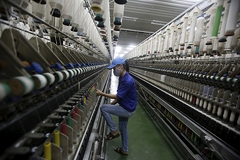
HCMC - Century Synthetic Fiber Corp (STK) has said the Turkish Ministry of Economy’s recent announcement of an anti-dumping duty of up to 72% on polyester draw textured yarn imports from Vietnam is unreasonable and Vietnam’s Ministry of Industry and Trade may file a case at the World Trade Organization (WTO).
According to the enterprise, Turkey is looking to apply anti-dumping duties on polyester draw textured yarn imported from some countries, including Vietnam. Turkey plans the dumping margins of 34.81-72.56% for Vietnamese products and 8.48-37.69% for Thai products.
When the Turkish ministry started to probe imports from certain markets in May, STK cooperated with the agency in the investigation. The company hired a Turkish consulting firm to prepare data and give it to the Turkish ministry as requested.
According to the consulting firm, STK’s data proved no signs of the product being dumped on the Turkish market with 2012-2014 sale prices 3.5% higher than average domestic prices. However, the Turkish ministry recently announced a dumping margin of up to 34.81% for STK. STK is collaborating with the consulting firm to appeal against the duty.
Besides, statistics showed that draw textured yarn producers in Turkey were still performing well in the 2012-2014 period as they posted higher turnover and profit. Meanwhile, the agency in its announcement did not mention the relationship between yarn imports from Vietnam and losses of Turkish companies.
STK also pointed out the wide differential of dumping margins between Vietnam and Thailand though Vietnam’s export prices were 4% higher than Thailand’s.
Therefore, the Ministry of Industry and Trade, the Vietnam Competition Authority and the Vietnam Cotton & Spinning Association (VCOSA) will send written objections to the Turkish ministry.
The Ministry of Industry and Trade will send officials and experts to a consultation in Ankara on September 7-8 to protect the interests of Vietnamese enterprises. If the Turkish agency does not revise the dumping margins, the Ministry of Industry and Trade would consider bringing the case to the WTO, said STK.
The Turkish ministry will make a final decision based on results of the consultation and supplemental papers it gets from the parties involved.
In the first six months of this year, Turkey accounted for 27% of STK’s revenue while the proportions in 2014 and 2015 were 44% and 38%, respectively. After the nation launched the anti-dumping investigation, STK has revised its business strategy by expanding to new markets such as South Korea and focusing on new products.
According to VCOSA, Turkey previously made up one-third of Vietnam’s yarn exports but local firms have shifted to China and South Korea since Turkey slapped anti-dumping duties years ago.
Earlier, Turkey imposed anti-dumping duties on man-made yarn, synthetic or artificial staple fibers imported from Vietnam, Malaysia, Greece, Pakistan and Thailand. Vietnam has been subjected to rates of 19.48-25.25% in five years starting from August 2014.
According to the enterprise, Turkey is looking to apply anti-dumping duties on polyester draw textured yarn imported from some countries, including Vietnam. Turkey plans the dumping margins of 34.81-72.56% for Vietnamese products and 8.48-37.69% for Thai products.
When the Turkish ministry started to probe imports from certain markets in May, STK cooperated with the agency in the investigation. The company hired a Turkish consulting firm to prepare data and give it to the Turkish ministry as requested.
According to the consulting firm, STK’s data proved no signs of the product being dumped on the Turkish market with 2012-2014 sale prices 3.5% higher than average domestic prices. However, the Turkish ministry recently announced a dumping margin of up to 34.81% for STK. STK is collaborating with the consulting firm to appeal against the duty.
Besides, statistics showed that draw textured yarn producers in Turkey were still performing well in the 2012-2014 period as they posted higher turnover and profit. Meanwhile, the agency in its announcement did not mention the relationship between yarn imports from Vietnam and losses of Turkish companies.
STK also pointed out the wide differential of dumping margins between Vietnam and Thailand though Vietnam’s export prices were 4% higher than Thailand’s.
Therefore, the Ministry of Industry and Trade, the Vietnam Competition Authority and the Vietnam Cotton & Spinning Association (VCOSA) will send written objections to the Turkish ministry.
The Ministry of Industry and Trade will send officials and experts to a consultation in Ankara on September 7-8 to protect the interests of Vietnamese enterprises. If the Turkish agency does not revise the dumping margins, the Ministry of Industry and Trade would consider bringing the case to the WTO, said STK.
The Turkish ministry will make a final decision based on results of the consultation and supplemental papers it gets from the parties involved.
In the first six months of this year, Turkey accounted for 27% of STK’s revenue while the proportions in 2014 and 2015 were 44% and 38%, respectively. After the nation launched the anti-dumping investigation, STK has revised its business strategy by expanding to new markets such as South Korea and focusing on new products.
According to VCOSA, Turkey previously made up one-third of Vietnam’s yarn exports but local firms have shifted to China and South Korea since Turkey slapped anti-dumping duties years ago.
Earlier, Turkey imposed anti-dumping duties on man-made yarn, synthetic or artificial staple fibers imported from Vietnam, Malaysia, Greece, Pakistan and Thailand. Vietnam has been subjected to rates of 19.48-25.25% in five years starting from August 2014.
Source: The Saigon Times
Các tin khác
- New-generation FTAs open wider export opportunities to Middle East and South Asia (15/06/2026)
- Updated regulations on foreign trade management and import quotas (15/06/2026)
- Mandatory traceability for high-risk goods from July 1st: What should businesses prepare for? (15/06/2026)
- Tariff pressure is forcing businesses to restructure in order to adapt. (15/06/2026)
- Coffee Citizens model aims to lift Vietnamese value chain (15/06/2026)