Home
Home
 About Us



Trade protectionism against China is growing
22/12/2008 12:00
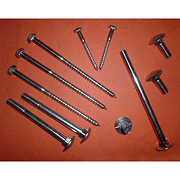
China expressed regret over the European Commission's decision to launch anti-dumping duties ranging from 63 to 87 percent on China-made screws and bolts in the next five years. 14 EU member countries voted in favor of the measure, with 12 against and one abstention. It is another case of trade protection by the EU in recent years.
One professor with the Catholic University of Louvain in Belgium said recently that trade protectionism had been proved destructive, and that world leaders should prevent the spread of trade protectionism amid the global financial turmoil.
Most of the products in the EU’s anti-dumping cases against China are low-end products, which will not pose any threat to the high-tech products manufactured by European enterprises. However, the European Commission disregarded the fact and considered China-made fasteners a threat despite a European Commission report stating that China’s products had not caused any threat to European enterprises manufacturing similar products.
The "potential substantial harm” claimed by the EU was merely an excuse for launching an anti-dumping case against China. As some European experts pointed out, there were political reasons behind the EU’s approval of anti-dumping tariffs.
Trade protectionism has been popular within EU member countries. It is estimated that the euro is the currency of 500 million people who live in euro-area countries. The EU could realize full employment if the economic union could market its own computers and did not rely on textile imports. Does the EU’s statement justify China to adapt the measure of trade protectionism to protect 1.3 billion people and the dominant RMB?
Maurice Allais, the Nobel laureate in economics held the view that the world enjoyed greater economic growth during the protectionism period of 1880-1914 and 1945-1970 than during free trade period. Only through trade protectionism can the EU save its enterprises from depression. A great clamor has arisen around trade protectionism in Europe as global financial meltdown worsens.
According to WTO statistics, EU enterprises with over 100 employees have cut 487,000 jobs due to corporate restructuring, and only seven percent of total staff reduction was caused by non-localization. As a matter of fact, economic globalization, instead of bringing high unemployment to EU member countries, brought development and prosperity to the region. The EU has witnessed an average annual growth of 11 percent in export since 1999, which created jobs for 14 million people in euro zone.
Many economists equated the current financial meltdown with the “Great Depression” in the 1930s, and stated that trade protectionism could not save the world from economic crisis. The Smoot-Hawley Tariff Act the US Congress passed during the “Great Depression”, which was regarded as the biggest mistake ever made, raised the import tariffs for over 20,000 foreign commodities. Such move did not save the US from economic depression, and even caused a drastic shrink in global trade.
European countries created the common market with an aim of maintaining peace and eliminating wars. All EU member countries are now actively coordinating with each other for an effective measure to tackle this crisis. From the EU Summit to the Asia-Europe Meeting and the G20 Meeting in Washington, leaders all over the world voiced their support to economic growth and prevention of trade protectionism. In these circumstances, the EU’s anti-dumping measure against China-made commodities was obviously an inappropriate measure.
By People's Daily Online
16:16, December 18, 2008
Source: english.people.com.cn
Các tin khác
- Rising global shipping costs put pressure on Viet Nam’s seafood exporters (22/06/2026)
- India likely to retain anti-dumping duties on Bangladeshi jute products (22/06/2026)
- Japan slaps anti-dumping duties on Chinese, Taiwanese steel (22/06/2026)
- India initiates anti-dumping probe against a Chinese, Japanese chemical used in tyre, rubber items (22/06/2026)
- Reasons why the US continues to suspend customs clearance for Vietnamese trailers (22/06/2026)