Home
Home
 About Us


Trade agreements help exports increase by tens of billions of dollars a year
21/08/2023 01:28
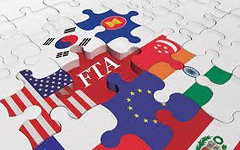
Opportunities from new-generation free trade agreements (FTAs) help Vietnam increase tens of billions of dollars per year from exports to CPTPP and EVFTA member countries.
Vietnam has signed and implemented many new generation FTAs, such as CPTPP, EVFTA and UKVFTA. Last month, a free trade agreement with Israel – the first country in West Asia – was also signed, offering the opportunity to reduce up to 92% of tariff lines for Vietnamese goods to this country.
In a report just sent to the Government, the Ministry of Industry and Trade said that free trade agreements bring positive impacts to Vietnam’s exports, imports and investment attraction. In 2022, trade turnover with countries in the CPTPP will increase by more than 14% compared to 2021, reaching 104.5 billion USD. In which, Vietnam’s exports to CPTPP member countries recorded a positive increase, such as Canada more than 20%, Brunei 163%.
With the EVFTA, last year, trade between Vietnam and European Union (EU) countries reached more than 62.2 billion USD, an increase of over 9% compared to 2021. EU countries imported nearly 47 billion USD of Vietnamese goods. last year, up nearly 17% from a year earlier.
Particularly for the UK, in 2022 Vietnam has a trade surplus of more than 5.3 billion USD to this country after more than a year of the UKVFTA agreement taking effect.
New generation FTAs bring Vietnam tens of billions of dollars a year from exports, But the implementation of these agreements still has many problems, according to the Ministry of Industry and Trade. Currently, the rate of taking advantage of incentives of Vietnamese enterprises from FTAs is still low, such as CPTPP close to 5%, EVFTA nearly 26% and UKVFTA about 24%.
The FDI sector still accounts for the majority when exporting products with large turnover, while domestic enterprises mainly process or export raw materials and semi-finished products.
Many new businesses have just joined some stages of the supply chain, their ability to meet quality, food safety, and technical requirements for exports is limited, especially in the context of increasing technical barriers in many countries. Non-tariff barriers. Therefore, the number of Vietnamese enterprises that have built their trademarks to export to FTA markets is still limited. In addition, the connection between businesses is still loose, and unfair competition such as product dumping is common.
In order to solve the problem and take advantage of the advantages brought by FTAs, the Ministry of Industry and Trade proposes to consider setting aside its own capital to support businesses to take advantage of FTAs. Accordingly, the State Bank and ministries and branches work with commercial banks to have appropriate credit sources and preferential interest rates to support businesses that want to improve production capacity. At the same time, businesses themselves also need to increase access to green credit sources, in order to promptly meet increasing standards from export markets.
The Ministry of Industry and Trade and localities have piloted to build an ecosystem, first of all 1-2 fields and industries in each province, to take advantage of opportunities from FTAs. This agency also suggested that the Government have an overall policy, creating conditions for businesses to access and use “internal” raw materials, meeting the origin criteria as prescribed by each trade agreement.
Source: Vietnam Posts English
Các tin khác
- Viet Nam extends anti-dumping duties on some Thai sugar products to 2031 (05/06/2026)
- Hong Kong: Ministry of Commerce Rules on Inheritance of Anti-dumping Duty Rates for Copolymer Polyoxymethylene Imports Originating from S Korea, Thailand and Malaysia (05/06/2026)
- Early-season Vietnamese lychees conquer US consumers (05/06/2026)
- Global rubber prices surge, raising hopes for Vietnamese exporters (05/06/2026)
- Modern logistics creates new growth opportunities for Lang Son’s border-gate economy (05/06/2026)