Home
Home
 About Us


The US reduces anti-dumping duties on Vietnamese honey
29/05/2026 05:14
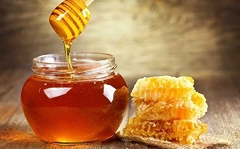
After years of facing very high anti-dumping duties, Vietnamese honey now has the opportunity to regain market share in the US as preliminary tariffs are being significantly reduced.
Vietnamese honey faces reduced tax pressure in the US.
Despite being one of the world's top five honey-producing countries, Vietnamese honey has been virtually unavailable for export to the US for the past three years due to excessively high tariffs, rendering it uncompetitive.
However, by the end of last year, the US Department of Commerce announced its preliminary findings in the second administrative review of anti-dumping duties on Vietnamese honey. The anti-dumping duties on honey products from this country, applied to Vietnamese businesses, were significantly reduced, from over 410% - 413% in the preliminary findings, to 58% - 61%.
Thus, the anti-dumping duty margin for Vietnamese businesses, in the final conclusion, has decreased by nearly seven times. However, this is only a preliminary conclusion. What opportunities will there be for the honey industry in the US market? Will this preliminary conclusion change?
The U.S. Department of Commerce (DOC) continues its administrative review of the anti-dumping duties imposed on raw honey imported from Vietnam. The most recent review was announced last November. The duty rates for some Vietnamese honey exporters have generally decreased significantly compared to before, ranging from approximately 6.72% to 21.55%, depending on the group of companies participating in the review.
Businesses that did not fully participate in the review process, or did not qualify for the separate tax rate, will continue to be subject to the nationwide tax rate of over 60%. Currently, these tax rates are not the final rates.
Regarding the impact on exports, information from the Vietnam Trade Office in the US indicates that honey exports from Vietnam to the US in 2025 will reach $29.5 million, a decrease of more than 31% compared to 2024.
Opportunities for Vietnamese honey
In general, the main reason is that the U.S. believes that raw honey from Vietnam risks being sold in the U.S. market below its normal value, causing or threatening to cause harm to the domestic U.S. honey industry. The U.S. is a very large market with very high compliance requirements.
The recent review rulings are quite typical of the US trade defense system. The DOC doesn't just look at the selling price, but also carefully examines accounting records, input materials, consumption norms, HS codes, and the ability to verify data. This means how businesses demonstrate transparency and independence to qualify for individualized tariff rates.
According to recommendations from the Vietnamese Trade Office in the US, honey exporting businesses need to provide complete, timely, and consistent documentation to the DOC, build a verifiable data system for both raw materials and costs, and sell products according to standards, in order to facilitate international investigations.
Overall, there are opportunities for Vietnamese honey to enter the US market in 2026, especially given the pressure on US domestic production since last year. According to the US Department of Agriculture , US honey production decreased by 14%, while honey prices increased by 27%. This indicates that the US market still needs external supply sources.
The Ministry of Industry and Trade stated that it will continue to coordinate with relevant ministries and agencies to support the Vietnamese honey industry. This is to ensure fair treatment, compliance with World Trade Organization regulations, and the legitimate rights of Vietnamese honey exporting businesses are protected.
A minimum price is needed for exported honey.
Currently, Vietnam has about 30 honey exporting companies, mostly focusing on key markets such as the United States and Europe. These companies need to standardize export prices for honey to ensure sustainable development.
According to businesses, in previous years, 50% of honey production was consumed domestically, and the remaining 50% was exported. However, in the last two years, domestic consumption has halved, and exports have dropped to just over 10%. Due to the volatile market, the price of exported honey has fallen. Calculations show that beekeepers only make a profit when the price of honey is around 2-3 USD/kg, so ensuring a floor price for this product is essential for the industry's efficient and sustainable development.
Mr. Nguyen Van Truong from Tam Dao Honeco Joint Stock Company stated: "Export prices should be from 2-3 USD upwards; exporting at excessively low prices is unacceptable, as it negatively impacts farmers. If any company exports at low prices, the association must intervene, or the state authorities must intervene…"
The global honey market is projected to exceed $10 billion this year and reach over $18 billion by 2034. This market is driven by a growing number of beekeepers and increasing demand for natural sweeteners as alternatives to sugar. Major honey-producing countries currently include China, Vietnam, Türkiye, Iran, Ukraine, Argentina, India, and Mexico.
Source: Vietnam.vn
Các tin khác
- U.S. to Impose Duties on Mexican, Thai, Vietnamese Chassis (03/06/2026)
- Mexican sugar producers push to scrap U.S. import quotas (03/06/2026)
- Japan launched an anti-dumping investigation into flat steel imports from three countries (03/06/2026)
- Eurochem challenges anti-dumping duties in the EU (03/06/2026)
- Pangasius prices in Viet Nam surge due to high export demand (03/06/2026)