Home
Home
 About Us


The US is stepping up monitoring of shrimp imports
23/02/2026 04:16
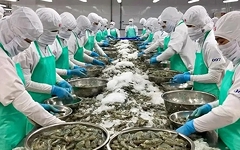
One of the challenges for shrimp exporting businesses to the US market this year is the US government's strengthening of technical barriers.
The US is stepping up monitoring of shrimp imports.
The US market accounts for approximately one-fifth of Viet Nam's total annual shrimp export value, making Viet Nam one of the top three exporters of warm-water shrimp to this market. However, one of the challenges for shrimp exporters to the US market this year is the US government's strengthening of technical barriers.
Strengthening the monitoring of imported shrimp is one of the top priorities of the U.S. Food and Drug Administration (FDA) in 2026. Recently, the agency announced a series of key areas of focus for the coming year. These goals are also linked to a program to improve the safety of the food supply and the health of the American people. One of the key priorities is enhancing the capacity to inspect imported shrimp and assess compliance with U.S. regulations. The FDA emphasizes that seafood requires special attention due to its high import share in U.S. seafood consumption.
As US demand for seafood increases, so do the challenges.
The final ruling on anti-dumping duties for frozen warmwater shrimp from Viet Nam will be issued by the US Department of Commerce in February and will directly impact shrimp exports for the entire year. If this preliminary duty rate is upheld, the shrimp industry will face significant financial pressure. High duties not only reduce profit margins but also directly affect the ability to maintain market share in the US – a market with high requirements but large and stable order values.
Overall, consumption of seafood products in the US is projected to continue growing in the long term. According to independent market research reports, the US seafood market will increase from $25 billion in 2025 to nearly $29 billion in 2034, with an average growth rate of 1.3%–1.7% per year. This reflects its continued importance as a staple food in the American diet and as an alternative to red meat due to its nutritional and health benefits. Popular product categories include shrimp, whitefish, tuna, and salmon, with shrimp being the most consumed. Frozen, packaged, and affordable products hold strong demand, accounting for approximately 45% of the market share. This indicates that the US market is sensitive to price fluctuations and spending pressures due to inflation and tariffs. Therefore, importers prioritize supply sources that are competitively priced, stable, and meet all technical and sustainability standards.
Prepared to respond to fluctuations in the US seafood market.
To maintain its position in the US market in the coming period, the Vietnamese seafood industry has little room for extensive growth. Improving product quality, increasing transparency in the supply chain, reducing emissions, and digitizing traceability have become mandatory requirements rather than options.
In fact, the US relies heavily on imported seafood, accounting for approximately 65-85% of its total domestic consumption. This presents a significant opportunity for the Vietnamese seafood industry.
According to the Viet Nam Trade Office in the US, Viet Nam is currently the fourth largest supplier of shrimp to the US. Regarding pangasius (catfish), Viet Nam has a clear advantage in terms of reputation and product recognition, currently accounting for over 80% of the pangasius supplied to this market, and is also one of the important sources of whitefish.
However, annual anti-dumping duties remain a major obstacle to expanding market share. In addition, there are new regulations on marine animal protection from the U.S. National Oceanic and Atmospheric Administration (NOAA), which went into effect earlier this year.
The US is not the largest seafood import market in terms of quantity, but it is the market with the highest import value in the world . Therefore, in a market that demands quality over quantity, businesses will need to standardize traceability, meet standards, and promote deep processing.
Source: VTV
Các tin khác
- U.S. to Impose Duties on Mexican, Thai, Vietnamese Chassis (03/06/2026)
- Mexican sugar producers push to scrap U.S. import quotas (03/06/2026)
- Japan launched an anti-dumping investigation into flat steel imports from three countries (03/06/2026)
- Eurochem challenges anti-dumping duties in the EU (03/06/2026)
- Pangasius prices in Viet Nam surge due to high export demand (03/06/2026)