Home
Home
 About Us



The United States International Trade Commission determined that a US industry is materially injured by reason of imports of wel
23/02/2009 12:00
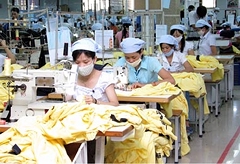
The recently passed US stimulus plan, which contained worrisome "Buy American" provisions, despite having been watered down before its final passage, has provoked waves of fear around the world that the free trade which has come to characterize the globalized world may be coming to an abrupt end as successive countries implement beggar-thy-neighbor policies, and neighbors respond with tit-for-tat actions.
Although warning that it is too early to speak with certainty, trade experts believe that it would be difficult, if not impossible, for Turkey to rely on "protectionist" policies because in order to combat what it perceives as protectionism, tit-for tat policies would hurt Turkey more than it would help it. Moreover, the benefits that Turkey can likely extract from its present free-trade agreements probably far outweigh the benefits it could receive by implementing any short-term protectionist policies.
Despite the fact that a number of matters of concern were introduced with the most recent US stimulus plan's "Buy American" clause, the issue that has received the most attention has been the provisions which call for the use of American-produced iron, steel and manufactured goods to be used in projects funded from the US stimulus plan. If carried through, this certainly does have implications for Turkey, which is amongst the largest exporters of construction steel to the US. In fact, in the first 10 months of 2008 Turkey exported a total of $642.7 million, while it remained the largest importer of US iron and steel scrap exports.
Some have already pointed to "creeping protectionism" in Turkey as a result of a recent decision taken by Turkey to increase tariffs applied against certain steel products imported to Turkey by as much as 8 percent.
Indeed, trade with the United States is set to take another downturn in the months ahead. Turkey's participation in the generalized system of preferential taxes and tariffs for developing countries will soon expire. It's unlikely that in a period of increasing talk of "keeping jobs at home" Turkey will be included in any similar program.
The concern was so great that the representatives of nine international businessmen's associations -- which included a rainbow of groups such as the Turkish Industrialists and Businessmen's Association (TUSIAD) and the Japanese Business Federation -- submitted a petition to senior US politicians and policymakers -- which included US House Speaker Nancy Pelosi -- calling on the US government to ensure trade openness. "We strongly urge you to reject measures that would close off the US market, leading inevitably to other markets being closed to you in return," one part of the report read.
But despite all the focus on the US, worse news for Turkey stems from the recent auto bailout package introduced by France last week which, if implemented, will directly target such countries as Turkey with its provision for "keeping jobs in France."
President Nicolas Sarkozy's statements last week which suggested that carmakers should move factories back to France from such countries as the Czech Republic have fueled concerns that France may well embark on "beggar-thy-neighbor" policies to protect French workers.
Even the head of Volkswagen piped up recently. "This will not help anyone if the protectionism of French agricultural policy is now transposed to the auto sector," Martin Winterkorn was quoted as saying by Agence France-Presse.
In response to such measures and as what some can see as further evidence of creeping protectionism in Turkey, Nejat Koçer, president of the Gaziantep Chamber of Commerce, was quoted in Milli Gazete as saying: "The world is turning back to a protectionist economy. In order to revive internal consumption, local products must be used. Today every single import product means unemployment in Turkey and a loss of capacity as well. Even the US is transforming its economy to a protectionist one and so we must also apply a new mentality in terms of using local products."
Few think that such policies can actually be carried out in any concerted manner. Dr. Seyfettin Gürsel, professor of economics at Galatasaray University, is not overly worried that Turkey would resort to protectionist measures as a means to combat the actions of others. "Turkey does not produce enough things to implement protectionist measures," he said, noting that the various recourses available to Turkey through trade agreements to which Turkey is signatory would be compromised were Turkey to implement tit-for tat measures.
This view was reiterated by Sinan Ülgen, chairman of the Center for Economics and Foreign Policy Studies (EDAM), speaking with Sunday's Zaman. Despite conceding that there would certainly be a push for protectionist retaliation in the event there was a drive to move production from Turkey to France, "It's a bit premature to talk about it now," he said. Commenting on the likelihood of tit-for-tat policies, Ülgen said, "What they don't take into account is that Turkey is a member of both the European customs union as well as the World Trade Organization," giving Turkey significant leverage in challenging any such measures in arbitration.
Levent Santemiz, sales and production director at Telfleks, a producer of push-pull cables for the automotive sector, was not overly worried, either. According to him it would be exceedingly difficult for European car manufacturers to carry through on suggested protectionist policies in the auto sector, believing that such statements were more a conciliatory note for domestic consumption. "We have heard rumors that some manufacturers have been pushed into a corner by their governments to bring their manufacturing home; however, manufacturers have refused because of the prohibitive costs associated with such a move." Santemiz felt that considering the international division of labor in the sector, the enormous cost discrepancies and the unimaginable expenses in streamlining such a process back in the home country, it would be extremely difficult to implement the proposed protectionist policies. "It would ruin the long-term supply policies of automakers," Santemiz said.
Free trade issues are rarely cut and dry. Stimulus plans are one such example. So, too, are state interventions in currency markets to keep currencies low to promote exports. When asked by Sunday's Zaman whether there were any concerns as a result of shifting focus to "fair trade" as opposed to "free trade," Ülgen responded by saying that determining this was "much more difficult" and that focusing on "fair trade" issues are "much more amenable to insidious protectionism."
Despite these various calls, however, there seems to be little to suggest that Turkey will, or even can, revert to protectionist measures. But, as Ülgen stated, "it is a bit premature to talk about it now."
Global crisis brings threat of protectionism
Here are details of some interventionist measures:
UNITED STATES - A $787 billion (550 billion pounds) US stimulus package, signed by President Barack Obama on Tuesday, has been criticized for its "Buy American" clause that says firms must use US steel and other US-made goods. A final provision also includes language that requires the US to implement the provision consistent with its trade commitments.
A $17.4 billion lifeline to two Detroit carmakers was announced on December 19. The bailout funds will come from the $700 billion Troubled Asset Relief (TARP) program. GM will receive $13.4 billion and Chrysler $4 billion.
On February 17, GM and Chrysler requested a further $22 billion in US government loans as they submitted plans with the Obama administration on how they could restructure.
CANADA - Alarmed by Obama's stated desire to renegotiate the North American Free Trade Agreement which groups the US, Canada, and Mexico, it fears it could lead to new tariff barriers. US officials, in turn, have said Obama will seek to allay those fears.
Unveiled an aid package on December 20 that provided C$4 billion (2.3 billion pounds) in emergency loans to the Canadian arms of General Motors and Chrysler to keep them operating.
EUROPEAN UNION - The European Union has imposed temporary antidumping duties of up to 25 percent on imports of Chinese-made steel wire rods, but will not to put extra tariffs on other Chinese steel products.
Brussels has also imposed antidumping duties of around 4 percent on imports of steel rods -- mainly used in construction -- from Moldova.
The European Commission said it would re-introduce export subsidies for butter, cheese, and whole and skimmed milk powder from January 2009.
BRITAIN - Britain launched two bank rescue packages in the last six months to improve lending as the economy slips into its first recession since the early 1990s.
The government now owns a 70 percent stake in Royal Bank of Scotland and 43 percent of Lloyds Banking Group, which agreed to buy rival HBOS in September in a government-brokered deal. It had earlier nationalized two banks with heavy exposure to the country's ailing mortgage market, Northern Rock and Bradford & Bingley.
Announced last month it would guarantee up to 2.3 billion pounds of loans to the car industry including up to 1.3 billion pounds of auto industry loans from the European Investment Bank and a further 1 billion pounds in loans to back investments that are not eligible for support from the European lender.
FRANCE -- Pledged loans of 6 billion euros (5.3 billion pounds) to struggling car makers PSA Peugeot Citroen and Renault, (3 billion euros each) in return for them promising to "do everything" to avoid further job losses. The five-year, 6 percent interest rate loans are designed to fund investment into clean vehicle technologies.
GERMANY -- Unveiled a 1.5 billion euro aid package on January 13 to form part of a 50 billion euro stimulus package of investments, tax relief and support for companies. The measures include incentives worth 2,500 euros for new car purchases. ITALY -- Unveiled a $1.7 billion package for its car industry. Carmakers in turn have been told to maintain their plants in Italy and pay auto parts suppliers.
INDONESIA - Plans to order its nearly four million civil servants to use local products ranging from footwear to heavy machinery to help the economy weather the global financial crisis. Officials denied the measures would be protectionist. Indonesia, Southeast Asia's biggest economy, has experienced a slump in exports of key commodities such as tin and palm.
OTHERS:
India raised tariffs on some imported steel products.
Russia raised duties on imports of used cars to prop up its struggling domestic industry. Reuters
Although warning that it is too early to speak with certainty, trade experts believe that it would be difficult, if not impossible, for Turkey to rely on "protectionist" policies because in order to combat what it perceives as protectionism, tit-for tat policies would hurt Turkey more than it would help it. Moreover, the benefits that Turkey can likely extract from its present free-trade agreements probably far outweigh the benefits it could receive by implementing any short-term protectionist policies.
Despite the fact that a number of matters of concern were introduced with the most recent US stimulus plan's "Buy American" clause, the issue that has received the most attention has been the provisions which call for the use of American-produced iron, steel and manufactured goods to be used in projects funded from the US stimulus plan. If carried through, this certainly does have implications for Turkey, which is amongst the largest exporters of construction steel to the US. In fact, in the first 10 months of 2008 Turkey exported a total of $642.7 million, while it remained the largest importer of US iron and steel scrap exports.
Some have already pointed to "creeping protectionism" in Turkey as a result of a recent decision taken by Turkey to increase tariffs applied against certain steel products imported to Turkey by as much as 8 percent.
Indeed, trade with the United States is set to take another downturn in the months ahead. Turkey's participation in the generalized system of preferential taxes and tariffs for developing countries will soon expire. It's unlikely that in a period of increasing talk of "keeping jobs at home" Turkey will be included in any similar program.
The concern was so great that the representatives of nine international businessmen's associations -- which included a rainbow of groups such as the Turkish Industrialists and Businessmen's Association (TUSIAD) and the Japanese Business Federation -- submitted a petition to senior US politicians and policymakers -- which included US House Speaker Nancy Pelosi -- calling on the US government to ensure trade openness. "We strongly urge you to reject measures that would close off the US market, leading inevitably to other markets being closed to you in return," one part of the report read.
But despite all the focus on the US, worse news for Turkey stems from the recent auto bailout package introduced by France last week which, if implemented, will directly target such countries as Turkey with its provision for "keeping jobs in France."
President Nicolas Sarkozy's statements last week which suggested that carmakers should move factories back to France from such countries as the Czech Republic have fueled concerns that France may well embark on "beggar-thy-neighbor" policies to protect French workers.
Even the head of Volkswagen piped up recently. "This will not help anyone if the protectionism of French agricultural policy is now transposed to the auto sector," Martin Winterkorn was quoted as saying by Agence France-Presse.
In response to such measures and as what some can see as further evidence of creeping protectionism in Turkey, Nejat Koçer, president of the Gaziantep Chamber of Commerce, was quoted in Milli Gazete as saying: "The world is turning back to a protectionist economy. In order to revive internal consumption, local products must be used. Today every single import product means unemployment in Turkey and a loss of capacity as well. Even the US is transforming its economy to a protectionist one and so we must also apply a new mentality in terms of using local products."
Few think that such policies can actually be carried out in any concerted manner. Dr. Seyfettin Gürsel, professor of economics at Galatasaray University, is not overly worried that Turkey would resort to protectionist measures as a means to combat the actions of others. "Turkey does not produce enough things to implement protectionist measures," he said, noting that the various recourses available to Turkey through trade agreements to which Turkey is signatory would be compromised were Turkey to implement tit-for tat measures.
This view was reiterated by Sinan Ülgen, chairman of the Center for Economics and Foreign Policy Studies (EDAM), speaking with Sunday's Zaman. Despite conceding that there would certainly be a push for protectionist retaliation in the event there was a drive to move production from Turkey to France, "It's a bit premature to talk about it now," he said. Commenting on the likelihood of tit-for-tat policies, Ülgen said, "What they don't take into account is that Turkey is a member of both the European customs union as well as the World Trade Organization," giving Turkey significant leverage in challenging any such measures in arbitration.
Levent Santemiz, sales and production director at Telfleks, a producer of push-pull cables for the automotive sector, was not overly worried, either. According to him it would be exceedingly difficult for European car manufacturers to carry through on suggested protectionist policies in the auto sector, believing that such statements were more a conciliatory note for domestic consumption. "We have heard rumors that some manufacturers have been pushed into a corner by their governments to bring their manufacturing home; however, manufacturers have refused because of the prohibitive costs associated with such a move." Santemiz felt that considering the international division of labor in the sector, the enormous cost discrepancies and the unimaginable expenses in streamlining such a process back in the home country, it would be extremely difficult to implement the proposed protectionist policies. "It would ruin the long-term supply policies of automakers," Santemiz said.
Free trade issues are rarely cut and dry. Stimulus plans are one such example. So, too, are state interventions in currency markets to keep currencies low to promote exports. When asked by Sunday's Zaman whether there were any concerns as a result of shifting focus to "fair trade" as opposed to "free trade," Ülgen responded by saying that determining this was "much more difficult" and that focusing on "fair trade" issues are "much more amenable to insidious protectionism."
Despite these various calls, however, there seems to be little to suggest that Turkey will, or even can, revert to protectionist measures. But, as Ülgen stated, "it is a bit premature to talk about it now."
Global crisis brings threat of protectionism
Here are details of some interventionist measures:
UNITED STATES - A $787 billion (550 billion pounds) US stimulus package, signed by President Barack Obama on Tuesday, has been criticized for its "Buy American" clause that says firms must use US steel and other US-made goods. A final provision also includes language that requires the US to implement the provision consistent with its trade commitments.
A $17.4 billion lifeline to two Detroit carmakers was announced on December 19. The bailout funds will come from the $700 billion Troubled Asset Relief (TARP) program. GM will receive $13.4 billion and Chrysler $4 billion.
On February 17, GM and Chrysler requested a further $22 billion in US government loans as they submitted plans with the Obama administration on how they could restructure.
CANADA - Alarmed by Obama's stated desire to renegotiate the North American Free Trade Agreement which groups the US, Canada, and Mexico, it fears it could lead to new tariff barriers. US officials, in turn, have said Obama will seek to allay those fears.
Unveiled an aid package on December 20 that provided C$4 billion (2.3 billion pounds) in emergency loans to the Canadian arms of General Motors and Chrysler to keep them operating.
EUROPEAN UNION - The European Union has imposed temporary antidumping duties of up to 25 percent on imports of Chinese-made steel wire rods, but will not to put extra tariffs on other Chinese steel products.
Brussels has also imposed antidumping duties of around 4 percent on imports of steel rods -- mainly used in construction -- from Moldova.
The European Commission said it would re-introduce export subsidies for butter, cheese, and whole and skimmed milk powder from January 2009.
BRITAIN - Britain launched two bank rescue packages in the last six months to improve lending as the economy slips into its first recession since the early 1990s.
The government now owns a 70 percent stake in Royal Bank of Scotland and 43 percent of Lloyds Banking Group, which agreed to buy rival HBOS in September in a government-brokered deal. It had earlier nationalized two banks with heavy exposure to the country's ailing mortgage market, Northern Rock and Bradford & Bingley.
Announced last month it would guarantee up to 2.3 billion pounds of loans to the car industry including up to 1.3 billion pounds of auto industry loans from the European Investment Bank and a further 1 billion pounds in loans to back investments that are not eligible for support from the European lender.
FRANCE -- Pledged loans of 6 billion euros (5.3 billion pounds) to struggling car makers PSA Peugeot Citroen and Renault, (3 billion euros each) in return for them promising to "do everything" to avoid further job losses. The five-year, 6 percent interest rate loans are designed to fund investment into clean vehicle technologies.
GERMANY -- Unveiled a 1.5 billion euro aid package on January 13 to form part of a 50 billion euro stimulus package of investments, tax relief and support for companies. The measures include incentives worth 2,500 euros for new car purchases. ITALY -- Unveiled a $1.7 billion package for its car industry. Carmakers in turn have been told to maintain their plants in Italy and pay auto parts suppliers.
INDONESIA - Plans to order its nearly four million civil servants to use local products ranging from footwear to heavy machinery to help the economy weather the global financial crisis. Officials denied the measures would be protectionist. Indonesia, Southeast Asia's biggest economy, has experienced a slump in exports of key commodities such as tin and palm.
OTHERS:
India raised tariffs on some imported steel products.
Russia raised duties on imports of used cars to prop up its struggling domestic industry. Reuters
DAVID NEYLAN ISTANBUL
22 February 2009, Sunday
Source: www.todayszaman.com
22 February 2009, Sunday
Source: www.todayszaman.com
Các tin khác
- Rising global shipping costs put pressure on Viet Nam’s seafood exporters (22/06/2026)
- India likely to retain anti-dumping duties on Bangladeshi jute products (22/06/2026)
- Japan slaps anti-dumping duties on Chinese, Taiwanese steel (22/06/2026)
- India initiates anti-dumping probe against a Chinese, Japanese chemical used in tyre, rubber items (22/06/2026)
- Reasons why the US continues to suspend customs clearance for Vietnamese trailers (22/06/2026)