Home
Home
 About Us


The United States initiated an investigation to prevent trade defense tax evasion on Vietnamese aluminum cables
25/10/2023 09:34
The United States extends the investigation against tax evasion on trade remedies on Vietnamese imports. The EU initiates an investigation against tax evasion and anti-dumping on cold-rolled stainless steel
The Trade Remedies Department, Ministry of Industry and Trade said that on October 13, 10, the US Department of Commerce (DOC) initiated a product scope ruling and anti-tax evasion investigation. anti-circumvention with aluminum cable products from Vietnam, Cambodia and Korea.
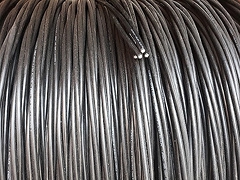
The product under investigation is aluminum cable with HS code 8544.49.9000, 8544.42.9090. According to the Trade Defense Agency, the DOC accused finished aluminum cables in Vietnam exported to the United States using input materials of Chinese origin such as braided cables or unfinished aluminum cables, without any conversion. significant changes, falling within or evading the original tax order with China.
Previously, on December 23, 12, the United States issued an order to impose anti-dumping and anti-subsidy duties on the same type of products originating from China with an anti-dumping tax rate of 2019 % to 58,51%, the anti-subsidy tax rate is from 63,47% to 33,44%.
In the description of goods subject to anti-dumping and anti-subsidy duties against China, aluminum cables are assembled from one or more electrical conductors from aluminum alloy 8000, 1350, 6201 with the following conditions: condition: at least one of the conductors is insulated; each conductor has a voltage rating greater than 80 volts and not exceeding 1000 volts; and at least one conductor is stranded and has a size of not less than 16.5 kcmil and not more than 1000 kcmil.
The assembly process may: Include a ground or neutral wire, covered with aluminum, steel or other base metal; or includes a central support steel wire, one or more connectors, shields, covers or other covering and filling materials, within the scope of anti-dumping and anti-subsidy duties.
According to US regulations, when determining whether a product is within the scope of a tariff order, the DOC will generally consider the main sources of interpretation: the description of the goods in the Trade Remedies Department. original investigation case; relevant decisions of DOC; decisions of the United States International Trade Commission (ITC) regarding the original tariff order.
DOC may also review secondary interpretive documents, such as other DOC or ITC decisions, U.S. Customs and Border Protection (CBP) rulings or decisions, and how they are used. Industry usage, dictionaries, and any other relevant documentary evidence. However, in cases where interpretations differ, the primary source of interpretation shall prevail.
Under current US regulations, the DOC will issue a final conclusion within 120 days (can be extended for an additional 180 days). During the investigation process, DOC may request relevant parties to provide information for review, send questionnaires and conduct on-site inspections of businesses if necessary.
In addition, the Trade Remedies Department said that in order to consider the form of trade defense tax evasion, there is no significant conversion of goods; DOC will consider 5 factors: Level of investment in Vietnam; level of research and development in Vietnam; the nature of the production process in Vietnam; production facility scale in Vietnam; What proportion does value added in Vietnam account for in the value of goods imported into the United States?
In addition, DOC will also consider additional factors: Trade model, raw material supply; Whether the Chinese manufacturer or exporter is affiliated with the Vietnamese manufacturer or exporter to use the goods to complete the assembly into goods exported to the United States; Will product imports into Vietnam increase after the United States initiated an investigation and imposed tariffs on China?
DOC will issue a final conclusion within 300 days (can be extended for another 65 days). During the investigation process, DOC may request relevant parties to provide information for consideration, select mandatory defendants or not, send questionnaires and conduct on-site inspections of businesses if necessary. hold a public consultation session.
To best protect the rights and interests of Vietnamese export enterprises, the Trade Remedies Department recommends that associations and related export enterprises: Review export activities of investigated products to the United States. Ky; Research and understand the regulations and procedures for investigating product scope and preventing tax evasion in the United States; properly and fully comply with the requirements of the US investigation agency; Proactively register an account at DOC's Trade Defense Electronic Information Portal - ACCESS (https://access.trade.gov/login.aspx) to update information and submit related documents and materials. related to US investigative agencies;
Coordinate closely with the Trade Defense Department throughout the process of the case. At the same time, monitor the Department's early warning information; Focus on investing in machinery and equipment, technology, research and development, improving production capacity of complex, high-quality aluminum products with great added value; Aim to proactively source raw materials for production, limit over-reliance on one source of raw materials, to avoid being affected by future anti-tax evasion investigations.
Source: Vietnam.vn
Các tin khác
- Viet Nam extends anti-dumping duties on some Thai sugar products to 2031 (05/06/2026)
- Hong Kong: Ministry of Commerce Rules on Inheritance of Anti-dumping Duty Rates for Copolymer Polyoxymethylene Imports Originating from S Korea, Thailand and Malaysia (05/06/2026)
- Early-season Vietnamese lychees conquer US consumers (05/06/2026)
- Global rubber prices surge, raising hopes for Vietnamese exporters (05/06/2026)
- Modern logistics creates new growth opportunities for Lang Son’s border-gate economy (05/06/2026)