Home
Home
 About Us


The United States has initiated anti-dumping and countervailing duty investigations into air compressors imported from Viet Nam
27/05/2026 04:08
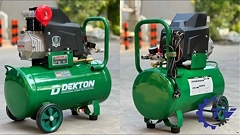
On May 21, 2025, the U.S. Department of Commerce (DOC) officially initiated anti-dumping and countervailing duty (ADD) investigations into air compressors imported from Malaysia, China, and Viet Nam.
1. General information about the incident
- Case codes: A-552-856 (CBPG) and C-552-857 (CTC)
- Products under investigation: air compressors, mainly falling under HS codes 8414.80.16.15, 8414.80.16.25, 8414.80.16.35, and 84.14.80.16.85.
Plaintiff: MAT Industries, LLC
- Application deadline: April 30, 2026.
- Exporting companies accused of dumping and subsidies: The complaint names 12 Vietnamese companies that manufacture and export the products under investigation.
- CBPG investigation period: October 1, 2025 - March 31, 2026
- CTC investigation period: 2025.
- Damage assessment period: 3 years (2023-2025).
- Export value: According to data from the U.S. International Trade Commission (ITC), in 2025, Viet Nam exported approximately $81 million worth of the alleged products to the United States, accounting for 6% of the import market share. The value of Viet Nam's exports of these products to the United States increased by 42% compared to 2023.
1.1. Information regarding alleged dumping
- Surplus Country and Values: Similar to recent cases, because the United States considers Viet Nam a non-market economy , the DOC will use surplus values from a third country to calculate the dumping margin for Viet Nam. In this case, the plaintiff proposed using Indonesia, Tunisia, or El Salvador as surplus countries, arguing that these countries have similar levels of economic development to Viet Nam and a significant number of producers under investigation.
- Alleged countervailing duty margins for goods exported from Viet Nam: 52.53-106.22% (if using El Salvador as a surrogate country); 25.85-132.31% (if using Indonesia as a surrogate country); 22.06-140.39% (if using Tunisia as a surrogate country).
Parties have 30 days to comment on the surrogate value before the date the DOC is expected to issue its preliminary findings in the case.
1.2. Information regarding alleged subsidies
- Alleged CTC margin for goods exported from Viet Nam: The plaintiff did not make allegations regarding the subsidy margin.
- Alleged subsidy programs: The plaintiff alleges that Vietnamese air compressor manufacturers/exporters received 46 government subsidies that caused or threatened to cause significant harm to the U.S. domestic industry. The alleged subsidy programs fall into the following categories:
(1) Group of loan and guarantee programs (9 programs): Policy loans from the State Bank of Viet Nam and other policy banks, Interest rate support program from the State Bank of Viet Nam, Export factoring from State Commercial Banks (SOCBs), Export operation guarantees from SOCBs, Preferential loans for exporters from SOCBs, Export credit from Viet Nam Development Bank (VDB), Investment credit from VDB, Preferential loans for National Innovation Center Programs, Loan programs to facilitate transition to clean energy.
(2) Group of tax incentive programs (20 programs): Income tax incentives for enterprises in special areas, Income tax incentives for export enterprises, Tax incentives for old investments, Tax incentives for new investments, Tax incentives under Decree 60/2012, Income tax incentives under Decree No. 24, Preferential income tax program for enterprises with foreign investment, Accelerated depreciation and increase in deductible expenses, Preferential income tax program for specific industries, Preferential tax rates for research and development and large investment projects, Income tax incentives, Support package for small and medium-sized industries, Incentives for supporting industries, Import tax exemption for imported goods used to produce export goods, Import tax refund for raw materials used to produce export goods, Import tax exemption for imported goods into industrial zones, Import tax exemption for imported raw materials used for processing enterprises Export-oriented and export-oriented processing zones; Exemption from import duties on equipment and machinery; Exemption from taxes for National Innovation Center projects; Exemption from other taxes on imported raw materials, supplies, and components.
(3) Land Program Group (6 programs): Exemption or reduction of land rent for encouraged industries or selected areas, Exemption of land use tax and fees for encouraged industries or industrial zones, Exemption or reduction of land rent for foreign investment enterprises, Exemption of land rent for national innovation centers and center projects, Exemption of land rent for other eligible projects, Exemption and reduction of land rent for enterprises located in special zones.
(4) Group of support programs (04 programs): Export promotion financing, Investment support financing, Financing program under Decree No. 118/2015, Providing services at prices lower than market prices.
(5) Utility programs with preferential prices (04 programs): including programs providing gas, liquefied natural gas, and electricity at preferential prices for industrial parks and export processing zones.
(6) Cross-border policy loans from Chinese financial institutions (03 programs): The plaintiff alleges that Chinese government policies benefit Vietnamese products through cross-owned subsidiaries under “international capacity cooperation” under the Belt and Road Initiative (BRI), capacity cooperation projects in Viet Nam, these financial support may be considered countervailable subsidies.
However, in its initiation notice, the DOC announced the initiation of investigations into 43 subsidy programs. The specific list of initiated programs has not yet been officially announced.
2. Subsequent investigation procedures
According to US investigation regulations, two agencies are involved in a countervailing duty (CVD) and countervailing duty (CTC) investigation: the DOC investigates dumping and subsidies and is generally responsible for the investigation's outcome, while the ITC is responsible for assessing the damage to the domestic industry. A product is only subject to CVD/CTC duties if both agencies issue affirmative conclusions. While in a CVD case only the exporting company is the subject of investigation, in a CTC case, the government is also subject to investigation.
2.1. DOC's investigation process:
(1) Mandatory defendant selection
After initiating the investigation, the DOC will issue a Quantity and Value (Q&V) Questionnaire for the countervailing duty (CVD) case to gather information for the selection of mandatory respondents. All businesses on the DOC's Q&V questionnaire list, businesses exporting during the investigation period, and businesses seeking individual CVD rates must respond. The questionnaire will be available at: https://www.trade.gov/ec-adcvd-qv-questionnaire and https://www.trade.gov/ec-adcvd-case-announcements
Typically, the DOC will rely on responses to the Q&V questionnaire and U.S. Customs data to select mandatory respondents (usually Viet Nam's largest exporters by volume during the investigation period). These mandatory respondents will be investigated and their dumping/subsidy margins determined individually.
(2) Register for separate tax rate (only applicable to CBPG cases)
In the case of a countervailing duty investigation, if not selected as a mandatory respondent, businesses must apply for an individual duty rate to have their tax calculated based on the results of the mandatory respondent (otherwise the nationwide rate, usually equal to the alleged rate, will be applied). Businesses need to demonstrate independent operation, free from government control both legally and practically. The individual duty rate is the weighted average of the dumping margins of the mandatory respondents (excluding zero margins, de minimis[1], and margins based on unfavorable available data). The deadline for submitting an Application for an Individual Duty Rate is 21 days from the date of initiation.
In cases where a company does not file an application for an individual dumping rate, or if it has filed but it is not accepted, the dumping margin for that company will be the nationwide dumping rate (which is usually very high, possibly equal to the alleged dumping margin).
(3) Comments and criticisms on product scope
Interested parties may comment on the scope of the products under investigation. The current comment deadline is June 9, 2026, and the deadline for responses is June 22, 2026.
(4) Answer the Survey Questionnaire
After identifying the mandatory respondent, the DOC will issue a Questionnaire for the Mandatory Respondent. In CTC cases, the DOC will also issue a Questionnaire for the Government. The deadline for responses is typically 30 days from the date of issuance of the initial questionnaire (extensions may be requested). The DOC may issue supplementary questionnaires with shorter deadlines.
(5) Preliminary conclusions
The DOC has 140 days from the date of initiation to issue a preliminary conclusion on dumping and 65 days from the date of initiation to issue a preliminary conclusion on subsidies. The DOC may apply retroactive duties up to 90 days before the date of preliminary duty in case there is evidence of an “emergency situation” (sudden surge in imports) as alleged by the Plaintiff.
(6) On-site verification: after a preliminary conclusion, DOC may conduct on-site verification of the enterprise and the Government (only verify the Government in CTC cases).
(7) Final conclusion: 75 days from the date of issuance of the preliminary conclusion, which may be extended.
2.2. Investigation Procedures at ITC
The ITC focuses its investigation on determining whether dumping/subsidies caused injury to the U.S. domestic industry. If the ITC determines there was no injury at the Final Conclusion stage, the case will be terminated.
3. Some recommendations for response
- Continue to closely monitor developments in the case; proactively research and thoroughly understand the regulations, procedures, and processes for anti-dumping and countervailing duty investigations in the United States; diversify export markets and products;
- Cooperate fully with the U.S. investigating authority throughout the entire process. Any act of non-cooperation or incomplete cooperation may result in the U.S. investigating authority using adverse available evidence or applying the highest countervailing and countervailing duties to the business;
- Proactively register for an ACCESS account on the DOC's online portal (https://access.trade.gov) to update information and submit responses and related documents to the U.S. investigating authority;
- Regularly coordinate and update information with the Trade Remedies Department to receive timely support.
For further information, please contact: Foreign Trade Remedies Processing Division, Trade Remedies Department, Ministry of Industry and Trade, 54 Hai Ba Trung Street, Cua Nam Ward, Hanoi (Contact person: Nguyen Viet Ha, Email: hanv@moit.gov.vn, ngocny@moit.gov.vn. Website: http://trav.gov.vn/).
Source: Vietnam.vn
Các tin khác
- U.S. to Impose Duties on Mexican, Thai, Vietnamese Chassis (03/06/2026)
- Mexican sugar producers push to scrap U.S. import quotas (03/06/2026)
- Japan launched an anti-dumping investigation into flat steel imports from three countries (03/06/2026)
- Eurochem challenges anti-dumping duties in the EU (03/06/2026)
- Pangasius prices in Viet Nam surge due to high export demand (03/06/2026)