Home
Home
 About Us



The pepper industry is adapting to the pressures of supply and deep processing
01/06/2026 08:50
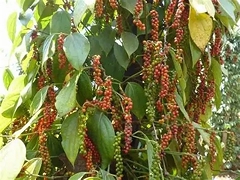
After a period of stagnation, the pepper market is entering a new cycle with a surge in export turnover in key markets such as the US and China, but also simultaneously facing tightening global supply and increasingly stringent technical barriers.
The strong resurgence of key markets.
According to statistics from the Ministry of Agriculture and Environment, in the first four months of 2026, Vietnam's pepper industry recorded impressive growth. Data from the Customs Department shows that pepper exports reached 96.8 thousand tons with a value of approximately 623 million USD, an increase of 31.6% in volume and 22.6% in value compared to the same period in 2025. This is evidence of the strong recovery in demand from major economies .
Ms. Hoang Thi Lien, President of the Vietnam Pepper and Spice Association (VPSA), affirmed that the main driving force for pepper exports in recent months has come from the recovery of import demand in major markets, especially the US - which is importing large volumes of Vietnamese pepper after a sharp decline in 2015.
The US market has imported nearly 25,000 tons of pepper from Vietnam, worth $178 million, accounting for 25.5% of the country's total exports. Currently, Vietnam continues to maintain its position as the largest supplier of pepper to the US, accounting for 78.1% of the country's total imports. Demand in the US is projected to continue increasing in the second half of the year as importers ramp up purchases for orders placed for the end of 2026 and the first quarter of 2027.
Meanwhile, the Chinese market also recorded a surge in growth. After two years of delaying purchases to wait for lower prices, China made a strong comeback with imports increasing by over 200% (at one point nearly 290%) in the first four months of the year. With domestic consumption estimated at around 90,000-100,000 tons per year while domestic production only meets about 30,000 tons, the pressure to import from this market remains very high. In addition, other markets such as Germany, the UAE, and Canada also recorded positive growth, helping Vietnam consolidate its position with approximately 36.3% of the global pepper market share.
New challenges in pepper supply
Despite high export figures, the pepper industry is facing a serious supply shortage. Vietnam's pepper production for the 2026 crop is estimated at only 170,000-180,000 tons, a decrease of 15-20% compared to the previous year. The main reasons are unfavorable weather conditions due to climate change and fierce competition from other economically valuable crops, leading to a reduction in cultivated area. Inventory carried over to 2026 is also almost depleted, with only about 40,000 tons remaining.
The scarcity of supply has kept domestic pepper prices high, fluctuating around VND 137,000 - VND 142,000/kg by the end of May 2026. Experts predict that, with pressure from global demand and limited supply, pepper prices are likely to reach VND 150,000 - VND 160,000/kg by the end of the year as businesses ramp up stockpiling for fourth-quarter orders. However, the market has also seen slight downward adjustments in Indonesia and Brazil, creating certain competitive pressure on Vietnamese pepper on the international market.
One of the biggest challenges facing the pepper industry in 2026 is the increasingly stringent technical barriers. Major markets such as the EU and the US are continuously tightening regulations on pesticide residue levels, traceability, and sustainability certifications.
In particular, China has issued Order 280 (replacing Order 248), scheduled to take effect from June 1, 2026. This new regulation requires export businesses to register through a letter of recommendation from a competent authority and tightens standards on packaging, labeling, and food safety. Any minor change in address or legal representative could result in the temporary suspension of the business's export code, causing significant disruption for businesses that have not yet adapted.
Furthermore, geopolitical conflicts in the Middle East have had direct repercussions on maritime transport. Rising shipping costs and cargo congestion at transshipment ports like Jebel Ali are putting significant pressure on the capital flow and delivery times of Vietnamese export businesses.
To address these challenges, the Vietnamese pepper industry is strongly shifting towards a sustainable production linkage model. In Gia Lai province, organically grown pepper fetches a higher price, ranging from 10-30%, and in some areas even 40,000-50,000 VND/kg higher than the market price.
Furthermore, the government's green agricultural development strategy is also being concretized. The "Emission Reduction in Crop Production Plan for the period 2025-2035" has set a target of reducing greenhouse gas emissions by at least 15% by 2035. Implementing low-carbon farming models, applying digital technology, and building a measurement-reporting-verification (MRV) system will give Vietnamese pepper an important "passport" to penetrate higher-end markets.
Looking at the long term, to maintain growth momentum, coordination between the government, businesses, and farmers is crucial. The Vietnam Pepper and Spice Association (VPSA) has proposed the need to build a detailed statistical system for growing areas down to the commune level to serve management and traceability purposes. At the same time, improving access to credit for agricultural businesses is essential so they have sufficient resources to invest in technology and deep processing.
Leading companies such as Olam Vietnam, Phuc Sinh, Nedspice, and Haprosimex continue to play a leading role in the market, boosting exports to potential regions such as Africa and the Middle East. Product diversification into areas such as pepper essential oil for cosmetics and pharmaceuticals is also opening up promising new avenues for growth.
Source: Vietnam.vn
Các tin khác
- U.S. to Impose Duties on Mexican, Thai, Vietnamese Chassis (03/06/2026)
- Mexican sugar producers push to scrap U.S. import quotas (03/06/2026)
- Japan launched an anti-dumping investigation into flat steel imports from three countries (03/06/2026)
- Eurochem challenges anti-dumping duties in the EU (03/06/2026)
- Pangasius prices in Viet Nam surge due to high export demand (03/06/2026)