Home
Home
 About Us


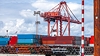
The international community highly appreciates Viet Nam's prominent role in the global supply chain
14/01/2026 11:38
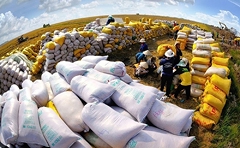
Amidst ongoing global economic challenges, Viet Nam is recognized by international news agencies and observers as one of the notable growth hotspots in Asia and is playing an increasingly prominent role in the global supply chain.
Many major news agencies, including Reuters, AFP, NHK, etc., cited official figures showing that Viet Nam's GDP growth in 2025 reached 8.02%, placing it among the high-growth countries in the region and the world .
International analyses note that this result is particularly noteworthy given that global trade is simultaneously impacted by rising protectionist trends, high logistics costs, and unpredictable supply chain fluctuations. In this context, Viet Nam has maintained strong growth momentum thanks to a relatively balanced combination of exports, domestic consumption, and public investment, reflecting the increasing diversity and flexibility of its growth model.
Dr. Jochen Schittmann, Regional Representative of the International Monetary Fund (IMF), affirmed: “Viet Nam continues to demonstrate a strong commitment to deep integration into the global economy , amidst a volatile international trade environment. These changes, of course, pose significant challenges for Viet Nam in maintaining and enhancing its growth rate, especially as the impact of trade barriers and tariffs on the global economy becomes more apparent and affects highly open economies like Viet Nam. However, it is crucial that Viet Nam is pursuing a very robust and ambitious structural reform program. In our report, we have developed a scenario in which these reforms are effectively implemented, and we believe that Viet Nam's growth could be significantly boosted, by approximately two percentage points above the baseline.”
The British news agency Reuters particularly highlighted Viet Nam's increasingly prominent role in the global supply chain, especially in the electronics, textile, footwear, and high-tech equipment sectors – areas closely linked to regional and global production networks. Beyond exports, growth in 2025 is also significantly supported by domestic drivers. Industrial production and construction are projected to grow by nearly 9%, the service sector by over 8.5%, while retail sales and domestic consumption continue to expand. Public spending on infrastructure remains high, acting as a "foundation" for the economy, while improving logistics capacity, connectivity, and creating room for medium- and long-term growth.
Meanwhile, NHK, Nikkei Asia, The Daily Star, and other publications have acknowledged Viet Nam's success in maintaining macroeconomic stability throughout 2025. Inflation was controlled at around 3.3%, within the government 's target. Foreign direct investment (FDI) increased by 9%, reaching over $27 billion, reflecting international investors' confidence in the medium- and long-term prospects of the economy.
One point particularly emphasized by international observers is the qualitative shift in growth. Instead of relying solely on low-cost advantages, Vietnamese goods are increasingly meeting technical, environmental, traceability, and sustainability standards. This is considered a key factor in helping Viet Nam maintain access to major markets amidst increasingly stringent trade barriers and new standards.
Michael Kokalari, Chief Economist at VinaCapital, assessed: “Currently, I am quite optimistic about the GDP outlook for next year. One of the most important factors is the significant improvement in consumer sentiment. Since the middle of last year, people's confidence has gradually recovered and remained stable throughout the past year. Although household savings have not fully returned to pre-pandemic levels, the accumulation trend is being re-established.”
Currently, retail sales are growing at around 7% annually, largely driven by the recovery of tourism. With the sustained improvement in consumer sentiment, coupled with supporting macroeconomic drivers, I believe that next year, domestic consumption growth could return to around 8%. This will be a significant contributor to GDP, and it's noteworthy that it will not depend on unusual or short-term policy measures."
Nevertheless, international organizations such as the International Monetary Fund (IMF) have noted that the outlook for 2026 remains fraught with risks from the external environment, particularly the slowdown in the global economy and adjustments in international trade policies. In this context, the high growth target for the 2026–2030 period is seen as a crucial test of Viet Nam's efforts to rebalance its growth model towards greater sustainability and self-reliance.
Source: Lao Cai News
Các tin khác
- U.S. to Impose Duties on Mexican, Thai, Vietnamese Chassis (03/06/2026)
- Mexican sugar producers push to scrap U.S. import quotas (03/06/2026)
- Japan launched an anti-dumping investigation into flat steel imports from three countries (03/06/2026)
- Eurochem challenges anti-dumping duties in the EU (03/06/2026)
- Pangasius prices in Viet Nam surge due to high export demand (03/06/2026)