Home
Home
 About Us



The G20 tries to beat inertia
01/04/2009 12:00
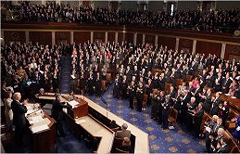
The G20 holds its summit this week in London. The political leaders of the world's top 20 nations are going to sit down and consider the worst economic situation for at least two generations. Never has this group of countries had such an opportunity to make an impression on the entire world. Not only does the G20 face the question of what to do about the financial crisis, it also must take action on protectionist violations by group members which are erecting so many barriers that it threatens to collapse international trade.
Thailand is not one of the top 20 economies and will not have a full seat at the summit when it begins on Thursday. Indonesia is the only neighbour that is a G20 member, and that is because of its oil wealth. By pre-summit accounts, there will be a lack of unity and a lot of different opinions when the meeting begins. What we will know by this time next week is whether the G20 has the backbone to debate those differences honestly, and then reach agreement on what steps to take to ameliorate and overcome the worldwide crisis that has left this country and most others in a serious depression.
The alternative is unacceptable. It will be bad news for us all if the US, Britain, China, India, Korea and other economic leaders are unable to agree on how to face and reform the shrinking world economy. Yet early indications are that there has been little pre-summit effort to overcome the conflicts and work towards feasible compromises.
The facts are gruesome. The World Trade Organisation reported last week that trade is contracting faster than at any point in our lifetime. It is the first time in 27 years that trade has not expanded. This year, international trade will fall by 9%.
Output is declining, factories are firing employees or shutting down. And in the midst of this, governments are instituting insidious and mean-spirited protectionism, even denying it as they proceed. No one is raising tariffs, but anti-dumping cases are up, along with regulations on such non-trade barriers as labour standards or intellectual property piracy.
Prime Minister Abhisit Vejjajiva has been forthright in rejecting such underhanded protectionism. His concern has been to keep and to expand free trade. The G20 leaders have not lined up with him. US President Barack Obama flies to his first international summit without disowning his ''Buy American'' campaign. Russia has raised barriers against imported cars. India has imposed what it alleges are compensatory taxes on steel imports.
The great argument is likely to be between Mr Obama's insistence on pouring trillions into stimulus plans against Europe's demand for more economising. Host Gordon Brown is to push his grandiose vision to redesign the entire financial system of the world. There is great danger the G20 summit will bog down and stall over such differences, which never will be reconciled in three days.
It is vital that the G20 meeting this weekend works on problems it can solve. Trade means jobs and prosperity worldwide.
It is impossible to ''protect local industry'' in a globalised world. Virtually every auto made in the world today has Thai parts. The world supply of computers would halt except for Thai factories producing hard drives and chips.
The G20 must address, condemn and act against punishment of cross-border trade. More than any single issue _ more than bank regulation or IMF funding _ trade can most quickly help the world out of recession.
Published: 30/03/2009 at 12:00 AM
Source: www.bangkokpost.com
Các tin khác
- Rising global shipping costs put pressure on Viet Nam’s seafood exporters (22/06/2026)
- India likely to retain anti-dumping duties on Bangladeshi jute products (22/06/2026)
- Japan slaps anti-dumping duties on Chinese, Taiwanese steel (22/06/2026)
- India initiates anti-dumping probe against a Chinese, Japanese chemical used in tyre, rubber items (22/06/2026)
- Reasons why the US continues to suspend customs clearance for Vietnamese trailers (22/06/2026)