Home
Home
 About Us



Textile mills demand exemption from WHT
07/05/2009 12:00
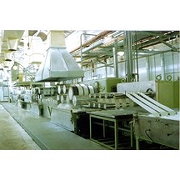
LAHORE: The All Pakistan Textile Mills Association (APTMA) has demanded the Federal Board of Revenue (FBR) to exempt all textile machinery, raw material, spares and chemicals from 1 per cent withholding tax (WHT) at the import stage.
In its budget proposals, the APTMA has also requested the government to reduce maximum corporate tax to 25 per cent in the upcoming budget to attract foreign investment in the sector. It has also said that minimum tax, which was abolished in the federal budget for 2008-09, should not be revived.
In view of prevailing shortage of polyester staple fibre (PSF) and not being cost effective when compared with international competitors, the APTMA has proposed that customs duty of 4.5 per cent on PSF at the import stage should be reduced for local consumers. Furthermore, duty levied on other man-made fibres like viscose, acrylic fibres etc should also be withdrawn.
Similarly, the Duty and Tax Remission for Export (DTRE) policy for imported PSF should continue and a provision should be made immediately as a temporary contingency measure for import of 10,000 tons of PSF per month free from import and anti-dumping duties.
The APTMA has proposed that zero rating of sales tax for textiles should be continued as over 85 per cent cotton and man-made fibre consumed in the textile value chain are exported in one form or the other.
Regarding pending sales tax refunds, the association has called for immediate sanction of outstanding amount to the extent of 1 per cent value of turnover to clear pending refund claims. The collectorates may conduct post-sanction verification of sales and purchase invoices.
The APTMA has also urged the government to withdraw 10 per cent duty on import and local sale of viscose besides abolition of 1 per cent special excise duty on machinery, spares and packaging materials.
So far as duty drawback to zero rate multiplier effects of the incidence of taxes, levies is concerned, APTMA has urged the government to allow duty drawback on yarn at 3 to 5 per cent and Greige Fabric at 4.5 per cent of the turn over value and to the downstream sector on cascading basis. The APTMA spokesman said an early removal of supply side constraints and financial support to the industry would enable it to attract much-needed investment in the country and to provide jobs to the masses at large.
The textile spinning and weaving industry is facing unprecedented crises since July 2006. Consequently, sizeable textile capacity has been severely impaired. Textile exports in quantity and value terms have declined all across the value chain by 30 to 40 per cent comparing with the maximum export year in 2006-07.
One major factor behind the declining trend is the erosion of Pakistan textile industry’s competitiveness particularly against the huge facilities being provided by the competing countries like China, India and Bangladesh etc to the industry and exports. APTMA has therefore sought favourable actions from the government on existing tax structure particularly that of Income tax, Customs duty and Sales tax.
The budget proposals further urge the government to revive industry in order to generate exportable surplus and create employment through much-needed changes in existing tax regime.
By our correspondent
Wednesday, May 06, 2009
Source: www.thenews.com.pk
Các tin khác
- Rising global shipping costs put pressure on Viet Nam’s seafood exporters (22/06/2026)
- India likely to retain anti-dumping duties on Bangladeshi jute products (22/06/2026)
- Japan slaps anti-dumping duties on Chinese, Taiwanese steel (22/06/2026)
- India initiates anti-dumping probe against a Chinese, Japanese chemical used in tyre, rubber items (22/06/2026)
- Reasons why the US continues to suspend customs clearance for Vietnamese trailers (22/06/2026)